
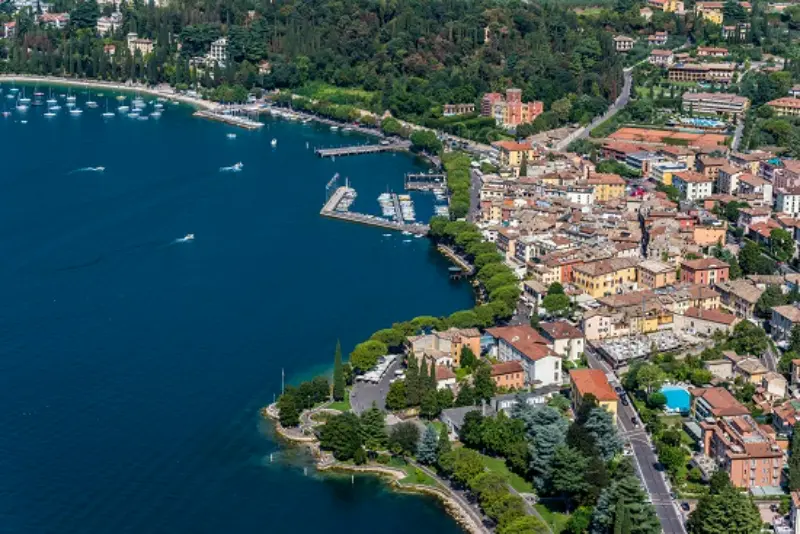
Lake Garda transport works well only when you accept that trains, buses, ferries and roads solve different parts of the lake. There is no rail line around the shore and ferry frequency changes by season, so the best plan is usually to choose a rail gateway, use boats for selected lake crossings and rely on buses or a car for stretches where water transport is inconvenient.
For the Lombardy shore, Desenzano is the essential rail hub, Salò and Gardone are important western-shore bases, Maderno provides the key vehicle-ferry crossing to Torri del Benaco, and Limone becomes especially attractive in the months when boat service is frequent.
Our Lake Garda Lombardy Travel Guide is helpful if you want to see how Lake Garda Ferry and Transport fits beside the main local sights and neighbourhoods.
| Rail gateway | Desenzano del Garda-Sirmione |
|---|---|
| Main 2026 ship season | 16 May–4 October 2026 |
| Vehicle ferry | Toscolano Maderno–Torri del Benaco |
| Best rule | Check the exact date, not only the route map |
2026 Lake Garda ferry timetable
Navigazione Laghi currently publishes the main 2026 Lake Garda ship timetable for 16 May to 4 October, including the Desenzano–Peschiera–Riva corridor, with separate seasonal periods before and after. This is the timetable you should use for actual planning, not a generic route map from a travel blog.
Search by date and departure point because not every boat stops everywhere. Some services are fast, some are slower ships, and certain journeys require a change. Leave time between a ferry arrival and any fixed train, dinner or attraction reservation because lake conditions and seasonal traffic can affect the day.
Maderno–Torri vehicle ferry
The ferry between Toscolano Maderno on the Lombardy shore and Torri del Benaco on the Veneto side is strategically important because it carries vehicles and avoids a long drive around the north or south end of the lake. VisitGarda describes it as a year-round car-and-passenger service, while the exact schedule is published by Navigazione Laghi.
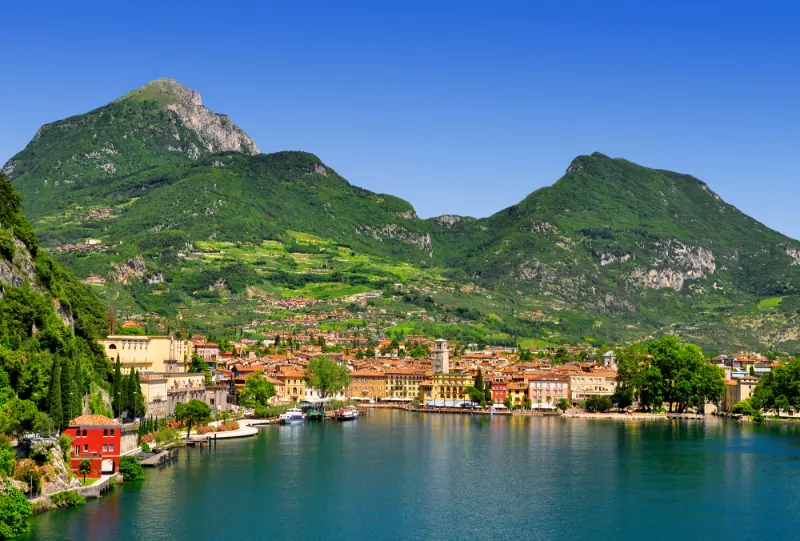
This crossing is particularly useful for a two-shore itinerary, but do not assume you can arrive with a car seconds before departure. Queueing, ticketing and seasonal demand can add time. If you have a fixed booking on the opposite shore, aim for an earlier ferry than the absolute minimum.
Desenzano as rail gateway
Desenzano del Garda-Sirmione station is on the Milan–Venice railway and is the most useful arrival point for the Lombardy shore. From the station, walk or use local transport to the centre and ferry pier. Sirmione itself does not have a railway station.
If you are arriving with luggage, decide whether to sleep in Desenzano before taking a boat or bus elsewhere. A direct same-day transfer to Limone or Tremosine can be possible, but it is less forgiving if a train is delayed or the seasonal ferry pattern is limited.
Buses along the western shore
Buses are the land-based backbone between towns on the western shore, especially when ferries are infrequent. They are useful for Desenzano–Salò connections and for movement north toward Gardone, Toscolano Maderno, Gargnano and Limone, with local variations and seasonal adjustments.
Timetables can change, and road traffic affects punctuality. Use the current operator information close to travel and avoid planning a chain of tight connections. If you have a reserved museum entry at the Vittoriale, build a meaningful buffer rather than treating the bus like an urban metro.
Driving the Gardesana Occidentale
The SS45 bis Gardesana Occidentale follows the western shore and is one of Italy’s most scenic roads, but scenery comes with tunnels, narrow sections and peak-season congestion. Driving gives excellent flexibility for villages and viewpoints that ferries cannot reach.
Do not use theoretical map times in August as if they were guarantees. Parking at Sirmione, Salò, Limone and other popular stops can add a significant final stage to the journey. For Tremosine, current Strada della Forra rules require a specific check because road access has been affected by safety works and a one-way uphill arrangement.
When the ferry is better than the road
Use boats when they connect the towns you actually want at convenient times, especially for Sirmione–Desenzano combinations, western-shore sightseeing, and cross-lake trips. The ferry removes parking stress and turns travel into sightseeing.
Use the road when the boat schedule forces a long wait, when you are carrying substantial luggage or when you want upland destinations such as Tremosine’s villages. A smart Garda itinerary changes mode rather than insisting on one form of transport for every day.
Tickets and reservations
Standard ferry tickets can often be purchased through official channels, with current fares and journey search available online. Fast services, vehicle transport and special cruises may have different conditions. Always use Navigazione Laghi for final 2026 information.
For trains, buy through the relevant railway operator and validate or activate regional tickets according to the product rules. For buses, understand whether tickets are app-based, contactless or require advance purchase. Lake travel becomes much easier when ticket mechanics are solved the night before rather than at the stop.
A car-free example route
A practical four-night car-free trip can begin in Desenzano, visit Sirmione by boat or bus, move to Salò for two nights, visit Gardone by local transport and take a ferry excursion toward Limone if the seasonal schedule allows. This gives a substantial Lombardy-shore experience without renting a car.
The limitation is Tremosine. Reaching and exploring the plateau is much easier with a car, taxi, organised excursion or carefully checked local bus arrangement. Do not make a car-free itinerary fail by forcing the one destination least suited to it.
When the Lombardy shore works best
The western and southern Lombardy shore of Lake Garda rewards travellers who choose a base according to the shape of the trip rather than simply booking the first attractive lake-view hotel. For Lake Garda transport, the most useful question is whether you need rail access, frequent ferries, a pedestrian old town or a quieter landscape. Desenzano is the rail hub, Sirmione is the headline historic stop, Salò is an excellent all-round western-shore base, while Limone and Tremosine feel much more dramatic and mountain-framed.
Distances around Garda are deceptive because the lake is long and the western road is constrained by cliffs, tunnels and seasonal traffic. A place that looks close across the water may take much longer by road than by boat, while two towns on the same shore can still require patience in summer. Build the day around one main area and one secondary stop instead of trying to collect five towns before dinner.
Best season and daily rhythm
Late spring and early autumn usually give the best balance of long daylight, open visitor services and comfortable walking weather. July and August bring the broadest tourism offer but also the heaviest traffic, the hottest afternoons and the greatest pressure on parking. Winter can be attractive for slow stays in larger towns, although ferry frequency and seasonal businesses are reduced.
On warm days, use the early morning for old towns, archaeological sites or exposed viewpoints, then shift to lunch, museums, gardens or a boat ride during the hottest part of the afternoon. The lake becomes particularly pleasant again toward evening, when waterfront promenades cool and day visitors begin to leave the most famous stops.
Driving and parking without frustration
A car is useful for hill villages, remote accommodation and combinations such as Tremosine plus the Valtenesi, but it is not automatically the easiest way to visit the busiest lake towns. Historic centres often have restricted traffic, central parking can fill early, and the Gardesana Occidentale may move slowly at peak times. Check the municipality or accommodation instructions before arriving rather than relying on the final few metres suggested by a navigation app.
If you are driving from Milan or Brescia, the A4 gives straightforward access to Desenzano and Sirmione, while the western shore continues north on the SS45 bis. VisitGarda identifies the Desenzano motorway exit as the practical gateway for Desenzano, Padenghe, Moniga, Manerba, Salò, Gardone, Toscolano, Gargnano and Tignale. For Limone and Tremosine, route choice can change with traffic and local road conditions, so a same-day check is sensible.
Travelling without a car
A car-free trip is very workable if you choose the right base. Desenzano has a mainline railway station on the Milan–Venice corridor and is the easiest starting point for travellers arriving by train. From there, boats and buses extend the trip along the lake. Salò and Gardone are useful bus-and-boat bases, while Limone is especially enjoyable when reached by ferry because you avoid the stress of parking and approach the old town from the water.
The key is to plan connections by timetable rather than by map. Ferries are seasonal and not every pier has a convenient direct sailing to every other town. For 2026, Navigazione Laghi publishes a main Lake Garda ship timetable valid from 16 May to 4 October, together with the Maderno–Torri vehicle ferry. Always check the exact date because autumn and spring service patterns differ.
Swimming, boats and outdoor safety
Lake Garda is a large alpine lake with real boat traffic, changing wind and locally variable swimming access. Use beaches and recognised access points, follow posted signs, and do not assume that every stone edge or harbour wall is suitable for entering the water. Water can feel considerably cooler than the air, especially outside midsummer or after a change in weather.
If you rent a boat, kayak, SUP or join a sailing activity, follow the operator’s instructions and check wind forecasts rather than treating conditions as identical across the lake. North–south wind patterns can change the character of the water quickly. For families, a simple beach or waterfront stop with easy access is usually better than improvising from an isolated roadside viewpoint.
How many nights to allow
Two nights are enough for a focused southern-lake trip built around Desenzano and Sirmione. Three or four nights let you add Salò, Gardone Riviera and a ferry journey without turning the holiday into a transfer exercise. Five or more nights work well if Limone, Tremosine, hiking, gardens or a relaxed lake day are important.
Changing hotel every night rarely improves a short Garda trip. One well-connected base plus day trips usually gives you more usable time. Split the stay only when you want to experience both the south and the upper western shore, where the atmosphere and journey times are different enough to justify moving.
Where to stay
For accommodation, compare location with transport as carefully as nightly price. On Lake Garda, a hotel that is slightly cheaper but far from the pier, station or bus corridor can cost more in time and taxis than a central option.
Continue planning
Use these related My Italy Experience guides to build the rest of the trip without repeating the same planning work:
- Lake Garda Lombardy travel guide
- Desenzano del Garda travel guide
- Sirmione travel guide
- Salò travel guide
- Limone sul Garda travel guide
Luggage and transfer strategy
A common mistake is using a ferry as if it were an airport shuttle with unlimited luggage space and guaranteed direct service. Boats are comfortable for normal travel, but a complicated transfer with large suitcases, children and a tight hotel check-in can be less convenient than a bus, taxi or private transfer.
If changing bases, travel earlier in the day and leave a generous buffer. If taking a ferry purely for sightseeing, leave luggage at the hotel or station storage when available so the boat journey remains enjoyable.
Cycling and bikes on transport
Cycling around Garda is popular, but carrying bikes on boats or buses is subject to service-specific rules and capacity. Do not assume a bicycle can board every departure. Check the current transport operator information before building a one-way cycling route that depends on a ferry return.
For casual visitors, renting locally for a defined route can be simpler than transporting a bike across several modes. The Limone cycle-pedestrian path is scenic but does not by itself form a completed around-the-lake route.
Useful official sources
- Navigazione Laghi – official Lake Garda tickets and timetables
- VisitGarda – navigation on Lake Garda
- VisitGarda – arriving and driving by car
Final planning advice
Keep the itinerary flexible around ferry times, weather and road traffic. Lake Garda is more enjoyable when each town has enough time to feel different instead of being treated as a sequence of parking stops.
Last updated: October 17, 2026