
Traveling through Lombardy without driving can be surprisingly practical. The region has a dense railway network linking Milan with many important cities and lake gateways, while local buses, funiculars and public boats reach places beyond stations. The difficulty lies in the last part of the journey: a beautiful village may be visible from the train window yet require a limited bus service or an infrequent ferry. This guide explains where a car-free holiday works well, where it becomes complicated and how to build journeys that do not depend on one perfect connection.
Choose your base around the right station
Milan has several major stations, including Centrale, Porta Garibaldi and Cadorna, serving different routes. Check the station shown on each itinerary before reserving a hotel. A journey that looks like a direct train from Milan could involve crossing the city first if you sleep near the wrong terminal. A metro ride is not difficult in itself, but becomes less comfortable with luggage, a stroller or a close connection. For a short city trip, location near useful transit is often worth a modest nightly premium.
Extend a visit to Lombardy Without a Car with the suggestions in our Lombardy travel guide, which covers regional transport and where to base yourself.
Beyond Milan, Como, Bergamo, Brescia, Pavia, Cremona, Lecco, Monza and Mantua are strong candidates for rail-oriented trips. A rail stop does not always place you beside the main historic center, so check the walking route and the bus option. Hotel descriptions such as 'near the station' can also conceal underpasses or steep approaches. When changing bases, favor fewer moves and longer stays; carrying bags every second day can consume the time you hoped to save by leaving the car behind.

How to understand Lombardy's trains
Trenord operates the regional network and publishes route information, schedules and service notices. Some trains are frequent and designed for commuting; others serve smaller valleys at longer intervals. Do not assume an online mapping result represents a daily service, especially on weekends or during engineering works. Check the precise travel date, platform information and whether a connection requires leaving one station and reaching another. Apps are useful for planning, but on the day of travel the operator's current notice should settle any disagreement.
Regional trains are a particularly good fit for journeys between Milan and Bergamo, Brescia, Como, Lecco and many towns in the plains. Longer-distance or cross-border travel may involve different operators or fares. Keep the ticket valid for your exact route and time conditions, and understand any validation requirements of the product you have purchased. A ticket to a town is not automatically a ticket for a city metro, mountain lift or tourist boat. Budget each stage separately before comparing travel passes.
The integrated regional pass: useful but not universal
The 'Io viaggio ovunque in Lombardia' ticket is designed for travel on qualifying local public transport across the region and is sold for several consecutive-day durations. It can offer value to visitors who plan many eligible journeys, particularly if they combine urban transit and regional trains. However, coverage has rules and exceptions. Do not assume a scenic tourist cruise, international train, premium service or every lake boat will be included just because it runs within the region. The correct comparison is with the tickets for the exact route you intend to take.
Before purchasing a pass, write down the planned journey for each day and calculate an ordinary ticket alternative. A day spent walking in Milan may use little transport, while one involving rail, local buses and a funicular might benefit more. Some public services are covered only within the applicable regional fare area. Confirm child-travel concessions using current official rules and do not confuse family initiatives with unconditional free travel on every operator.
Milan without a car is usually easier
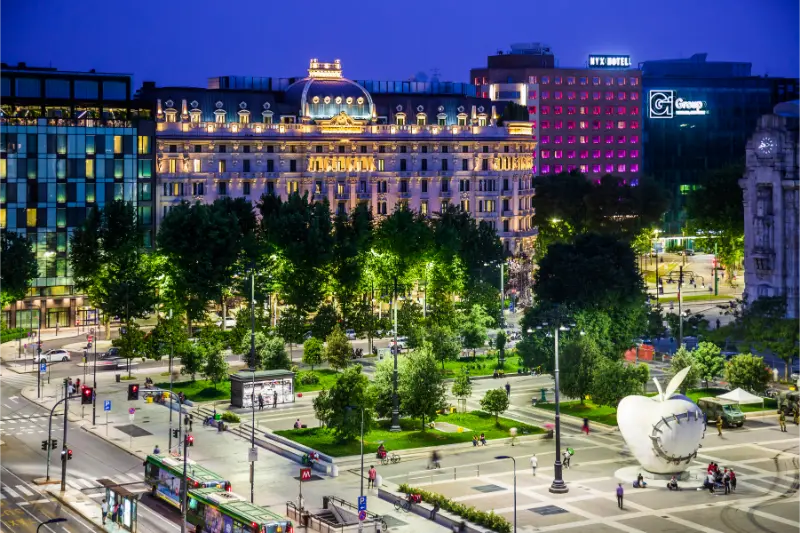
Milan is made for combining walking, metro, trams and buses. The historic center, Brera, the castle area and Porta Nuova are linked well enough that a rental car brings few advantages. Instead, group sights by neighborhood. A morning around the Duomo and Brera followed by an afternoon near the castle is more pleasant than crossing the whole city between bookings. Check step-free station access if needed, because an accessible system does not mean every entrance is equally convenient.
Airport travel requires a separate decision. Malpensa, Linate and Bergamo Orio al Serio have different connections to the city, and the cheapest air ticket can become less attractive after a long transfer. For flights early in the morning, review the earliest service rather than assuming a normal daytime frequency. A central hotel is not necessarily the best final night if your departure is from a distant airport. Plan the transfer before committing to a nonrefundable room.
Lake Como: combine rail and boats intelligently
The eastern shore of Lake Como has rail access to towns including Varenna, while Como town is reached by other rail corridors. Bellagio and Menaggio are served by lake transport rather than conventional trains. The most straightforward car-free plan usually involves choosing a lakeside base with a rail station or dependable ferry connection, then making a modest number of crossings. Trying to visit a series of distant villages in one day can become exhausting as boats slow and services thin outside summer.
Navigazione Laghi publishes schedules and fares for regular services, including central-lake ferry connections. Read the names of the piers carefully and check whether you need a passenger boat or a separate fast-service ticket. Some crossings take longer than expected, and bad weather can cause cancellations. Keep a note of the last practical sailing and an alternative route to the hotel. If traveling with luggage, check the steps between pier and accommodation; the scenic lakeside hill is more demanding with a suitcase than it looks in a photograph.
Lake Iseo: excellent for a focused rail holiday
The Iseo area has a different set of transport advantages. A railway follows the eastern side through towns including Iseo and Sulzano, making a straightforward combination with Brescia possible. From lakeside departure points, boats connect to Monte Isola. The island is a rewarding car-free outing precisely because the visit centers on walking, villages and short boat trips rather than trying to park in several places. Nevertheless, its rising interior and some steep village streets require thought if you have limited mobility.
Lovere and parts of the western or northern shore may need bus or boat arrangements depending on your starting point. Check the last return carefully, especially outside summer. The Franciacorta wine district lies close to the southern lake but individual wineries may be awkward without a car. For tastings, arrange a driver or an organized service rather than assuming a winery is a comfortable walk from the nearest station.
Lake Garda: pick a side and avoid long circuits
Desenzano offers a useful rail gateway on the Lombard shore, while Sirmione, Salò, Gardone, Limone and other towns depend on buses or boats for some connections. Lake Garda is much larger than many first-time visitors anticipate. A single trip around the shore can take most of a day during busy traffic periods, even in a vehicle. Without a car, choose one section of the lake for a short stay rather than setting daily targets at opposite ends.
Public boat services can be scenic and useful, but not every town is linked as frequently in every season. Train travel works well for arriving at the southern end, followed by planned local travel. The eastern shore is in Veneto, and the northern tip in Trentino; crossing those regional boundaries may affect which integrated tickets are valid. A route should be built around actual operators and departure points, not just the lake's single name on a map.
Bergamo, Brescia, Mantua and Cremona by rail
Bergamo is a natural choice for a day trip or overnight from Milan. From the station, the historic upper town involves local public transport, funicular or an uphill walk. The funicular is part of the experience but not a reason to underestimate gradients in the older streets. Brescia's museum district and Roman remains can be explored by combining walking with urban transport; staying near the rail station or metro simplifies an early departure toward the lake.
Mantua and Cremona are rewarding examples of rail-based slow travel. In both, choose a central hotel and walk around the historic core rather than hiring a vehicle for only a day or two. Check museum closure days before buying tickets or booking a special event. If visiting Mantua and Palazzo Te, allow enough time between its two principal palace complexes. If visiting Cremona for music, verify performance or instrument-audition schedules separately from regular museum opening hours.
The Alpine valleys require extra planning
Valtellina's main rail corridor reaches Sondrio and Tirano, and connections are useful for travelers whose activities remain near towns or recognized transit routes. Tirano is the starting point for the Bernina line into Switzerland, which has its own fares and reservation considerations. A day crossing the border is possible with planning but can be long from Milan. It becomes more relaxed with at least one overnight near the line.
Bormio, Livigno and many trailheads are beyond the ordinary rail network. Buses may operate, but their frequency and final departure times can constrain a trip. For remote mountain accommodation, taxis or a short rental-car period might make sense. Do not assume a mountain lift is operating because a summer tourist website advertises it; shoulder seasons can involve maintenance. A car-free Alpine trip succeeds by choosing a valley base with reachable activities, rather than treating every pass and summit as a spontaneous afternoon detour.
Wheelchairs, strollers and reduced mobility
Public transportation can make Lombardy accessible in ways that self-driving cannot, but individual stations, platforms and boats must be checked for the trip you are taking. A station marked accessible may still require advance assistance or have a particular entrance. Boats can be affected by water levels, pier configuration and vessel type. Historic upper towns often have uneven stone streets. Contact the operator and accommodation directly where step-free access is essential.
For parents with small children, plan around stroller-friendly promenades and no more than one complicated transfer at a time. A lake day that combines a short train ride and one ferry crossing can be wonderful, while an itinerary involving buses, steep stairs and luggage may exhaust the whole family. Older visitors may prefer an overnight in the destination rather than a late return to Milan. Less moving around often means more time enjoying the place.
When a short car rental makes sense
Traveling car-free does not have to be a rigid rule for every moment of a holiday. One or two rural days in Franciacorta, Oltrepò Pavese or a dispersed mountain area might justify renting a car locally after the city portion of the journey. Compare the total cost of the rental, fuel, parking and insurance with local tours or transfers. An organized tasting excursion may be cheaper and safer than driving between producers, particularly if everyone hopes to sample wine.
Avoid picking up a car before several nights in Milan; you may simply pay to store it. If collecting in a different town, verify the opening hours of the rental desk and the possibility of returning outside business hours. Mountain driving deserves extra care in winter, with road conditions and equipment rules that vary by route. When public transport cannot realistically support the activity, choose a transparent compromise rather than inventing an effortless connection.
A realistic week by train and boat
For an easy seven-day trip, stay three nights in Milan, two nights in Varenna or Como and two nights in Bergamo or Brescia. This gives you a city introduction, a lake experience and a second historic place without requiring long cross-region travel. Another good option is Milan for two nights, Brescia for two and Lake Iseo for three. That route offers Roman heritage, vineyards and Monte Isola while keeping most transfers compact.
Build each day's transport plan backward from the final train or boat. Mark the last comfortable departure before you start sightseeing. Save the operator's current timetable and consider an earlier return in case of delay. A car-free visit to Lombardy is not about proving how many connections you can make; it is about choosing places where public transport actually supports the holiday you want.
At a glance
| Travel focus | Practical choice |
|---|---|
| Milan and larger cities | Regional trains plus city transport |
| Central Lake Como | Train to a suitable shore, then ferries |
| Lake Iseo | Eastern railway plus island boats |
| Alpine towns | Rail corridors plus planned bus transfers |
Explore related guides
- Milan Public Transport Guide: Metro, Trams, Tickets, Contactless and How to Get Around
- Lake Como Without a Car: Trains, Ferries, Buses and the Best Bases
- Lake Iseo Ferry Guide: Routes, Monte Isola, Tickets and Seasonal Timetables
- Bernina Express from Tirano: Tickets, Regional Trains, Seats and 2026 Planning
Map and official travel resources
Compare places to stay
Frequently asked questions
Can you explore Lombardy without renting a car?
Yes for major cities and selected lake areas. Remote vineyards, trailheads and resort access often take more planning.
Does one regional pass cover all tourist boats?
No. Check each operator and the exact service against current integrated-ticket rules.
Is Lake Como accessible by rail?
Como town and Varenna have useful rail access, but other villages such as Bellagio need an onward boat or road connection.
Last updated: October 17, 2026