

Macugnaga sits at the head of Valle Anzasca beneath the enormous east face of Monte Rosa, one of the most dramatic mountain walls in the Alps. The settlement is not a single compact village but a collection of hamlets including Staffa, Pecetto, Borca and others, each with a different role in the visitor experience. Walser architecture and museums give the destination cultural depth, while lifts from Pecetto provide access toward the Belvedere area and glacier views. VisitOssola describes Macugnaga as a Walser village and notes that the Belvedere lifts also operate for summer access to higher trails. This is a destination where mountain conditions, lift schedules and weather matter more than a fixed checklist.
Quick planning overview
| Best for | Monte Rosa scenery, Walser culture, hiking and a true Alpine village stay |
|---|---|
| How long | 1 full day minimum; 2–3 nights for hiking |
| Car needed? | Useful but not essential if bus connections align from Domodossola |
| Pair with | Valle Anzasca, Lago delle Fate, Belvedere and Domodossola |
| Best season | Summer for hiking, winter for skiing, late spring/autumn for quieter village stays subject to lift schedules |
Monte Rosa as the defining landscape
The east wall of Monte Rosa dominates Macugnaga so completely that the mountain becomes part of every walk through the village. Punta Dufour reaches 4,634 metres, and the massif creates a scale rarely experienced from a settled Alpine valley floor. The best views depend on cloud and light, so stay flexible: a clear morning may be more valuable than a pre-booked indoor activity.
Do not confuse seeing the mountain with being prepared to climb on it. High-altitude routes require specialist skills, guides and equipment. Most visitors can experience the setting safely through village walks, lift-assisted viewpoints and marked lower trails.
Staffa, Pecetto and the hamlets
Macugnaga is spread among numerous hamlets rather than organised around one central piazza. Staffa contains many services and museums, while Pecetto is important for access to the Belvedere lifts. Borca preserves strong Walser character and gives access toward Lago delle Fate. Understanding these names helps when choosing accommodation and reading bus or lift information.
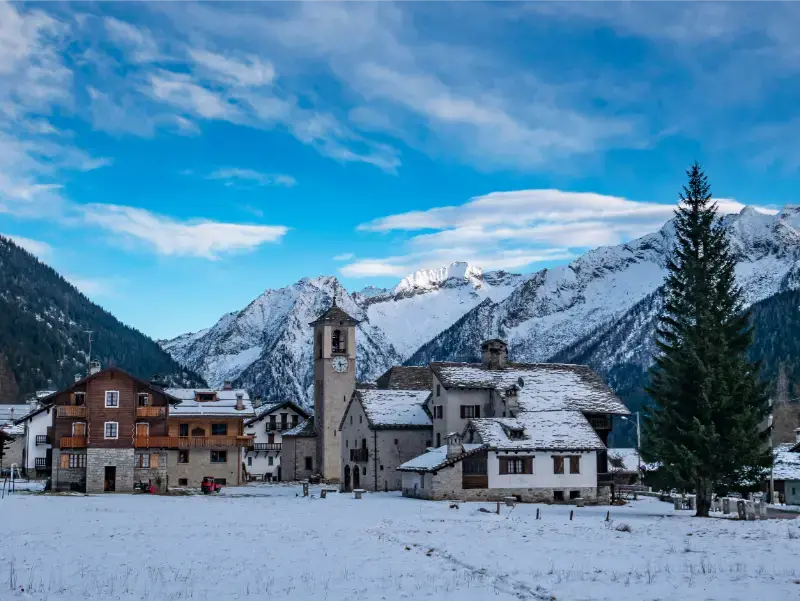
If you arrive for only one day, use Staffa as the cultural start and Pecetto as the outdoor second half. For a longer stay, walking between hamlets reveals more than repeatedly driving. Distances are manageable for active visitors, but elevation and weather still affect comfort.
Walser heritage
Macugnaga’s Walser identity is visible in timber-and-stone houses, settlement form and museum collections. The Casa Museo Walser in Borca recreates aspects of traditional domestic life, while other museums explore mountain history and local livelihoods. These places prevent the destination from becoming only a scenic backdrop for Monte Rosa.
Check seasonal opening hours because small Alpine museums may not operate daily. Even when closed, the architecture of the hamlets rewards respectful observation. Remember that many traditional buildings remain private homes.
Old Church and the ancient lime tree
One of Macugnaga’s symbolic places is the Old Church area, where a Romanesque church dating to the fourteenth century stands beside a monumental lime tree. VisitOssola notes that the tree’s base has a circumference of about seven metres. The setting brings together religion, village memory and the dramatic mountain backdrop.
Visit quietly and look beyond the famous tree. Cemetery, church and historic houses show how community life developed at the foot of a dangerous but economically important mountain environment.
Belvedere lifts and glacier environment
From Pecetto, two chairlifts reach the Belvedere area above 1,900 metres. VisitOssola describes the lifts as access to the Monte Rosa Wildlife Sanctuary and notes their summer role for hikers. The Belvedere glacier and surrounding trails bring visitors much closer to a high-Alpine environment than the village floor.
Lift operation is seasonal and weather-dependent, so verify the exact date. Near-glacier terrain requires caution even when a lift makes access feel easy. Stay on marked routes, respect closures and consider a guide for more demanding paths.
Lago delle Fate and Quarazza Valley
From the Borca area, the Quarazza Valley and Lago delle Fate provide a gentler excursion than high glacier routes. The small lake, forests and paths are popular with families, though popularity can mean crowds in peak summer. Continue beyond the immediate lakeshore if you want a quieter walk and conditions allow.
Combine this excursion with the Walser museum in Borca for a day that balances nature and culture. Wear proper walking shoes; even easy Alpine paths can be muddy after rain.
Winter and summer are different destinations
In winter, Macugnaga becomes a ski base with areas around Belvedere and Monte Moro. VisitOssola notes more than ten kilometres of pistes served by the Belvedere chairlifts, while the broader ski system depends on current snow and lift status. In summer, hiking, wildlife and glacier viewpoints take over.
Do not use a summer guide to plan a winter day or vice versa. Opening hours, road conditions and transport change substantially. Shoulder seasons can be peaceful but also have fewer open lifts and restaurants.
How to reach Macugnaga
The road climbs from the lower Anzasca Valley and takes time despite modest map distances. Drivers should expect mountain bends and slower speeds. Public buses connect the valley with Domodossola on selected schedules, which can make a car-free trip possible if carefully planned.
If using public transport, identify the final return before starting a hike. If driving, avoid a rushed descent after dark when tired. A night in Macugnaga is often a better choice than forcing the village into an already full Lake Maggiore day.
Getting there and getting around
Plan transport around the geography rather than the headline distance. For this trip, the practical mobility profile is: useful but not essential if bus connections align from domodossola. Lake boats, regional trains and buses are valuable where they exist, but seasonal frequency can change the shape of a day. Check the exact date on the official operator website and identify the last useful return before you leave in the morning. If driving, expect waterfront congestion, limited historic-centre parking and mountain roads that take longer than map estimates.
A good rule in this part of Piedmont is to combine one major transport move with one major attraction, not three. Parking, ferry boarding, ticket queues and short walks between stops all consume time. Build twenty to thirty minutes of margin around fixed departures, and never assume a rural or mountain service runs as late as an urban bus.
Best time to visit
Summer for hiking, winter for skiing, late spring/autumn for quieter village stays subject to lift schedules. Weather matters as much as the calendar: a clear day can transform mountain viewpoints, while rain may make gardens vivid but hiking less comfortable. July and August bring the broadest holiday atmosphere but also the most pressure on parking and popular lakefronts. May, June, September and early October are often excellent for travellers who value walking and moderate temperatures.
Use a flexible itinerary when possible. Put the most weather-dependent activity—mountain panorama, boat day or long hike—on the clearest forecast, and keep museums, historic centres or food experiences for unstable conditions. Seasonal attractions should always be rechecked shortly before travel.
Where to stay
Staffa for services; Pecetto for lift access; Borca for quieter Walser atmosphere. Location can be more important than hotel category because evening transport is less frequent than daytime transport. Before booking, check the actual walking route to the station, pier or parking area rather than relying on straight-line map distance.
For current availability you can compare accommodation options on Booking.com. Check parking charges, air conditioning in summer, breakfast hours for early departures and whether reception can handle a late arrival after a ferry or mountain excursion.
Food and local experience
A satisfying meal here can include polenta, mountain cheeses, game dishes, local cakes and refuge meals. Avoid treating food only as fuel between attractions. Lake and mountain destinations have distinct rhythms, and a long lunch or early aperitivo often becomes one of the most memorable parts of the day.
Reserve sought-after restaurants on summer weekends and during festivals, but leave some flexibility for simple cafés, bakeries and markets. If driving after wine, use a designated driver or choose accommodation within walking distance of dinner. Mountain roads and alcohol are a poor combination.
Families, accessibility and pace
Families should choose fewer stops and protect time for beaches, playgrounds, easy walks or unstructured breaks. A day that looks short on a map can feel long once ferries, heat and uphill streets are added. Pushchairs work well on many waterfronts but less well on cobbles, steps and mountain paths.
Travellers with mobility needs should verify gradients, lift availability and accessible routes directly with the attraction. Historic villages and botanical gardens can involve more elevation than expected. Accessibility information changes, so current official advice is more reliable than assumptions based on photographs.
Common planning mistakes
The most common mistake is trying to combine too many famous names because they appear close together. Lake Maggiore, Lake Orta and Ossola contain short map distances but many slow experiences: boats, gardens, winding roads and village walks. A better trip gives each day one clear anchor and two optional additions.
Also avoid relying on old transport articles. Cable cars can close, waterfall flows can be scheduled, boat timetables change and mountain lifts operate seasonally. Save the official links for your exact travel week and recheck them before leaving the hotel.
How much time to allow
For most visitors, 1 full day minimum; 2–3 nights for hiking is realistic. Add time if photography, hiking, gardens or long meals are priorities. Subtract attractions rather than rushing if you arrive late. The most rewarding journeys in this region are usually slower than the number of sights on a map suggests.
For context, compare this plan with Domodossola and Ossola guide, Val Formazza guide, Valle Vigezzo guide, Lake Maggiore and Ossola itinerary. These guides help you decide which nearby destination deserves its own day instead of being squeezed into the margins.
Practical checklist before you go
- Check the exact weather forecast and any local alerts.
- Verify current boat, train, bus, lift or road information for your travel date.
- Reserve timed attractions or popular restaurants when needed.
- Carry water, sun protection and a light waterproof layer.
- Download or screenshot essential tickets and return schedules.
- Leave enough margin for parking, ferry boarding and mountain-road delays.
Useful links for planning
- VisitOssola – Anzasca Valley
- VisitOssola – Macugnaga
- Domodossola and Ossola guide
- Val Formazza guide
- Valle Vigezzo guide
- Lake Maggiore and Ossola itinerary
- Check accommodation options