

Four days is an excellent first-trip length for the Langhe because it allows the region to unfold instead of becoming a race between wine labels. You can dedicate one day to Alba and cultural context, one to the Barolo heartland, one to Monforte and Serralunga, and one to Barbaresco country. The itinerary below assumes a car for flexibility but deliberately limits tasting appointments so each day includes villages, food and landscape as well as wine.
Quick planning overview
| Trip length | 4 days / 4 nights is ideal; 3 nights works with an early arrival |
|---|---|
| Best base | Alba for all four nights or split Alba + Barolo-country village |
| Car | Recommended; hire a driver on tasting-heavy days |
| Tastings | Aim for 3–5 meaningful winery visits across the whole trip |
| Season | Spring, early summer and autumn are especially rewarding |
Before you book
Decide first whether your priority is wine, food, landscape or a balanced mix. That choice determines how many winery appointments you need. Reserve accommodation and dinner before filling every afternoon with tastings, because the best Langhe experience includes unstructured time.
To connect Four Days in the Langhe with the rest of the destination, our Langhe Travel Guide offers a broader overview of what to see and how to get around.
Use our accommodation guide to choose between Alba’s convenience and a vineyard village’s atmosphere.
Day 1 morning: arrive in Alba
Base yourself in Alba and spend the first morning walking the historic centre. Visit churches, browse food shops and understand the town before the countryside. A coffee and simple lunch are enough; save the elaborate meal for dinner.
If you arrive by train, collect a rental car only when you are ready to leave the city centre rather than paying to park it unused.
Day 1 afternoon: Grinzane Cavour
Drive to Grinzane Cavour Castle for the Langhe Museum, Cavour history and UNESCO context. The visit explains why the vineyard landscape is culturally significant and makes a strong introduction before cellar tours.
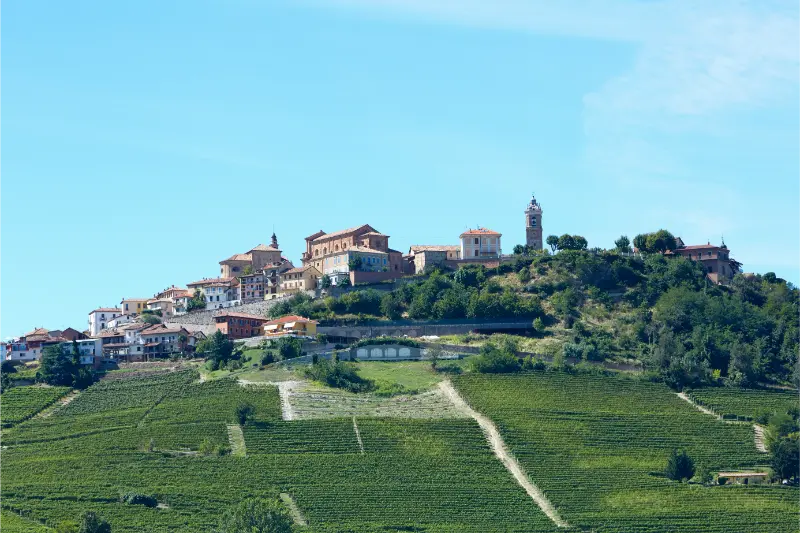
Return to Alba for aperitivo and dinner. Do not schedule a winery on arrival day unless your travel timing is exceptionally reliable.
Day 2 morning: La Morra
Begin early in La Morra at the Belvedere. Walk the historic centre, then descend toward Annunziata or the vineyard landscape. Schedule your first serious winery visit around late morning.
Leave at least two hours between the winery start time and lunch reservation; tastings frequently run longer than expected.
Day 2 afternoon: Barolo
After lunch, continue to Barolo. Visit WiMu if wine history interests you, browse the enoteca and walk the village. A second winery is optional; if the morning visit was extensive, use the afternoon for culture and views instead.
If you plan wine at dinner, return the car to your accommodation first.
Day 3 morning: Monforte
Walk Monforte d’Alba in the morning, climbing into the old quarter and Auditorium Horszowski area. Have coffee and enjoy the village rather than jumping immediately into another cellar.
If Monforte is your overnight base, this is the day to enjoy a long lunch or dinner because you can walk back afterwards.
Day 3 afternoon: Serralunga
Continue to Serralunga d’Alba for the castle, compact village and vineyard views. Book one winery either before or after the castle depending on the official visit schedule.
This day provides a strong contrast between two villages and is more satisfying than adding Barolo again simply because it is famous.
Day 4 morning: Barbaresco
Cross to Barbaresco and climb the tower if open. Visit the regional enoteca or one producer. The eastern Langhe feel different from Barolo country, and the change of scenery helps prevent wine-trip repetition.
Keep the morning flexible if fog blocks the panorama; wine and village exploration still work in poor visibility.
Day 4 afternoon: Neive
Finish in Neive, walking the medieval centre and visiting the clock tower when available. Have a final relaxed lunch or early dinner rather than trying to fit another distant town.
If you must return to Turin or Milan that evening, avoid alcohol and leave before fatigue becomes a safety issue.
Where to place winery tastings
A balanced four-day plan might include one tasting near La Morra, one around Barolo or Monforte, and one in Barbaresco country. A fourth can be added for enthusiasts. More than that begins to dominate the itinerary.
The Langhe wine tasting guide explains reservations, drivers and buying wine.
Food strategy for four days
Choose two significant restaurant meals and keep the rest flexible. Try tajarin, agnolotti, carne cruda, vitello tonnato, local cheese and hazelnut desserts across different meals. In autumn, add white truffle if it fits the budget.
Our Langhe food guide helps spread dishes sensibly rather than ordering every specialty in one evening.
If your trip falls in truffle season
Dedicate more of day one to the Alba fair and move Grinzane to another morning. Book central accommodation and restaurants early. The white truffle season guide explains market events and sensory experiences.
Autumn traffic means fewer stops per day, not more.
Bad-weather alternatives
Use Grinzane, WiMu, enoteche, long lunches and cellar visits when rain or fog reduces outdoor appeal. Do not drive viewpoint loops simply because they were on the plan. The Langhe have enough indoor food-and-wine culture to absorb a poor-weather day.
Keep your clearest forecast day for La Morra and the wider panoramas.
Budget priorities
Spend on experiences that cannot be replicated elsewhere: one excellent winery visit, a special dinner, a driver when needed and well-located accommodation. Save money on free village walks, viewpoints and simple lunches. A premium trip does not require premium spending every hour.
Book refundable accommodation early in high season so you preserve flexibility without accepting poor locations.
Who this itinerary suits
This plan is designed for first-time visitors who enjoy wine but do not want four days of continuous tastings. Experienced collectors can replace museum and village time with additional producers, while families can replace tastings with castles, short walks and food experiences.
The framework is deliberately modular: remove any village that feels like obligation and spend longer where you are happiest.
Packing for four days
Bring layers, shoes suitable for cobbles and vineyard paths, a small umbrella or shell, and space for food or wine purchases. In summer add sun protection and water; in autumn add footwear that tolerates mud. Smart-casual clothing is enough for most tastings and restaurants unless a venue states otherwise.
Extending to five or six days
With extra time, add a true rest day or expand into Roero rather than adding more appointments to existing days. Another option is one dedicated walking or cycling day. The region becomes more rewarding as pace slows, so an extra night should create space rather than simply enlarge the checklist.
How much time should you leave?
Allow more time than the map suggests. Parking, walking, meals and conversations are the substance of a Langhe trip, not delays to remove. A half day should contain one principal village or attraction plus at most one scheduled experience.
Do you need advance reservations?
Reserve wineries, important restaurants and any timed museum or castle visit that matters to you. Leave cafés, viewpoints and ordinary village walking unscheduled so the day can absorb weather and traffic changes.
Can you visit without drinking wine?
Yes. The Langhe are a cultural landscape of villages, castles, food and agriculture. Wine explains much of the territory but does not need to be consumed for the trip to be worthwhile.
Planning around meal times
Small Langhe villages do not operate like large cities with continuous service. Lunch and dinner reservations shape the day, and kitchens may close between services. Put winery visits on either side of meals rather than assuming you can eat whenever a tasting finishes. This also creates natural breaks between driving, walking and alcohol.
What to do if plans change
Weather, traffic, harvest work and opening schedules can change a day quickly. Keep one unscheduled village or viewpoint as a flexible option and save official links in your phone. If a winery cancels or a monument is closed, use the extra time for a longer lunch, an enoteca visit or a walk instead of trying to replace the reservation at the last minute.
Photography and private property
The vineyard landscape is visually open but much of it is private agricultural land. Take photographs from public roads, village terraces and marked paths, never from planted rows unless the owner explicitly permits access. Drones require separate legal and local checks and can disturb residents and farm work, so do not assume a scenic rural setting means unrestricted flying.
Mobile coverage and practical backups
Coverage is generally adequate but can weaken in valleys, inside thick-walled buildings and on minor roads. Download maps, keep addresses and booking confirmations available offline, and carry a small power bank on full sightseeing days. Paper or screenshot backups are especially useful when a timed visit depends on finding a rural entrance rather than a prominent city landmark.
How this stop fits a longer Piedmont trip
The Langhe work well after Turin because the rhythm changes from museums and boulevards to villages, vineyards and long meals. Avoid treating the region as a same-day extension of city sightseeing if wine and food are priorities. Two or more nights allow you to slow down, reduce evening driving and understand why these hills are a destination rather than only a collection of famous bottles.
Useful links for planning
- Langhe travel guide
- Where to stay in the Langhe
- Official Langhe Monferrato Roero tourism board
- Check accommodation options
Last updated: October 17, 2026