
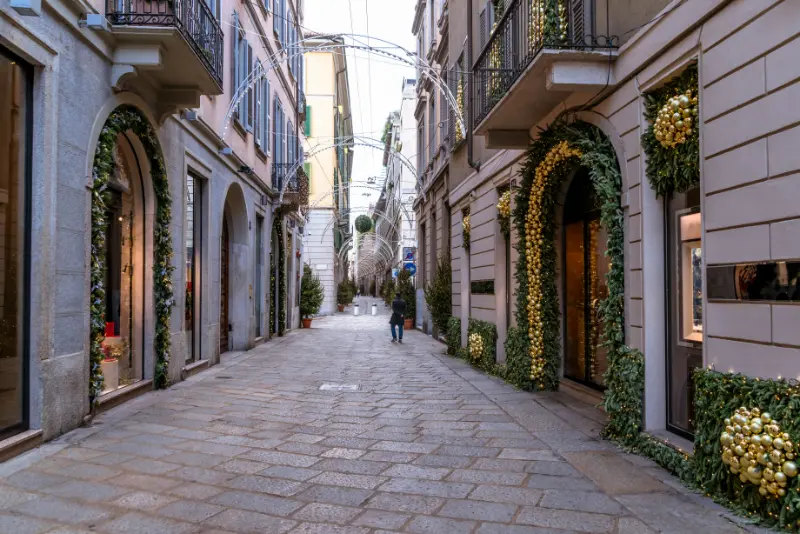
Milan in winter can be atmospheric, cultured and easier to explore than during peak summer, but the season is not automatically snowy or postcard-perfect. Cold humidity, fog, rain and short daylight are more common planning concerns. Christmas adds lights, markets, Sant’Ambrogio traditions and panettone, while January and February can offer calmer museums outside major events.
What winter weather actually feels like
Temperatures are usually cool rather than Arctic, yet humidity and wind can make a modest number feel colder. Rain and fog are possible, snow is occasional and cannot be promised. Pavements, tram tracks and stone surfaces become slippery.
If this is your first visit to the area, the Milan Travel Guide explains the main sights and how to fit them into one trip.
Check the short-range forecast, not a monthly average alone. Plan a museum or long lunch near every outdoor cluster so the day can change without a cross-city journey.
What to pack
Bring a water-resistant outer layer, warm mid-layer, compact umbrella, scarf, gloves and shoes with grip. Indoor spaces and metro cars can be warm, so removable layers work better than one enormous coat. Pack a foldable bag for wet accessories.
Churches remain cool and require respectful clothing. A hat helps on the Duomo terraces, but strong wind or weather can affect rooftop access. Confirm conditions before building the day around a view.
Daylight should control the itinerary
Use late morning and early afternoon for Parco Sempione, Porta Nuova, architecture walks and canal photography. Move museums, shopping and aperitivo into the darker hours. A winter itinerary that starts outdoors at 15:30 wastes the best light.
The two-day Milan itinerary can be adapted by moving Brera’s streets earlier and Museo del Novecento later. Keep travel buffers because rain slows walking.
Early December and Sant’Ambrogio
Milan’s patron saint is celebrated on 7 December, and the surrounding period traditionally includes the Oh Bej! Oh Bej! fair and the opening of La Scala’s season. Exact locations, dates, access and security arrangements must be checked each year.
This is culturally important and busy. Book accommodation early, expect crowded central transport and understand that a traditional fair changes over time. Attend for atmosphere and local context rather than assuming every stall sells unique Milanese crafts.
Christmas markets
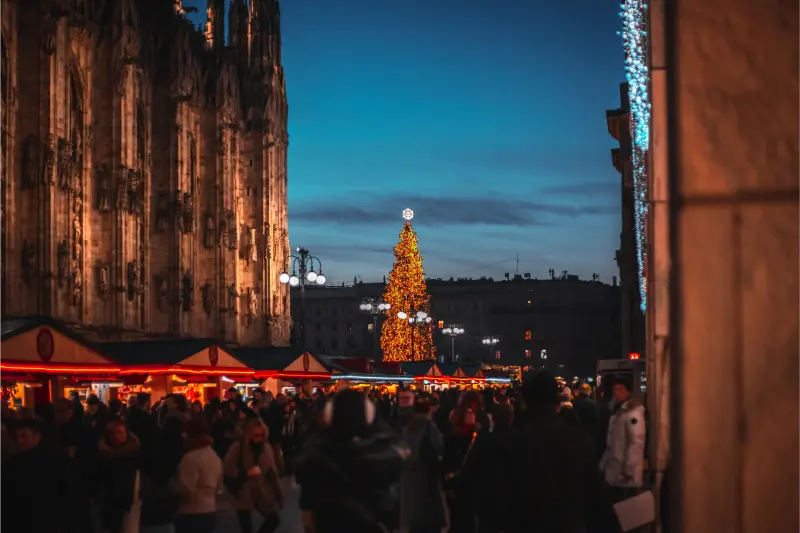
Markets appear in central and neighbourhood locations, with food, gifts and international stalls. Programmes change annually, and pages from the previous year often remain visible online. Use current YesMilano, municipal and organiser listings.
Set a spending plan and compare mass-produced souvenirs with local food or design. Keep valuables secure, carry limited cash and check whether edible products can travel to your home country.
Lights, trees and evening walks
Piazza del Duomo, Galleria Vittorio Emanuele II, Corso Vittorio Emanuele II and other shopping streets receive seasonal lighting and installations. Creative Christmas trees can appear across districts, but sponsors and locations change.
Walk after dusk, then enter a museum, café or dinner reservation. The Galleria is especially crowded at popular photo times; stand aside and do not block circulation. Decorations are best treated as a route, not a single crowded viewpoint.
Panettone in its home city
Panettone is one of Milan’s defining Christmas foods. Compare classic versions with contemporary variations, but freshness, butter, candied fruit and fermentation matter more than extravagant packaging. Artisan products can be expensive and large.
The Milan food guide covers local dishes. Ask about shelf life and transport packaging. A slice in a bakery or café may be wiser than carrying a kilogram through the rest of Italy.
Museums are a winter strength
Brera, Museo del Novecento, the science museum, castle collections, Triennale and house museums make Milan resilient in bad weather. Monday closures and holiday hours require careful planning, while temporary exhibitions can sell out during school breaks.
Use the best museums in Milan guide to choose by interest. Keep one museum flexible so it can absorb the wettest half-day.
La Scala and winter performance culture
Opera, ballet and concerts suit winter evenings, but performance tickets differ completely from museum admission. Check the official calendar, sale conditions, seat visibility and dress expectations. Returns and exchanges can be restrictive.
The La Scala guide explains museum and performance options. A museum visit is not a substitute for a show, and a show should not be added casually after an exhausting day.
Duomo terraces in winter
Clear winter air can produce excellent views, while fog, rain, ice or wind can reduce the experience or affect access. Book a flexible time when possible and check notices. Lift tickets still involve uneven surfaces and some stairs.
Visit the interior even if the rooftop changes. The Duomo guide explains the components, dress requirements and realistic timing. Wear gloves that allow you to handle tickets securely.
Navigli in cold weather
The canals remain attractive, but a long exposed evening walk may not suit rain or fog. Arrive before sunset, choose a shorter loop and reserve an indoor meal. Outdoor aperitivo seating can use heaters, yet comfort varies.
The Navigli guide helps identify streets and transport. Do not choose a canal hotel solely for winter atmosphere if early airport transfers require awkward connections.
Winter with children
Alternate the science museum, Natural History Museum, aquarium or planetarium with short park visits. Seasonal villages and skating rinks are temporary, may cost extra and require current-year schedules. Age and height restrictions can apply.
The family Milan guide offers year-round options. Carry spare gloves and socks, and avoid waiting outdoors for an event that has not been confirmed.
January sales and quieter weeks
Winter sales usually begin according to regional rules, drawing crowds to central retail streets. Verify official dates, return policies and the exact discount. Later January can feel calmer once holiday travel decreases, though trade fairs and fashion events can reverse that.
The shopping guide compares districts. Do not let sale hunting consume the daylight you wanted for architecture.
February and major events
Fashion, football, fairs and other events can raise hotel prices and crowd transport. Search your exact dates before booking. Temporary security zones or construction may alter normal routes.
Milan hosted the 2026 Winter Olympics with Cortina and other locations, but future winter visitors should not rely on event-specific facilities or schedules remaining unchanged. Use current official city information.
Holiday closures
Christmas Day, New Year’s Day and other holidays can change museum, restaurant and transport schedules. Some attractions close; others open for limited hours. A booking platform showing a date does not guarantee every component is operating normally.
Reserve important meals, buy simple food in advance and confirm airport transport. Apartment guests should remember that supermarkets may close earlier than expected.
A two-day winter plan
Day one: Duomo interior and terraces if conditions allow, Galleria, Brera and an afternoon art museum, followed by central lights. Day two: Last Supper, Sant’Ambrogio or the science museum, castle courtyards and an early evening in Navigli.
If rain dominates, replace parks with Triennale, ADI or house museums. If sunshine appears, protect it for Porta Nuova, Parco Sempione or the canals rather than remaining inside because a schedule was printed weeks earlier.
Transport in bad weather
Metro stations reduce exposure, while trams and buses can be delayed by traffic or disruption. ATM publishes current service information and ticket rules. Save routes offline but check live notices.
Allow extra time for airport travel during poor weather or holiday traffic. The airport transfers guide compares Malpensa, Linate and Bergamo connections.
Where winter planning usually goes wrong
The most common mistake is filling every hour with reservations because indoor attractions seem weatherproof. Coats, cloakrooms, wet umbrellas and crowded holiday streets slow movement, while darkness arrives before many visitors expect. Keep one unbooked block each day and choose a café, church or small museum near the previous stop rather than crossing Milan whenever the weather changes.
Another mistake is expecting the Christmas atmosphere to continue unchanged throughout winter. Decorations and markets are seasonal, often ending around Epiphany, while January and February have a different character shaped by sales, exhibitions, business events and ordinary city life. Confirm the dates that matter and appreciate the quieter season on its own terms.
| Typical challenge | Cold humidity, fog, rain and limited daylight |
|---|---|
| Seasonal period | Sant’Ambrogio in early December through Epiphany |
| Strength | Museums, opera, food and illuminated central streets |
| Essential habit | Verify annual event dates and holiday closures |
Tours and tickets: when booking adds value
Seasonal food walks, theatre visits and city tours can be excellent in winter, but confirm indoor time, cancellation rules and holiday schedules. Temporary Christmas attractions require current-year information rather than last season’s programme.
Where to stay for this plan
Choose a short walk from a metro station and avoid accommodation reached only by multiple outdoor connections. Brera, the centre, Porta Venezia, Cadorna and well-connected areas near Centrale can all work according to budget and arrival route. Compare hotels and apartments in Milan before choosing a neighbourhood.
Useful official sources
Final planning advice
Winter Milan is rewarding when you plan for the season rather than expecting a summer itinerary with a coat. Use daylight for parks and architecture, evenings for museums, theatre and food, and keep annual Christmas events flexible until official dates are published.
Last updated: October 17, 2026