
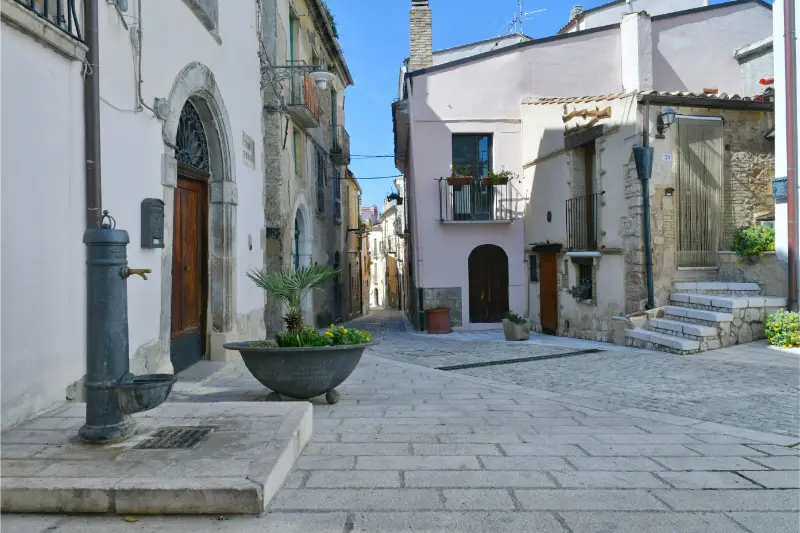
Molise is a good region for a trip built around a few places you can enjoy properly: a Roman town at Sepino, the Samnite sanctuary of Pietrabbondante, bell-making in Agnone and seaside evenings in Termoli. Its appeal comes from the variety between those stops. You can spend one morning among ancient streets and another watching a craft explained by the people who still practice it, with village lunches and mountain views between them.
For a first visit, allow five to seven days and divide your accommodation between the interior and coast. Three days also work if you choose one area. A car gives the broadest access, while a stay in Termoli is particularly practical by train. This Molise travel guide explains how to make those choices, including the differences between its archaeological sites, the most useful bases and the visiting arrangements that can shape your itinerary.
Understand the region in three parts
For a closer look at this side of the destination, read our Campobasso Travel Guide.
For a closer look at this side of the destination, read our Isernia Travel Guide.
Think of Molise as an Adriatic coast, a central inland area around Campobasso and a western or northern interior around Isernia and Agnone. This is a planning framework rather than an administrative division, but it helps prevent unnecessary driving. An accommodation search covering the whole region can produce properties that suit quite different trips.
Termoli is the clearest coastal base. Campobasso works for the regional capital, Sepino and inland castle outings. Isernia places you well for its museums and the upper Volturno area, while Agnone suits a slower stay focused on the high country and craft traditions. None of these automatically replaces the others: a seaside room is convenient for swimming, but less useful for repeated mountain mornings.
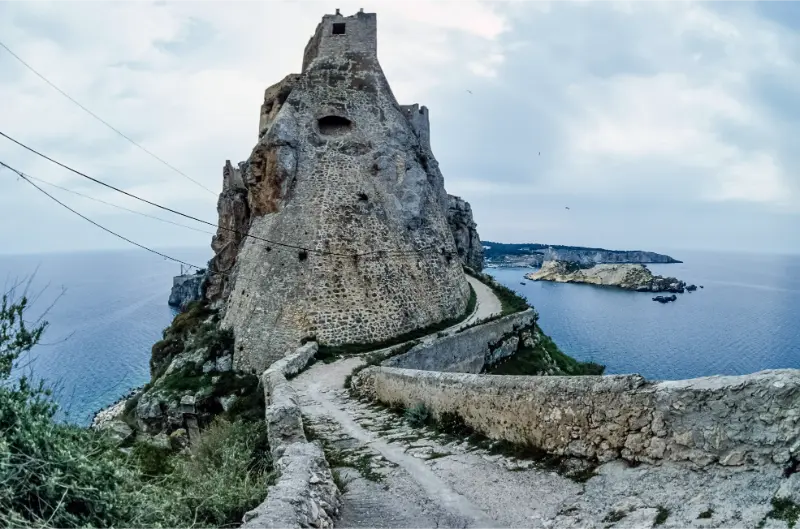
Look at road routes before deciding that two places are close. Hills, valleys and bends affect the journey, and a map's straight-line distance says little about the approach to a village. Avoid a plan that sends you from the coast to the far interior every day. Two well-chosen bases generally give you more time at the sights than one supposedly central property with long daily transfers.
The strongest places for a first visit
For a closer look at this side of the destination, read our Sepino and Saepinum Guide.
For a closer look at this side of the destination, read our Venafro Travel Guide.
Sepino, often searched as Altilia or Saepinum, provides the most accessible introduction to an ancient urban layout. Its gates, streets and public spaces can be understood together, even if you have never studied Roman history. The modern town of Sepino is a separate stop, so allow for the transfer if you want to visit both.
Pietrabbondante offers a different kind of archaeology: a Samnite sanctuary rather than another Roman town. Its theater and temple setting make more sense when you learn about their religious and public role. Agnone changes the theme again, with the Marinelli bell museum and foundry as a booked visit, followed by the historic town and local food.
Campobasso and Isernia deserve more than being treated as roads between smaller attractions. The former gives you an uphill old town and museums; the latter combines its historic center with a major Paleolithic museum. Finish with Termoli for a walk through the old seaside quarter, the cathedral area and time on the shore. Together these places create a balanced first trip without requiring a new hotel every night.
How many days do you need?
For a more detailed plan, our Scapoli Travel Guide develops this part of the journey step by step.
For a long weekend, choose Campobasso and Sepino for culture, Isernia and the western interior for museums and landscapes, or Termoli for a coast-based break. A brief trip improves when it has one clear center of gravity. Attempting all the major stops in three days usually turns the region into a driving exercise.
Five days allow one inland base and a couple of nights on the coast. Seven days give room for Agnone and Pietrabbondante, as well as an unhurried day around Isernia or the upper Volturno. Your interests should determine the distribution: archaeology lovers need longer at the outdoor sites, while families may prefer shorter visits and more time in Termoli.
An extra night in the interior can be more useful than adding another destination. It gives you flexibility for an appointment at the foundry or a weather-dependent outdoor visit. If you arrive late, count that evening as settling in rather than as a full sightseeing day. The separate seven-day itinerary provides a suggested order with grouped stops and alternatives.
Arriving and traveling without a car
For a closer look at this side of the destination, read our Larino Travel Guide.
Termoli sits on the Adriatic railway corridor and is the simplest starting point for a coastal rail trip. Check Trenitalia's current journey planner for your date, including the specific train's stopping pattern and any changes. Travel to the inland towns needs its own check: scheduled works and replacement buses can affect a route that appears straightforward on an older map.
For flying, compare the full onward journey from the airport that best fits your itinerary. Airports in neighboring regions may serve as gateways, but an attractive flight fare can lose its advantage if the transfer is awkward. Check collection hours when renting a car, especially after a late arrival, and consider spending the first night near the arrival point if that makes the trip easier.
A car-free holiday is entirely possible when you choose its shape carefully. Termoli offers town walks, beaches and rail travel; an inland city stay can focus on museums and local streets. Remote sanctuaries, lakes and small villages may require an arranged excursion or taxi. Verify the last connection as well as the outward service before booking an activity outside your base.
Driving and choosing your bases
A car works best for a circuit, with Campobasso, Isernia or Agnone followed by Termoli. Reserve accommodation with clearly explained parking. In historic centers, ask where you may unload and how far you must carry luggage; a building can be close to the main square but reached by steps or a steep lane.
Avoid using the smallest available road simply because navigation predicts a few minutes saved. A wider approach may be easier for an unfamiliar rental car, particularly at night. Give yourself time to find village parking and walk to a monument. Rural driving and an interior visit should not be scheduled back-to-back with no margin.
For a week, two or three bases are enough. Campobasso plus Agnone or Isernia plus Termoli covers different parts of the region, but the right combination follows your priorities. If you choose a rural property, check dinner arrangements and the actual access road. A peaceful setting may involve driving for every meal, which changes how relaxing the stay feels.
When to visit Molise
For a more detailed plan, our Capracotta Travel Guide develops this part of the journey step by step.
For a more detailed plan, our Pietrabbondante Guide develops this part of the journey step by step.
Spring and fall work well for towns, archaeological sites and a driving itinerary. Days are often easier to organize without putting a long outdoor visit in the hottest part of the afternoon. Weather still varies by elevation, so carry a layer and keep one indoor option available.
Summer favors Termoli and the coast, with earlier starts for exposed ruins. In the interior, a terrace or garden can make an accommodation particularly pleasant, but ask about room cooling rather than assuming a mountain address guarantees comfort. Book popular dates and reserved activities ahead. Small-scale visitor services can fill even where the surrounding region feels quiet.
Winter is a different trip. Choose town museums, a booked craft visit and suitable accommodation with heating, then assess any high-country drive for current weather. A summer hiking description does not establish a safe winter route. Religious and traditional events can be worth traveling for, but use the current local calendar; their dates and arrangements should not be inferred from a previous year's program.
What to book before the journey
Book accommodation first around the places that matter most, then reserve the activities with a fixed departure. The Marinelli visit in Agnone operates as a guided appointment, so it should have a confirmed place in your schedule. A lunch reservation may also be useful in a small village when you are traveling outside busy visitor periods.
For archaeology, consult the site authority's latest notices before buying a tour or choosing an entrance. Sepino's official 2026 information describes works, temporary free admission and an altered approach. That is more useful than relying on a permanent-looking price or map pin from an older travel page. Ask which areas are available if your interests depend on a particular feature.
Leave flexible time between bookings. One scheduled visit in a morning gives the rest of the day room to breathe; several appointments in different towns can make minor delays difficult to absorb. For a boat trip from Termoli, verify the return and operator's arrangements for disruption before building a flight or long-distance train connection around it.
Food and a realistic spending plan
To explore local dishes and food stops in more detail, use our Agnone Travel Guide.
Food is a good reason to slow down. In Agnone and the high country, look for local cheeses and dishes reflecting the pastoral landscape. On the coast, seafood offers a different meal. Cavatelli and seasonal preparations make useful starting points, but ask what the kitchen actually serves rather than expecting every regional specialty in one restaurant.
Compare accommodation on the total cost: room, parking, breakfast, any tourist tax and the transfers you will need. A lower rural room rate may create more driving, while a central room can make meals and evening walks easier. The best value is often a location that fits your daily routine, not the lowest headline price.
For sightseeing, keep a separate allowance for museum admission and guided services. A site's free entry does not necessarily include a professional explanation or transport. Buy food and craft items that you can keep and carry properly; a large cheese or fragile souvenir is less attractive if it spends the afternoon in an overheated vehicle.
Traveling with children and different walking needs
For more detail on the landscape and possible routes, see our Castel San Vincenzo.
For more detail on the landscape and possible routes, see our Frosolone Travel Guide.
Alternate the kind of activity. A morning at Sepino can be followed by a short village lunch, while a foundry visit can be paired with a walk and a food stop. Children usually gain more from one clear question or object than from a long succession of monuments. Ask guides about age suitability and the practical length of the visit.
Outdoor ruins can involve uneven paving, grass, loose stone and limited shade. Request a route appropriate to your group, particularly during works or after wet weather. Historic towns can also have slopes and stairs. Check the specific accommodation entrance and museum route rather than relying on a broad accessible label.
If part of your group wants mountain walking and another part prefers culture, choose a base with worthwhile town activities nearby. Separate outings can work well when the transport and meeting time are agreed. Nobody needs to complete a difficult trail for the trip to feel successful; the region offers substantial alternatives in museums, workshops and its public streets.
A good first-trip balance
Choose two archaeological experiences that differ, one craft appointment, a town day and time on the coast. Add the upper Volturno or another village only when the schedule leaves room. This gives you a picture of Molise through several kinds of place, with enough time to understand each.
Before departure, save accommodation directions, reserved meeting points and the essential return journeys. Keep official museum and operator contacts available for changes. A printed note with a rural address can also help when phone reception is unreliable.
The region is most rewarding when your plan matches its scale: a few strong stops, meals with time to spare and drives that follow a sensible direction. Start with the experiences you most want, choose accommodation around them and let smaller discoveries fill the gaps.
Plan at a glance
| Stop or choice | Why choose it | Before you go |
|---|---|---|
| Three days | One base and a focused area | Coast, central interior or western museums |
| Five days | Interior plus Termoli | Choose one inland base |
| Seven days | A broader circuit | Group sites and reserve guided appointments |
| Without a car | Termoli or a city-based stay | Check final connections for rural outings |
Location map
Use this map for orientation in the region and its visiting areas. Check actual road connections, site entrances and official trail information before planning a journey or walk.
Open the location in Google Maps
Frequently asked questions
How long should a first Molise trip be?
Five to seven days allow a useful inland-and-coast combination. Three days work well when you choose one area and a focused excursion.
Do I need a car?
A car gives the most flexibility for villages and archaeological sites. A stay in Termoli or an inland city can also work with verified transport and selected outings.
Which base should I choose first?
Choose Termoli for the coast, Campobasso for central cultural outings, Isernia for the western interior or Agnone for craft and high-country time.
Where to stay
If choosing a base is the next step, our Termoli Travel Guide compares the options in more detail.
More Molise ideas
- 10 Best Things to Do in Molise: Ancient Sites, Crafts and Coastal Days
- Where to Stay in Molise: Best Bases for Coast, Culture and Mountain Towns
- Seven Days in Molise: A Practical Road Trip from Ancient Towns to the Coast
- Abruzzo, Lazio and Molise National Park: Where to Go and How to Plan Your Visit
Visitor information
For a more detailed plan, our Gambatesa Travel Guide develops this part of the journey step by step.
- Official regional trip planning
- Sepino park visitor information
- Agnone visitor information
- National museums and sites
- Current train journeys
Last updated: October 17, 2026