
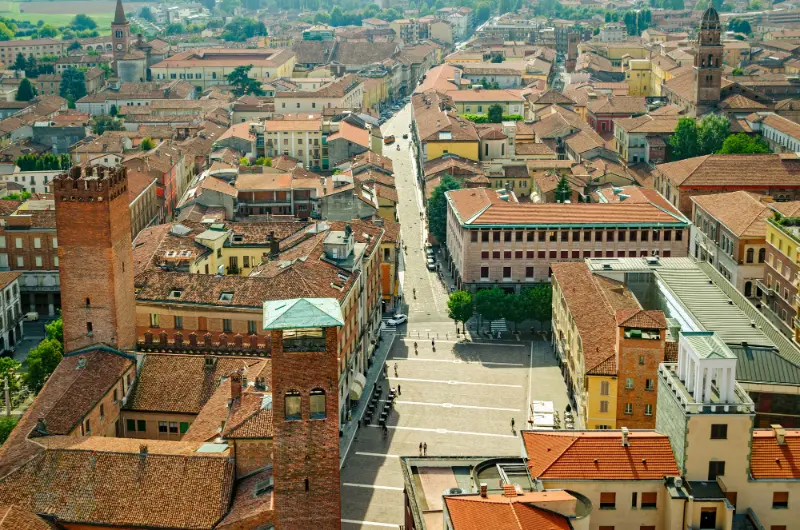
One day in Cremona is enough to understand the city if you focus on its three defining themes: the medieval centre, violin-making and food. The distances are short, so a good itinerary is built around opening hours and energy rather than transport.
This route assumes a full day, roughly from 09:00 to 19:00. If you are arriving from Milan, adjust the first and last sections to the actual Trenord timetable and never book a timed activity immediately after your scheduled train arrival.
If you are planning several stops rather than just One Day in Cremona, start with the Cremona Travel Guide for a sensible route and transport advice.
09:00 – Arrive and walk to Piazza del Comune
From Cremona station, walk toward the historic centre rather than taking a taxi unless mobility or luggage makes it necessary. The approach helps you understand the city’s scale and gives cafés time to open if you need breakfast.
If you are staying overnight, leave luggage before sightseeing. Carrying a suitcase through the Torrazzo or museum security is unnecessary.
09:30 – Piazza del Comune orientation
Spend at least fifteen minutes outside before entering the Cathedral. Identify the Torrazzo, Baptistery, Palazzo Comunale and Loggia dei Militi. The compact square is the historic map for the rest of the morning.
Take wide photographs now, before the square becomes busier, but do not spend the best morning light only behind a camera.
09:45 – Cremona Cathedral
Enter the Cathedral and focus on the fresco cycle and the spatial effect of the nave. Because it is an active church, services can alter this plan; if one is under way, reverse the order with the tower and return later.

Keep the visit around thirty to forty minutes on a one-day itinerary. Art specialists can spend longer, but that should come from another activity rather than from lunch or the violin museum.
10:30 – Torrazzo and Vertical Museum
Allow roughly ninety minutes for the tower, including ticketing, exhibition rooms, the stairs and views. The Vertical Museum explains the astronomical clock and the measurement of time, so the climb is more than a viewpoint.
If stairs are unsuitable, replace the tower with the Baptistery and Museo Diocesano rather than waiting in the square while companions climb.
12:00 – Baptistery or coffee break
If you still have energy, visit the Baptistery. Otherwise use this half hour for coffee and a short walk through surrounding streets. The one-day itinerary should not become a race through every ticketed door.
A short pause now makes the afternoon museum experience much better.
12:45 – Traditional lunch
Choose a restaurant within the centre and order one or two Cremonese specialties. Marubini are a good first choice, while mostarda makes more sense beside meat or cheese than tasted alone. Save torrone for coffee or later shopping.
Allow around an hour. A three-hour formal lunch would force you to shorten the Museo del Violino, while fast food misses an important part of the city.
14:15 – Walk to Piazza Marconi
The walk to the Museo del Violino is short. Use it to notice luthier workshop signs and ordinary streets beyond the cathedral square. Do not enter workshops without an appointment.
Arrive a little before your intended museum time so tickets and cloakroom procedures do not eat into the final rooms.
14:30 – Museo del Violino
Give the Museo del Violino at least ninety minutes. Follow the story from construction and historic makers to collections and contemporary craftsmanship instead of rushing directly to Stradivari.
If a historic instrument audition is scheduled, centre the afternoon on that event and adjust lunch accordingly. Live sound is worth more than squeezing in another minor museum.
16:30 – Historic-centre walk and food shopping
After the museum, walk without a strict monument list. Look for specialist food shops, bakeries and streets connected with violin-making. This is the right moment to buy torrone or mostarda if you want edible souvenirs.
Check baggage restrictions before buying large glass jars or heavy gift boxes for a flight.
17:15 – Choose one final experience
You have three good options: Museo Civico Ala Ponzone for art, a walk toward the Po for outdoor space, or a longer aperitivo in the centre. Choose one based on weather and interest rather than trying to do all three.
On a Monday, museum closures may narrow the choice, which is another reason to check the weekly schedule before your trip.
18:30 – Aperitivo or early dinner
If returning to Milan the same evening, eat early enough to leave a comfortable margin before the train. If staying overnight, slow down and make dinner the final cultural experience rather than a logistical obstacle.
Use our Cremona food guide to choose dishes you did not try at lunch.
How to adapt the itinerary from Milan
Trenord currently lists direct services between Milano Centrale and Cremona taking about 68 minutes. Aim for a morning train that leaves enough margin before any booked museum or audition and identify at least two reasonable return options.
Do not plan around the last train unless absolutely necessary. Regional disruption, a long dinner or a delayed museum visit is easier to absorb when you have a backup service.
If it rains
Keep the Cathedral and Museo del Violino as anchors, add Ala Ponzone and shorten outdoor photography. The Torrazzo can still be worthwhile if open, but the upper view may be limited by low cloud and wet steps demand extra care.
Carry a compact umbrella rather than a large one that becomes awkward in museums.
If it is very hot
Climb the tower early, take a longer shaded lunch and use the museum during the hottest part of the afternoon. The Po Valley can feel humid, and a one-day itinerary becomes unpleasant if every break is sacrificed for sightseeing.
Carry water and refill where permitted. Do not wait until the tower stairs to realise you are dehydrated.
One day with children
Choose the Torrazzo or the full violin museum as the main structured activity, not both at maximum length. Children often respond well to the tower’s clock and science displays, while the museum can work if you give them visual tasks and breaks.
Keep lunch flexible and include outdoor time. The compact centre makes it easy to shorten the plan without feeling that the day has failed.
What to skip on a first day
Do not prioritise remote minor sights, multiple secondary museums or a speculative workshop visit. The core experiences already fill a satisfying day. A first trip becomes stronger when you give them enough time.
If you leave wanting more, use our two-day itinerary for a return or an overnight extension.
Final planning advice
A successful one-day Cremona trip is not measured by the number of doors you enter. See Piazza del Comune carefully, climb or interpret the Torrazzo, spend meaningful time with the violin tradition and eat something genuinely local. Those four experiences give you a coherent picture of the city without turning a compact destination into an exhausting checklist.
If you arrive after 11:00
Skip one secondary element rather than trying to compress the full morning. Visit the Cathedral, choose either the Torrazzo or Baptistery, have lunch and protect the violin museum. The museum and historic square matter more than maintaining the exact clock times of this itinerary.
If you miss the train home
Check later services in the official journey planner rather than relying on search-engine snippets. If no practical train remains, use a licensed taxi only after understanding the substantial cost to Milan, or book a local room rather than improvising an unsafe journey.
Planning the visit without rushing
For one day in cremona, leave buffer time between major activities. Cremona’s compact map can create the illusion that every attraction fits into a few hours, but museum interpretation, church access, meals and ordinary pauses all take real time. Check official opening information on the morning of the visit, keep one optional activity that can be dropped, and avoid making the final train or closing time the only workable outcome. This approach produces a more resilient itinerary when a service, queue, weather change or longer-than-expected meal alters the schedule.
Checking current information before the visit
For One Day in Cremona, recheck the official source within a few days of travel rather than treating any timetable, ticket price or access rule as permanent. Cremona’s cultural sites can change hours for exhibitions, religious services, maintenance, performances and public holidays. Save the relevant official page on your phone, note the last admission rather than only the closing time, and take a screenshot if you expect poor mobile coverage. If a particular experience is the reason for your trip, such as an instrument audition, tower climb or workshop appointment, confirm that item first and build the rest of the day around it. This is more reliable than creating a perfect-looking itinerary based on several independent opening times that may not align.
Pacing, accessibility and backup choices
A good one day in cremona plan should include one activity that can be dropped without ruining the day. Historic streets, church access, museum security, stairs, meals and regional trains all introduce small delays that accumulate. Travellers with mobility, sensory or stamina concerns should contact the attraction or accommodation directly for the exact route they need, because historic buildings can have partial rather than complete accessibility. Families should alternate concentrated indoor visits with food or outdoor time. In poor weather, substitute another museum or café stop; in extreme heat, move the most physical activity to morning. The compact centre makes these changes easy, so flexibility is an advantage of Cremona rather than a sign that the itinerary has gone wrong.
Last updated: October 17, 2026