
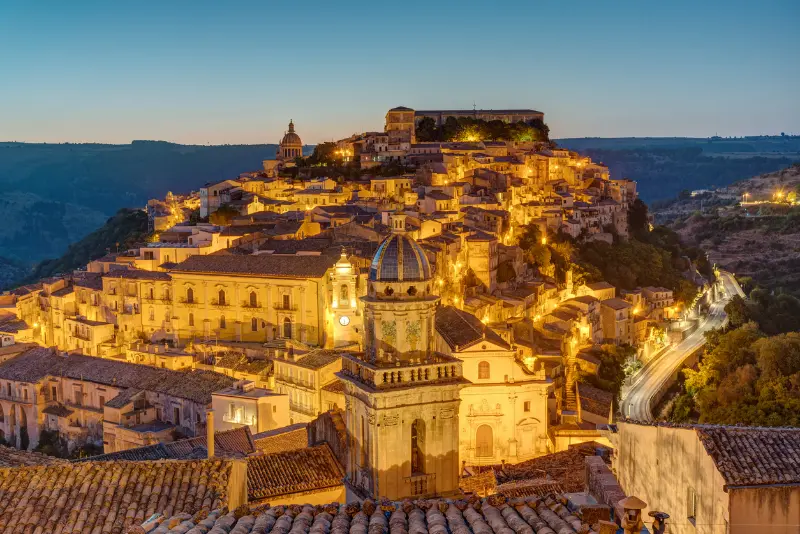
Ragusa’s drama comes from topography as much as architecture. The city has two main urban identities—Ragusa Superiore and the older Ibla—separated and connected by slopes, stairways and views that make the movement between them part of the visit.
Ibla is one of the most atmospheric Baroque centres in Sicily, but the best visit also acknowledges upper Ragusa. The contrast between the two helps explain how the city rebuilt after the 1693 earthquake. The practical goal is to decide what deserves your time, where the logistics become inefficient and how this stop fits into a wider Sicily route.
If Ragusa Travel is part of a longer route through Sicily, our Sicily travel guide is a useful starting point for choosing the next stop.
Quick planning summary
| Best for | Baroque architecture, dramatic hill-town views, walking and travellers building a Val di Noto road trip |
|---|---|
| Time needed | One full day; one night is worthwhile if you want both Ragusa Superiore and Ibla without rushing. |
| Car | Useful for the wider area, but park and walk within each urban section rather than driving constantly between sights. |
| Best seasons | April–June and September–October are excellent for sightseeing; summer needs earlier starts, shade and realistic heat planning. |
| Top planning rule | Spend most of your time in Ibla, but begin or end with a viewpoint that shows the full urban landscape. Do not waste energy moving the car for every short section. |
Is Ragusa worth visiting?
Yes, especially for Baroque architecture, dramatic hill-town views, walking and travellers building a Val di Noto road trip. Ibla is one of the most atmospheric Baroque centres in Sicily, but the best visit also acknowledges upper Ragusa. The contrast between the two helps explain how the city rebuilt after the 1693 earthquake.
My priority: Spend most of your time in Ibla, but begin or end with a viewpoint that shows the full urban landscape. Do not waste energy moving the car for every short section. Sicily rewards travellers who leave enough margin for parking, heat, opening times, ferries and long meals. The experience usually improves when one major stop is removed from an overloaded day.
What to see and do
Ragusa Ibla
The lower historic centre is the main reason to visit: narrow streets, honey-coloured stone and Baroque façades unfold across a hill rather than along one straight axis.
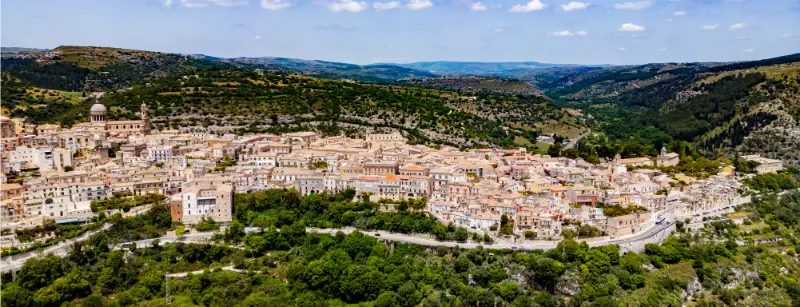
Allow enough time to understand this stop rather than reducing it to a photograph. Where admission, guided access, ferries, volcanic conditions, protected landscapes or worship schedules are involved, verify the current situation close to your travel date.
Duomo di San Giorgio
The cathedral and its sloping piazza form Ibla’s visual heart. The approach through surrounding streets makes the monument more impressive than arriving only for the façade.
Allow enough time to understand this stop rather than reducing it to a photograph. Where admission, guided access, ferries, volcanic conditions, protected landscapes or worship schedules are involved, verify the current situation close to your travel date.
Giardino Ibleo
The gardens at the eastern end of Ibla offer shade, views and a useful break from stone streets. They are especially valuable in warm weather.
Allow enough time to understand this stop rather than reducing it to a photograph. Where admission, guided access, ferries, volcanic conditions, protected landscapes or worship schedules are involved, verify the current situation close to your travel date.
Churches and noble palaces
Ibla contains a dense collection of churches and palaces associated with the Val di Noto UNESCO landscape. Choose several representative examples instead of trying to enter every church.
Allow enough time to understand this stop rather than reducing it to a photograph. Where admission, guided access, ferries, volcanic conditions, protected landscapes or worship schedules are involved, verify the current situation close to your travel date.
Ragusa Superiore
The upper town includes the Cathedral of San Giovanni Battista and broader urban spaces. It deserves at least a short walk, particularly if you want to understand the city’s dual structure.
Allow enough time to understand this stop rather than reducing it to a photograph. Where admission, guided access, ferries, volcanic conditions, protected landscapes or worship schedules are involved, verify the current situation close to your travel date.
Viewpoints and stairways
Some of Ragusa’s most memorable experiences come from moving between levels and looking back toward Ibla. The stairs are physically demanding but visually rewarding.
Allow enough time to understand this stop rather than reducing it to a photograph. Where admission, guided access, ferries, volcanic conditions, protected landscapes or worship schedules are involved, verify the current situation close to your travel date.
How to plan the day without wasting time
Spend most of your time in Ibla, but begin or end with a viewpoint that shows the full urban landscape. Do not waste energy moving the car for every short section. Make that decision before adding secondary attractions. Sicily’s distances can look manageable on a map, but city traffic, restricted streets, ferry check-in, mountain roads and parking can turn a simple move into a meaningful part of the day.
In summer, move exposed archaeology, hill walks and long old-town circuits to morning or late afternoon. Midday is better for lunch, museums, shaded interiors or a genuine rest. In spring and autumn, you can use more of the day, but daylight and occasional bad weather become more important for mountain or island plans.
Avoid planning every day around a fixed reservation. One important timed entry or excursion is useful; four separate bookings create a fragile itinerary. Keep at least one part of the day flexible enough to absorb delays or simply stay longer somewhere you enjoy.
Getting there and getting around
A car is useful for reaching Ragusa and continuing to Modica or Scicli, but parking strategy matters. Use established parking areas and be prepared to walk; trying to drive between tiny streets usually saves little time.
Driving
A rental car is most valuable when it connects rural, archaeological or coastal places that public transport serves poorly. It is least valuable when parked for days in a dense historic centre. Check ZTLs, hotel access and parking before arrival and never assume the navigation app knows current restrictions.
Public transport
Rail is useful on selected Palermo–Messina–Catania and east-coast corridors, while buses fill many gaps. Service frequency can fall on Sundays, holidays and outside peak season. Always verify the final return rather than only the outbound journey.
Realistic travel-time rule
Add 20–40 minutes beyond the pure driving time when a route involves a historic centre, luggage, a popular beach or a major attraction. On ferry or airport days, add substantially more margin. Sicily is much more enjoyable when transport is treated as part of the plan instead of invisible time.
Where to stay in Ragusa
Ibla offers atmosphere and evening beauty but can complicate luggage and parking. Upper Ragusa is more practical for some drivers. Countryside accommodation works well for road trips but removes the ability to walk to dinner.
When comparing accommodation, check parking, stairs, air conditioning, street noise, breakfast times and the exact walking route. In a steep town, 400 metres can be harder than one kilometre on flat ground. On an island or rural coast, proximity to restaurants and transport can matter more than a dramatic view.
A realistic itinerary
Morning
Start with a panoramic view or upper Ragusa.
Late morning / lunch
Descend or transfer to Ibla and spend late morning around the Duomo.
Afternoon
Use lunch and Giardino Ibleo as a slower middle section.
Evening
Stay through late afternoon light before continuing to Modica on another day or after an overnight.
If the day starts running late, drop the least important secondary stop rather than compressing everything. Sicily is a place where an extra hour at dinner, a market or a viewpoint can be more valuable than reaching another town just before closing.
Food and local character
Ragusa’s province has strong cheese, chocolate, meat and bakery traditions. Ragusano cheese is an obvious regional product. Make time for local food rather than eating only in the most photographed square.
Look for regional specificity. Western Sicily, the Etna area, the south-east and the islands have different food identities. Ask what is produced nearby and let season influence your choices instead of treating a fixed list of Sicilian dishes as mandatory everywhere.
Reservations make sense for a restaurant you genuinely care about, a small countryside venue or peak-season weekends. Keep other meals flexible so food supports the itinerary rather than dictating long extra drives.
Best time to visit
Spring
April to early June is one of the most balanced periods: comfortable walking temperatures, green landscapes and lower pressure than midsummer. Easter events can be culturally rich but may alter traffic and opening hours.
Summer
July and August bring long days, beach weather and the fullest ferry/event schedules, but also intense heat, crowds and higher accommodation demand. Start archaeological and hill-town days early, protect midday and reserve essential accommodation in advance.
Autumn
September and October can combine warm sea temperatures with easier cultural sightseeing. Harvests and food traditions add interest, while ferry and beach services may gradually reduce later in the season.
Winter
Cities and major archaeological sites can be rewarding with very low crowds, but smaller attractions, islands and resorts may operate reduced schedules. Short daylight makes ambitious road-trip days less sensible.
Costs and what to book in advance
The largest costs are usually accommodation, rental cars, guided volcano or boat experiences, major archaeological tickets and ferries rather than ordinary town walks. Decide which paid experience defines the day and protect enough time for it.
Book earlier for peak-summer accommodation, ferries on important transfer days, regulated volcano excursions and any attraction with timed or guided entry. For ordinary churches, markets and public streets, flexibility is more useful than over-planning.
Visiting with children and accessibility
The hills and stairs are the main challenge. Families can focus on Ibla and the gardens rather than completing every staircase.
Ragusa’s slopes and old paving make accessibility complex. Select flatter sections and accommodation carefully; viewpoints and churches vary.
For family days, one major cultural attraction plus a beach, garden, food stop or shorter outdoor activity usually works better than an adult checklist. Water, shade, toilets and the walk back to the car deserve as much planning as entrance tickets.
Common mistakes to avoid
- Underestimating the stairs.
- Trying to park directly beside every monument.
- Seeing only the Duomo square.
- Combining Ragusa, Modica and Noto in one compressed day.
- Booking Ibla accommodation without checking luggage access.
The broader mistake is measuring success by the number of places visited. Sicily’s strongest experiences—markets, archaeology, island evenings, volcanic landscapes and meals—benefit from time. A shorter route usually produces a better trip.
How Ragusa fits into a wider Sicily itinerary
Include Ragusa when its strongest themes match your priorities: Baroque architecture, dramatic hill-town views, walking and travellers building a Val di Noto road trip. If adding it creates a cross-island detour, a one-night hotel change and a late arrival at the next base, save it for another trip. If it sits naturally within your current geographic cluster, it can be a high-value addition.
For a seven-day first trip, be selective. For ten days, you can connect three major clusters. With two weeks, smaller towns, islands and slower beach days begin to fit naturally. This geographic discipline matters more than any universal list of “must-see” places.
Ragusa, Modica and Scicli: how much fits in one day?
Ragusa and Modica can technically be combined, but a satisfying visit to both already creates a full day because of parking, hills, churches and lunch. Adding Scicli usually turns the itinerary into a sequence of arrivals and departures rather than a real experience.
If architecture is your main interest, spend a night in Ragusa or Modica and divide the towns over two days. The evening and early morning also give you softer light and fewer people, which matters in steep streets where viewpoints are part of the attraction.
Travellers with limited mobility should be especially selective. Ragusa Ibla and Modica reward walking but involve significant elevation. Choosing fewer, flatter sections can produce a better day than trying to complete the standard sightseeing circuit.
Related Sicily guides
Noto Travel Guide — useful for continuing the route without creating an unnecessary cross-island detour.
Sicily Travel Guide — useful for continuing the route without creating an unnecessary cross-island detour.
Syracuse & Ortigia Travel Guide — useful for continuing the route without creating an unnecessary cross-island detour.
Official information to check before travel
Opening hours, access rules, ferry services, protected-area restrictions and event schedules can change. Before travelling, check the official destination information and verify any attraction or transport connection that is essential to your day.
Last updated: October 17, 2026
Leave a Reply