
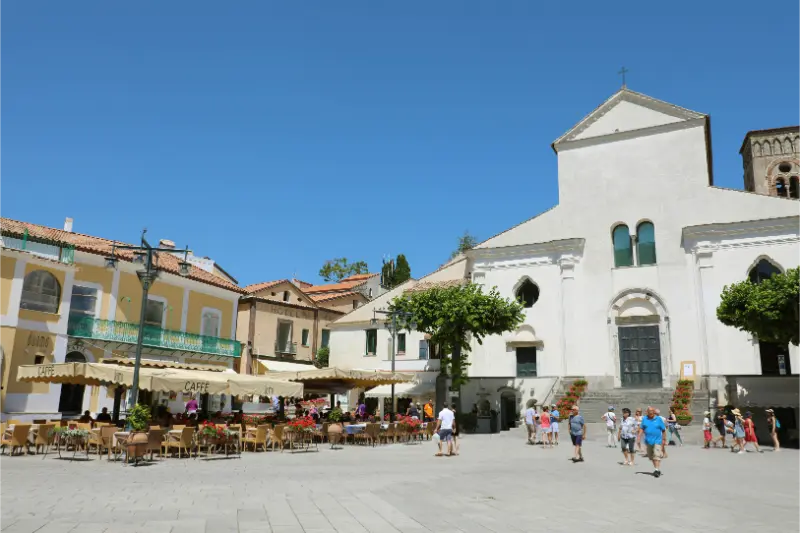
Ravello is the Amalfi Coast town I would choose when the views, gardens and atmosphere matter more than direct beach access. It sits high above the sea, which removes you from the busiest waterfront traffic but creates a different logistical question: every arrival and departure involves the mountain road.
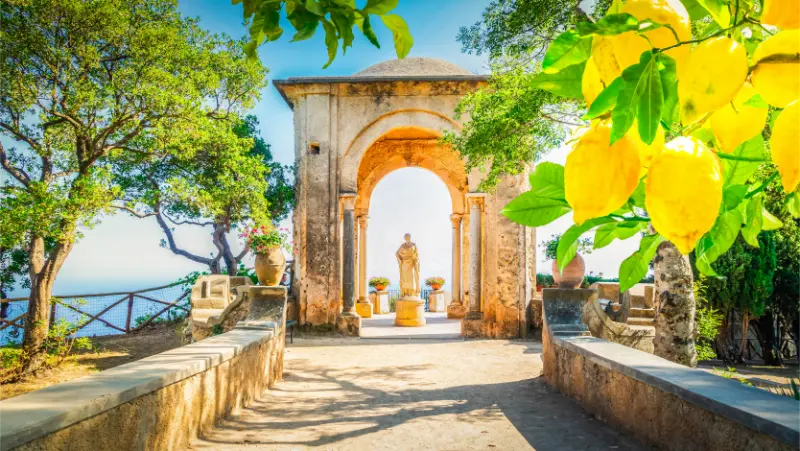
The town’s two headline gardens—Villa Rufolo and Villa Cimbrone—are not interchangeable. Villa Rufolo connects architecture, music and the Ravello Festival setting; Villa Cimbrone is famous for the Terrace of Infinity and a longer garden experience. Add the cathedral and quiet lanes, and Ravello comfortably fills most of a day.
Ravello works naturally with Amalfi, but I would not squeeze both plus Positano into a few hours. Use the Amalfi Coast travel guide to decide where it belongs in the wider trip.
| Ideal visit | 4–7 hours; 1–2 nights for quiet evenings |
|---|---|
| Best for | gardens, views, culture and a slower coast experience |
| Sea access | None directly in town |
| Car | Not necessary; parking can be difficult |
| Best moment | Morning or late afternoon outside peak excursion hours |
Why Ravello feels different from the waterfront towns
Ravello’s altitude changes the experience. Instead of a beach and port defining the day, the main rhythm comes from gardens, terraces and lanes opening suddenly toward the sea. It is quieter than Positano at night and often cooler, but you must accept the extra road time whenever you want a ferry or beach.
That trade-off is exactly why some travellers love staying here. If you want a honeymoon-style hotel, long views, garden mornings and calm dinners, Ravello can feel more rewarding than a waterfront base. If you want to swim every day and take several ferries, Amalfi is usually more efficient.
Villa Rufolo: current practical details and what to prioritise
Villa Rufolo sits just off Piazza Duomo and is the easiest major sight to integrate into a short visit. Its layered architecture, towers, cloisters and gardens create a compact but varied route. The famous sea-facing garden terraces are central to the experience, but do not rush past the medieval spaces on the way to the viewpoint.
As of the current autumn 2026 schedule, Villa Rufolo lists daily opening from 09:00 to 19:00 with last admission at 18:30, and an €8 standard ticket. Tickets are purchased on site and booking is not required. These details can change seasonally, so verify the official page before travel rather than relying on a saved screenshot months later.
If the Tower Museum is a priority and you are travelling with young children, note that Villa Rufolo currently limits tower access to children aged five and over for safety reasons. The garden experience itself remains valuable even when the tower is not part of the visit.
Villa Cimbrone and the Terrace of Infinity
Villa Cimbrone requires a little more walking from the main square, which helps thin the crowds. The garden route is longer and feels more like a destination in itself. The Terrace of Infinity is the famous photograph, but the pleasure comes from moving through shaded avenues, architectural fragments and changing viewpoints before reaching it.
If you only have two hours in Ravello, trying to do both villas can turn the visit into a race. Choose Rufolo for convenience and historic context; choose Cimbrone if the extended garden walk and iconic terrace are the main reasons you came. With half a day or more, both make sense.
Duomo, Piazza Vescovado and the lanes around the centre
Ravello Cathedral anchors Piazza Vescovado and is worth entering even on a garden-focused day. The centre is compact, but small lanes and terraces between the major villas are part of the experience. Avoid navigating only by the quickest map route; some of the best moments come from short detours where the coast appears between buildings.
Ravello Festival and the town’s music identity
Ravello’s association with music is not just branding. Villa Rufolo and the surrounding cultural institutions host major events, and festival dates can change hotel demand, access and the atmosphere of the town. If your visit overlaps an event, check whether parts of a garden or viewpoint are affected by staging.
Conversely, if you love classical music or cultural travel, an evening performance can justify staying overnight rather than returning down the mountain after sightseeing.
How to get to Ravello
Ravello has no railway station or ferry pier. The usual public-transport approach is to reach Amalfi and continue uphill by bus. Taxis and private transfers are useful when luggage, limited mobility or a tight schedule makes bus queues a poor fit.
Driving is possible but not automatically convenient. Parking supply is limited relative to demand, and the road itself can be slow. If you are staying in Ravello with a car, choose accommodation only after confirming where the vehicle is actually parked and whether the rate includes it.
Should you stay overnight in Ravello?
Stay overnight if you value quiet evenings, hotel terraces and waking above the coast. Day-trip crowds change the character of the centre, and the hours before and after they arrive are among Ravello’s greatest advantages.
Do not stay here purely because it looks central on a regional map. Every beach day, ferry trip or evening in another town adds a descent and return climb by road. For a trip built around boat connections, Amalfi is more practical.
A realistic Ravello day
Arrive early and begin with Villa Rufolo while the town is still settling into the day. Walk through the cathedral and main square, then continue to Villa Cimbrone before lunch or reverse the villa order if photography is your priority. Leave time for a relaxed meal rather than booking a return bus immediately after the second garden.
If combining with Amalfi, I prefer Ravello first on a clear morning and Amalfi later for the cathedral, port and dinner. The reverse can work if you have a timed garden or event ticket, but avoid scheduling the final bus too tightly against a ferry departure.
Best time to visit Ravello
Spring is outstanding for gardens, while early autumn keeps the views and outdoor dining without the heaviest summer heat. July and August are lively and event-rich but can be crowded and expensive. Winter is quiet, and some hotel or restaurant choices may be reduced.
Ravello with children and limited mobility
The centre is calmer than cliffside Positano, but garden paths, slopes and steps still matter. Villa visits work better with children when they have time to move rather than being pushed through two formal gardens back-to-back. Travellers with limited mobility should check the exact accessible route for each property and the distance from the bus or taxi drop-off.
Mistakes to avoid
- Assuming Ravello has direct ferry access.
- Trying to fit both major villas into a one-hour stop.
- Booking a late return connection with no margin for mountain-road delays.
- Choosing a hotel without checking parking or luggage access.
- Visiting only the famous terrace and missing the town’s cathedral and music context.
Frequently asked questions
Is Ravello worth visiting?
Yes if gardens, views and culture are priorities. It is less suitable if your coast day is focused mainly on swimming.
How long should you spend in Ravello?
Four hours is a useful minimum. Six to seven hours gives both major villas, the cathedral and a relaxed meal.
Can you walk from Amalfi to Ravello?
There are stair and path routes for fit walkers, but the climb is substantial. Most visitors use the bus or taxi uphill and save walking for a dedicated route.
Which is better, Villa Rufolo or Villa Cimbrone?
Rufolo is more central and closely tied to Ravello’s medieval and music history; Cimbrone offers a longer garden walk and the famous Terrace of Infinity. With enough time, do both.
Practical planning details that make the trip easier
For Ravello travel guide, the most useful final check is not another attraction list but the sequence of the day. Put the activity most vulnerable to weather, heat or timed entry first. Keep lunch and a flexible walk in the middle, then finish with a viewpoint, waterfront or town centre that does not depend on an exact reservation. This protects the part of the day that is hardest to replace.
Save tickets and hotel details offline before leaving Wi-Fi. Keep a screenshot of the return transport you expect to use, but verify live service because coastal ferries, mountain access and local buses can change. Carry a backup payment method and enough water to absorb a delay without turning it into an emergency purchase.
If you are moving accommodation the same day, deal with luggage before sightseeing. Hotel storage, station lockers or a private transfer can be worth paying for because dragging bags through steps and crowded transport is one of the fastest ways to make a short Campania day unpleasant.
Finally, protect unstructured time. These destinations reward a coffee, a church you did not plan, a swim or simply sitting at a viewpoint. A cluster guide should help you make better decisions, not force you to complete a checklist.
Viewpoints, photography and when Ravello looks its best
Ravello is one of the few Amalfi Coast towns where you can enjoy major sea views without spending the whole day moving vertically between a beach and an upper road. The formal garden terraces are obvious photographic locations, but some of the best images come from ordinary lanes between the centre and Villa Cimbrone. Early morning usually gives cleaner light and fewer people; late afternoon brings warmer colour but can place the sea in strong contrast.
If photography is a priority, do not rush both villas in the middle of the day. Use Villa Rufolo early, take a long lunch, then reach Villa Cimbrone later. In summer, this also avoids part of the hottest walking period. Tripods and professional equipment can be subject to site rules, so check directly if you plan anything more than normal handheld travel photography.
Walking between Ravello, Amalfi, Minori and Atrani
Historic stairways and footpaths connect Ravello with the coast below. For fit travellers, walking downhill can be a memorable alternative to taking the bus both ways. The descent toward Amalfi or Atrani provides changing views, while routes toward Minori can connect Ravello with the eastern coast. These are not step-free promenades: expect long stair sections, uneven paving and heat exposure.
A practical strategy is to take public transport uphill and walk down, reducing the physical demand. Carry water, avoid heavy luggage and confirm the route locally after bad weather. If your knees dislike long descents, the bus in both directions is the better choice; there is no prize for turning a garden day into an uncomfortable staircase marathon.
Food, lunch and the value of staying for dinner
Ravello has enough restaurants to support a full day, but lunch near the main square can be busy when excursion groups overlap. A reservation helps if you want a terrace or a long meal. The wider coast’s lemons, local cheeses, seafood and handmade pasta appear frequently, while inland slopes add garden produce and wine to the picture.
Dinner is where an overnight stay becomes especially valuable. Once the last large day groups have gone, Piazza Vescovado and the surrounding lanes feel very different. If your hotel has a view, consider one evening on the property and one in town rather than travelling down to Amalfi for every meal.
Parking and luggage: details that matter more than they sound
Ravello’s road access is concentrated and parking demand can be high. Travellers arriving by car should reserve accommodation with a clearly described parking arrangement rather than assuming a public space will be available. Ask whether the garage is on site, valet-operated or several minutes away, and whether the price is included.
With luggage, a taxi or hotel transfer from Amalfi can be more comfortable than boarding a crowded bus. This is particularly true for families and travellers carrying larger suitcases. Once you are settled in Ravello, you can switch back to public transport for sightseeing days.
Booking accommodation: what to check before paying
For Ravello, pay particular attention to the hotel’s road access, shuttle arrangements and whether sea views require a long stair route from the centre. For current availability, compare accommodation options on Booking.com. Check the exact address, stairs or lift access, cancellation terms and the route to the transport you expect to use most often.
Affiliate links can support this site at no extra cost to you. Always compare the final price and conditions shown by the booking provider before confirming.
Useful official information
For current opening times, ticket rules, transport notices or local restrictions, check Villa Rufolo – official visitor information shortly before travel. On the coast and islands, weather and seasonal services can change the practical plan even when the attraction itself is open.
Leave a Reply