
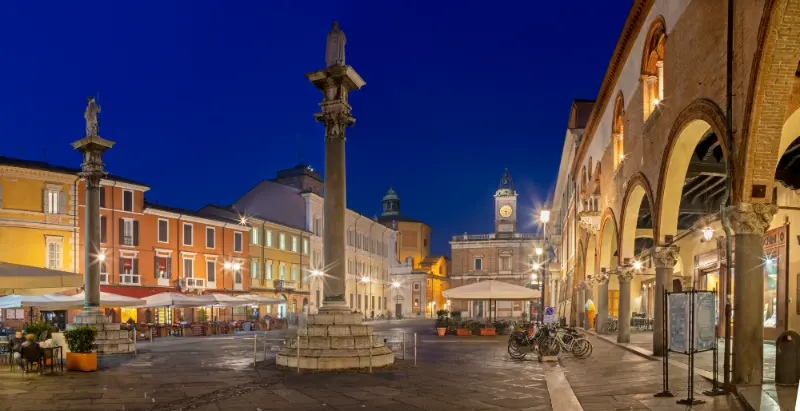
Ravenna can work extremely well with children, but only if adults stop planning it like an art-history exam. The monuments are small enough to visit in short bursts, mosaics are visually immediate, the city centre is flat, and the wider area adds Classis, beaches, wetlands and Mirabilandia. The challenge is choosing the right mix for your child’s age and attention span.
A family day should usually include no more than two or three major indoor cultural stops before changing activity. Treasure hunts, mosaic details and stories about emperors, stars and animals are more effective than long chronological explanations. Ravenna Tourism itself publishes family material and in 2026 RavennAntica ran Saturday workshops and animated visits connected with Classis and Theodoric.
If this is your first visit to the area, the Ravenna Travel Guide explains the main sights and how to fit them into one trip.
| Best for ages | Flexible: mosaics for all ages, Classis for school-age children, Mirabilandia for ride-focused days |
|---|---|
| City advantage | Flat centre and short distances between major monuments |
| Best cultural rhythm | 2–3 indoor stops, then food, park or outdoor activity |
| Easy add-ons | Classis, beach, pinewood, Mirabilandia |
| Ideal stay | 2–3 nights for culture plus one major family day |
Why Ravenna is easier with kids than it looks
Unlike museum cities where every highlight requires an hour inside a large building, Ravenna’s major mosaic monuments are compact. A child can enter, look up at a glittering dome, find animals or stars and move on before attention collapses. That makes it possible to create a day of short discoveries instead of long sessions.
The centre is also relatively flat and walkable. The main logistical challenge is not distance but ticket timing, queues in busy periods and adults trying to see every UNESCO site in one day. Family travel improves when you deliberately leave some monuments for another trip.

Turn mosaics into a visual game
Before entering San Vitale or Galla Placidia, give children one or two things to find: a crown, an animal, a pattern, a face or a star. Do not hand them a list of twenty details. The goal is to make them look, not to test memory.
Photography can become another game, but set limits so the visit does not turn into screen time. Ask for one favourite mosaic detail at each stop. Later, compare the photographs over gelato. This creates a simple narrative without demanding that a six-year-old understand Byzantine politics.
Which monuments to prioritise
For a first family day, San Vitale and Galla Placidia are the strongest pair because the spaces feel dramatically different and are close together. Sant’Apollinare Nuovo can be another good stop because the long processions are easy to read visually. Add the baptisteries only if interest remains high.
Use our Ravenna mosaics guide for the full monument system, but family planning should be more selective. The best day is the one children remember positively, not the one that maximises ticket value.
Classis Ravenna for context and activities
Classis Ravenna is one of the best ways to give children context before or after seeing ancient churches. The museum explains Ravenna’s port, trade and development with models, objects and a more spacious museum environment than the tiny mosaic interiors.
In 2026 RavennAntica programmed family workshops and animated visits at Classis and the Mausoleum of Theodoric. Programmes change, so check the current calendar. A booked family activity can provide the structured explanation adults often struggle to improvise.
Mirabilandia: treat it as a separate day
Mirabilandia is close enough to Ravenna that families are tempted to visit mosaics in the morning and the theme park later. That usually produces a rushed version of both. If the park is important, give it a dedicated day and use Ravenna for a slower culture day.
Our Mirabilandia guide covers rides, tickets, Mirabeach and transport. The key family decision is whether the park is the main reason for the trip or an add-on; accommodation location changes accordingly.
Beach day: which Ravenna coast works
Ravenna’s coast offers several lidos with different atmospheres. Families often value shallow sandy beaches, organised services and easy meals more than nightlife. Check whether your chosen beach club includes changing facilities, play areas or parking rather than comparing only umbrella price.
A beach afternoon after a morning of mosaics can work well in summer, but allow enough time for the drive and parking. Our Ravenna beaches guide compares the main coastal areas.
A two-day family itinerary
Day one: choose two central mosaic monuments in the morning, stop for a long lunch, add one easy afternoon site or park and finish early. Day two: pick one major family activity—Classis plus Classe, a beach day, Mirabilandia or a nature outing. This rhythm gives children contrast and gives adults enough culture without constant negotiation.
If you have three days, use the third for the coast or theme park rather than adding more monuments. Ravenna’s province is one of the rare places where a cultural city break can turn into a family holiday without changing hotel every night.
Food with children
Piadina is the obvious easy option because fillings can be simple and meals are quick. Fresh pasta such as cappelletti or tagliatelle works for many children, while gelato makes a natural break between monuments. Choose restaurants where adults also want to eat; there is no need to build the day around a generic children’s menu.
Long formal lunches can help or hurt depending on age. For younger children, a quick piadina followed by a park break may be better. For older children, a relaxed trattoria lunch can reset everyone before the afternoon.
Pushchairs, toilets and practical pauses
The city centre is generally manageable with a pushchair, but individual historic monuments can have thresholds, steps or crowding. A compact stroller is easier than a large travel system. Keep a small bag rather than expecting cloakrooms everywhere.
Build toilet and snack stops into the route before they become emergencies. Piazza areas and cafés make this easier than at isolated archaeological sites. With young children, staying centrally is often worth more than saving a small amount on a hotel outside the city.
Bad-weather alternatives
Classis and the main museums provide useful indoor options, but do not automatically schedule five churches because it is raining. Alternate a museum with a long lunch, a workshop or a hotel rest. The Butterfly House in Milano Marittima can be another seasonal family option if you have a car and it is open.
Check current programmes rather than assuming family workshops run every day. Ravenna’s special activities are often weekend or seasonal events, which can be excellent if you plan around them.
Mistakes to avoid
Do not explain every mosaic. Do not force children through all eight UNESCO monuments in one day. Do not combine Mirabilandia with a serious city itinerary, and do not book a remote hotel if you expect to return for midday rests.
The most common mistake is treating children as an obstacle to adult sightseeing. Ravenna becomes more interesting for adults too when you slow down, look for visual details and vary the day between art, food and open space.
Where to stay with a family
Central Ravenna is the easiest choice for a culture-first trip because you can walk back to the hotel for rests. A coastal base works better if the beach is the main activity and you only plan one city day. For Mirabilandia-heavy trips, compare driving and parking rather than choosing solely by distance on a map.
Look for family rooms, breakfast, parking and the ability to reach dinner on foot. Those practical features usually matter more than a hotel having a decorative “family-friendly” label.
Decision guide: is this stop right for your trip?
Choose Ravenna with Kids: Mosaics, Classis, Beaches, Mirabilandia and Easy Family Planning if the themes in this guide genuinely match your interests, not simply because it appears close on the map. Small destinations reward travellers who arrive with one or two clear reasons to be there. If your schedule is already dominated by Ravenna’s UNESCO monuments, it is usually better to give those sites enough time and move this excursion to a separate day.
Before leaving, check three things in this order: the least frequent opening or guided visit, the weather for any outdoor section, and the final transport or driving plan. Then build meals and flexible walking around those constraints. This simple sequence prevents most wasted journeys in Ravenna province, where small museums and seasonal nature sites often have more limited schedules than attractions in the capital.
Tours and bookable experiences
Guided experiences can be useful when they solve a real planning problem—special access, transport, family interpretation or a nature route that should not be attempted casually. Check the exact inclusions, starting point and cancellation terms before booking; do not assume a general Ravenna excursion enters every place mentioned in its description.
Where to stay
For a one-off excursion, staying in Ravenna or another established base is usually simpler than changing hotels for a small town. An overnight stay makes more sense when the destination includes evening events, thermal time, a beach holiday or an early nature outing. Compare parking, breakfast and walking distance to dinner as part of the real room cost.
Official sources and last checks
- Ravenna Turismo – Ravenna with children
- Ravenna Turismo – RavennAntica for Kids 2026
- Ravenna Turismo – official city information
Opening times, prices, guided visits, trail access and temporary closures can change. The practical details in this article were checked against official information available in 2026; recheck the linked sources shortly before travel, especially when a limited opening or booked activity is essential to your itinerary.
Final planning advice
A strong Ravenna-province itinerary is not the one with the most stops. It is the one that uses each place for what it does best and leaves enough time for food, walking and the unexpected. Choose the main experience first, protect its opening window, and treat nearby attractions as options rather than obligations.
Last updated: October 17, 2026
Leave a Reply