
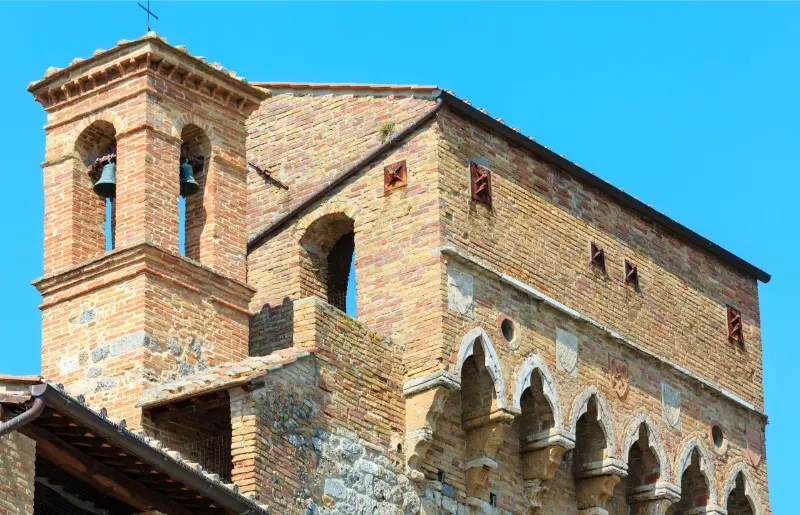
San Gimignano is one of Tuscany’s most photographed towns, which makes timing more important than adding more sights. Its medieval towers create the famous skyline, but the town also holds major fresco cycles, a civic museum, local saffron and Vernaccia wine. Visit early, stay late, or sleep inside the walls and the experience becomes far more than a crowded stop between Florence and Siena.
At a glance
| Ideal time | Half-day minimum; full day or overnight for depth |
|---|---|
| Main sights | Piazza del Duomo, Torre Grossa, Collegiata, civic museums |
| Train station | None in San Gimignano |
| Best crowd strategy | Early morning, late afternoon or overnight |
| Official museums | San Gimignano Musei |
Why the towers matter
San Gimignano once had many more towers than survive today; the remaining skyline reflects medieval family power, wealth and urban competition. The Visit Tuscany page for San Gimignano notes thirteen surviving towers, enough to preserve the distinctive vertical profile.
For travel beyond San Gimignano Travel, consult our Tuscany travel guide; it explains how to choose a base and link nearby destinations.
Do not spend the whole visit looking upward. The towers make sense when connected to the town’s trade history, civic institutions and churches. The best visit alternates streets, interiors and viewpoints.
Piazza della Cisterna and Piazza del Duomo
These adjoining squares form the core of the town. Piazza della Cisterna is immediately picturesque, while Piazza del Duomo concentrates civic and religious buildings. Arrive early enough to see the architecture before the central space fills with day-trip movement.
Use the squares as orientation points, not merely meeting places. Several of the most important interiors are only a few steps apart, which means you can keep the day compact and avoid wasting time crossing town repeatedly.
Torre Grossa and Palazzo Comunale
Torre Grossa is the city’s principal public tower and offers the classic panorama over rooftops and countryside. It is part of the civic museum system, so check the official museum information for current opening hours and tickets.
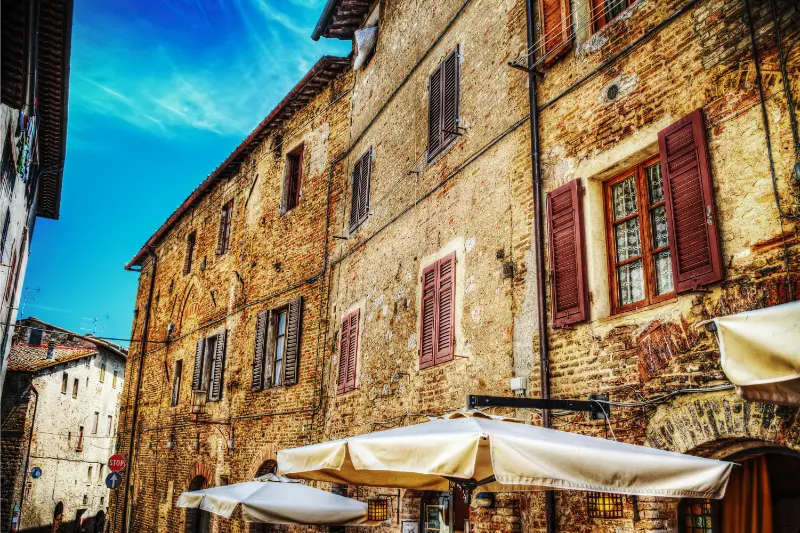
The climb involves stairs and is not essential for every visitor. If mobility, weather or queues make it unattractive, countryside views can also be found from quieter edges of town. The Palazzo Comunale’s art collection gives the tower visit cultural context.
The Collegiata: do not skip the frescoes
The Collegiate Church of Santa Maria Assunta is one of the strongest reasons to see San Gimignano as an art destination rather than only a skyline. Its painted cycles create an immersive medieval interior that deserves unhurried viewing.
Church access and services can affect visits. Dress respectfully, keep voices low and verify current conditions locally. If you have only one major interior in town, this is a strong candidate.
Sant’Agostino and the quieter northern side
The Church of Sant’Agostino sits away from the most congested centre and contains important frescoes, including work associated with Benozzo Gozzoli. The walk there also shows a calmer residential texture.
This is a useful strategy in peak periods: alternate the famous central sights with one quieter edge. You do not need to escape the town; you only need to move beyond the busiest thirty metres.
Vernaccia di San Gimignano
Vernaccia gives San Gimignano a wine identity distinct from the red-wine image many travellers bring to Tuscany. A tasting can be a meaningful part of the day if you want to understand local agriculture, but it does not need to become a multi-stop wine tour.
If driving, keep tastings conservative or designate a driver. Better still, stay overnight or use organised transport if wine is a major focus. The point is to learn what makes the local wine different, not to maximise the number of glasses.
Saffron and local food
San Gimignano also has a historical association with saffron. Look for dishes that use it thoughtfully rather than buying every saffron-labelled souvenir. Local menus may also feature Tuscan soups, cured meats, cheeses and game depending on season.
Eat away from the exact centre if you want a calmer meal, but do not assume that any place on a side street is automatically better. Check recent menus, pricing and opening days.
How to get there without a car
San Gimignano has no railway station. Public transport normally requires buses, often via Poggibonsi depending on your origin and timetable. This is one reason to check the day’s connections carefully rather than improvising. Use our Italy without a car guide for broader route-building principles.
From Florence, a guided day trip can be efficient if you also want Siena or a winery, but compare how much free time is actually provided in San Gimignano. A cheaper tour that gives only a brief photo stop may not suit an art-focused visit.
Driving and parking
Drivers leave the car in designated parking areas outside the historic core and walk uphill or use local connections. Arrive earlier than peak day-trip hours if you want easier parking. Read our driving in Italy guide before a broader Tuscany road trip.
Do not build a day with San Gimignano, Volterra, Siena and Chianti unless you enjoy spending more time on roads than in towns. Choose one major place plus one secondary stop.
How to beat the crowds
The most reliable tactic is time: enter early, remain into evening, or sleep in town. The Italy crowd-avoidance guide explains the same principle across famous destinations. Midday is when group arrivals tend to make the central axis feel most compressed.
At busy times, walk to Sant’Agostino, Rocca viewpoints or less central lanes before returning to the main squares. Crowding is highly concentrated; a small change of route can transform the experience.
San Gimignano from Florence or Siena
From Florence, expect transport to take a meaningful part of the day. From Siena, distances are shorter but public transport still needs planning. If you are driving between the two cities, San Gimignano can fit naturally, but luggage security and parking should be considered.
Avoid leaving luggage visible in a parked car. If the town is an en-route stop, use covered storage in the vehicle and keep valuables with you.
San Gimignano and Volterra
Volterra makes a logical second destination for travellers interested in Etruscan history and less concentrated tourism. The pairing is better by car than public transport, and the roads require realistic timing.
With only one day, choose which town receives the longer visit. San Gimignano rewards art and skyline interest; Volterra adds archaeological depth and a different urban character.
Where to stay
Staying inside or near the walls gives you access to the town before and after peak excursion hours. Countryside accommodation offers views and parking but makes dinner logistics more car-dependent. Compare options through Booking.com and verify parking arrangements before booking.
One night is enough to gain the main benefit: an evening walk, dinner after crowds thin, and early-morning streets. You do not need a long stay unless using the area as a rural base.
A full-day itinerary
Arrive early and begin at the civic centre, climbing Torre Grossa before the day becomes hot if desired. Visit the Collegiata, then move to Sant’Agostino before lunch. Use the afternoon for wine interpretation, viewpoints, small museums or simply slower streets.
Stay through the late afternoon rather than leaving at the first sign of crowds. The flow often changes again once excursion schedules move on.
San Gimignano with children
Children often enjoy the visible towers and fortress-like atmosphere, but repeated church interiors and climbs can quickly become tiring. Choose one tower, one major fresco stop and enough outdoor time.
Strollers can manage much of the centre but cobbles and slopes are real. A carrier may be easier for very young children. Build snack and toilet stops into the route rather than assuming facilities will appear exactly when needed.
Half-day versus full-day: what changes
A half-day should focus on the two central squares, the Collegiata and either Torre Grossa or another civic-museum element. A full day adds Sant’Agostino, a proper lunch, local wine interpretation and time at the edges of town. The difference is not simply more attractions; it is the ability to experience the town outside its busiest corridor.
Overnight visitors gain a third layer: dinner after day-trip groups leave and early-morning streets before shops fully open. That atmosphere is often worth more than adding another village.
Photography without disrupting local life
Use viewpoints, public streets and the fortress area rather than doorways, private gardens or farm access. The famous skyline can be photographed from several public approaches, so there is no reason to trespass or stop unsafely on roads.
Inside churches and museums, follow photography rules even when other visitors do not. Fresco conservation and worship take priority over a photograph.
What to book and what to leave flexible
Check the official municipal museum site for Torre Grossa and civic-museum access, particularly in high season. Accommodation is worth booking early for popular weekends, but restaurants and smaller stops can often remain flexible if you have alternatives.
Use our Italy attraction-booking guide to avoid turning the whole day into timed entries. San Gimignano is compact enough that one fixed booking is usually plenty.
Final thoughts
San Gimignano deserves to be treated as a town, not a skyline. See the frescoes, climb one tower if you want the view, taste what is genuinely local, and use early or late hours to recover the medieval scale beneath the crowds. One well-paced day is far more satisfying than squeezing it between three other Tuscan stops.
Last updated: October 17, 2026