
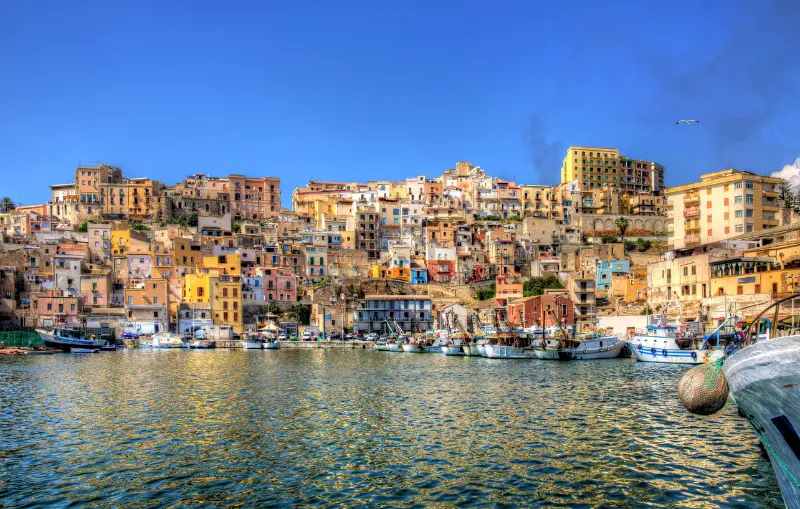
Sciacca is a working fishing and ceramic town on Sicily’s south-west coast, positioned naturally between Selinunte and Agrigento. Its layered centre, harbour, artisan traditions and unusual Castello Incantato give it a personality distinct from both archaeological and resort destinations.
Sciacca works very well as a slower stop on a south-coast road trip. It breaks long drives, provides excellent seafood and allows you to experience a town whose identity is based on real industries and traditions rather than a single monument. This guide focuses on what deserves your time, where logistics become inefficient and how Sciacca fits into a wider Sicily itinerary.
To see where Sciacca Travel fits into a wider Sicily itinerary, use our Sicily travel guide for transport, bases and possible neighbouring stops.
Quick planning summary
| Best for | ceramics, seafood, coastal road trips, carnival culture and travellers moving between Selinunte and Agrigento |
|---|---|
| Time needed | One full day; two nights are useful if you want beaches, Monte Kronio or a slower south-west coast stop. |
| Car | Useful for the wider area, beaches and Monte Kronio. The central town should be explored mostly on foot. |
| Best seasons | April–June and September–October are excellent for sightseeing; July–August works with earlier starts, realistic heat planning and advance booking where necessary. |
| Main planning rule | Walk the upper historic centre and ceramic streets first, then descend toward the port. Use a separate block for Monte Kronio or Castello Incantato rather than trying to rush both. |
Is Sciacca worth visiting?
Yes, especially for ceramics, seafood, coastal road trips, carnival culture and travellers moving between Selinunte and Agrigento. Sciacca works very well as a slower stop on a south-coast road trip. It breaks long drives, provides excellent seafood and allows you to experience a town whose identity is based on real industries and traditions rather than a single monument.
My priority: Walk the upper historic centre and ceramic streets first, then descend toward the port. Use a separate block for Monte Kronio or Castello Incantato rather than trying to rush both. A Sicily trip improves dramatically when one major experience anchors the day and everything else is genuinely nearby rather than added because it appears on a popular checklist.

What to see and do
Historic centre
Churches, piazzas and sea views spread across a sloping urban fabric. The town is best understood by walking downhill toward the harbour rather than navigating attraction-to-attraction by car.
Give this stop enough time to understand why it matters. Where opening times, ferries, protected landscapes, guided access, worship schedules or weather conditions are involved, verify the current arrangement close to your travel date rather than relying on an old itinerary.
Ceramic workshops
Sciacca has a strong ceramic tradition with colorful local styles. Visit genuine workshops and compare techniques before buying rather than choosing mass-produced souvenirs.
Give this stop enough time to understand why it matters. Where opening times, ferries, protected landscapes, guided access, worship schedules or weather conditions are involved, verify the current arrangement close to your travel date rather than relying on an old itinerary.
Fishing port
The harbour shows Sciacca as a working maritime town. Fishing boats and seafood markets are part of everyday identity, especially earlier in the day.
Give this stop enough time to understand why it matters. Where opening times, ferries, protected landscapes, guided access, worship schedules or weather conditions are involved, verify the current arrangement close to your travel date rather than relying on an old itinerary.
Castello Luna
The medieval castle ruins add a defensive and noble-history layer above the town. Even partial remains contribute to the historic skyline.
Give this stop enough time to understand why it matters. Where opening times, ferries, protected landscapes, guided access, worship schedules or weather conditions are involved, verify the current arrangement close to your travel date rather than relying on an old itinerary.
Castello Incantato
Filippo Bentivegna’s unusual sculpture garden contains carved heads in stone and wood, creating one of Sicily’s most eccentric outsider-art environments.
Give this stop enough time to understand why it matters. Where opening times, ferries, protected landscapes, guided access, worship schedules or weather conditions are involved, verify the current arrangement close to your travel date rather than relying on an old itinerary.
Monte Kronio
The mountain and its thermal/cave history have long been associated with Sciacca. Access to specific thermal or cave areas can change, so verify current conditions before driving up.
Give this stop enough time to understand why it matters. Where opening times, ferries, protected landscapes, guided access, worship schedules or weather conditions are involved, verify the current arrangement close to your travel date rather than relying on an old itinerary.
How to plan the visit
Walk the upper historic centre and ceramic streets first, then descend toward the port. Use a separate block for Monte Kronio or Castello Incantato rather than trying to rush both. Make that the anchor decision, then add only experiences that improve the day rather than create another transfer.
Sicily’s map is deceptive. Mountain roads, historic-center traffic, restricted zones, ferry check-in, summer parking and long walks from official access points can turn a short distance into a meaningful block of time. Always plan door to door.
In July and August, place archaeology, exposed nature and hill walks in the morning or late afternoon. Use midday for lunch, swimming, museums, shaded interiors or genuine rest. In spring and autumn, walking is easier but daylight, sea conditions and reduced seasonal services matter more.
Avoid filling the schedule with timed reservations. One essential booking per day is often enough. Flexibility lets you absorb traffic, weather or a place that deserves longer than expected.
Getting there and getting around
Sciacca is easiest by car on a south-coast route because rail does not serve the city directly. Bus connections exist but reduce flexibility. Park once for the centre and accept the town’s slopes.
Driving and parking
If you drive, park once whenever possible. The closest legal space is not automatically the best if reaching it means navigating narrow streets or seasonal restrictions. In beach and island destinations, transport planning is often the difference between a relaxed morning and an hour lost to parking.
Public transport and transfers
Public transport works best on major city and coastal corridors. Islands, mountain parks and nature reserves require more specialized planning. Check the return service as carefully as the outbound trip, particularly on Sundays and outside summer.
How much can you combine in one day?
One main destination plus one complementary stop is normally enough. Every additional town creates a new cycle of driving, parking, orientation and walking. A slower lunch or sunset often contributes more to the trip than a third check-in on the map.
Where to stay in Sciacca
Central accommodation is best for restaurants and walking; seaside properties suit swimming; rural options make sense with a car. Sciacca can be a good two-night pause between western Sicily and Agrigento.
When booking, check the practical details: parking or port access, stairs, air conditioning, road quality, street noise and restaurant distance. On islands and in mountain areas, an atmospheric remote property can become inconvenient if every meal requires a long drive.
A realistic itinerary
Morning
Walk the historic centre and ceramic shops in the morning.
Late morning / lunch
Descend toward the fishing port and have a seafood lunch.
Afternoon
Visit Castello Incantato or Monte Kronio in the afternoon, not both unless timing is generous.
Evening
Stay for sunset or dinner before continuing the south-coast route the next day.
If the day starts running late, remove the least important secondary stop rather than shortening everything. Sicily rewards time between attractions: food, changing light, markets, harbours and evening streets are part of the destination.
Food and local character
Seafood is a major strength, supported by the working fishing port. Combine it with local bread, olive oil and pastries, and leave room for a relaxed meal rather than treating Sciacca only as a driving break.
Look for immediate geography in the menu. Islands, mountain parks, fishing towns and Palermo’s coast have very different food traditions. Ask what is genuinely local and seasonal rather than working through the same list of Sicilian dishes everywhere.
Reserve only when a particular restaurant matters or when peak-season demand is high. Otherwise, leave enough flexibility for a meal close to where the day naturally ends.
Best time to visit
Spring
April to early June is excellent for walking, nature and historic centres, with greener landscapes and lower crowd pressure. Mountain conditions can still be cool, and some island services may not yet run at peak frequency.
Summer
July and August bring the fullest ferry, beach and event schedules, but also strong heat and high demand. Start early, protect midday and book essential accommodation, vehicles and island transport ahead.
Autumn
September and October often combine warm sea temperatures with easier cultural sightseeing. Food traditions and harvests become especially interesting, while late-season ferries or beach services may gradually reduce.
Winter
Winter can be excellent for cities and some mountain villages, but coastal resorts and islands may feel very quiet. Weather, daylight and transport schedules should guide the plan more than low hotel prices alone.
Costs and what to book in advance
The major expenses usually come from accommodation, car rental, ferry/flight access, regulated nature experiences and major admissions rather than from walking a town. Protect budget and time for the experience that defines the destination.
Book earlier for peak-season island travel, popular coastal accommodation, rental vehicles and any site with managed capacity. Ordinary village walks and viewpoints benefit more from flexibility than rigid scheduling.
Families and accessibility
The harbour, ceramics and unusual sculptures of Castello Incantato can work well with children. The sloping centre requires pacing.
Sciacca’s hills and older paving can be challenging. Harbour areas are easier, while rural attractions need individual checks.
For families, one cultural or nature anchor plus a beach, garden, food stop or easier walk usually works better than an adult-style checklist. Water, shade, toilets and the return route deserve as much planning as tickets.
Common mistakes to avoid
- Driving between every central sight.
- Skipping the port and seeing only churches.
- Buying ceramics without checking local production.
- Treating Sciacca as a lunch stop between two archaeological parks.
- Assuming all historic thermal facilities are currently accessible.
The broader mistake is using the number of destinations as the measure of a successful trip. Sicily’s coast, islands and mountain parks are most rewarding when you allow enough time to experience the place rather than only arrive there.
How Sciacca fits into a wider Sicily route
Include Sciacca when its strengths match your priorities: ceramics, seafood, coastal road trips, carnival culture and travellers moving between Selinunte and Agrigento. If it requires a major detour, another one-night hotel and a late arrival at the next base, save it for another trip. If it fits naturally into an existing western, northern or island cluster, it becomes much more valuable.
For a seven-day Sicily trip, concentrate on one or two geographic clusters. Ten days can support three. With two weeks or more, smaller islands, mountain parks and deeper coastal detours become realistic without sacrificing the atmosphere of each base.
Sequence also matters. Alternate intensive cultural days with slower outdoor or food-focused days. That reduces fatigue and gives weather-dependent plans more flexibility.
Three practical choices that improve a Sciacca trip
First, decide what the destination is for. A beach day, archaeological visit, mountain hike or island stay has a different ideal rhythm. When you mix several goals without hierarchy, transport consumes the hours that should have been spent enjoying the place.
Second, use morning and evening for the most exposed or visually rewarding experiences. Midday can be used for lunch, indoor heritage or rest. This matters more in Sicily than squeezing one additional attraction into every available hour.
Third, spend at least one evening in any place you choose as a base. Sunset, dinner and the change after day visitors leave often explain why staying locally was worth more than another late drive.
Related Sicily guides
Selinunte Travel Guide — useful for continuing the route without creating an unnecessary cross-island detour.
Agrigento & Valley of the Temples Travel Guide — useful for continuing the route without creating an unnecessary cross-island detour.
Scala dei Turchi Travel Guide — useful for continuing the route without creating an unnecessary cross-island detour.
Sicily Travel Guide — useful for continuing the route without creating an unnecessary cross-island detour.
Official information to check before travel
Opening hours, reserve rules, transport, ferry schedules and seasonal access can change. Before travelling, check the official destination information and verify anything that is essential to the day.
Last updated: October 17, 2026
Leave a Reply