
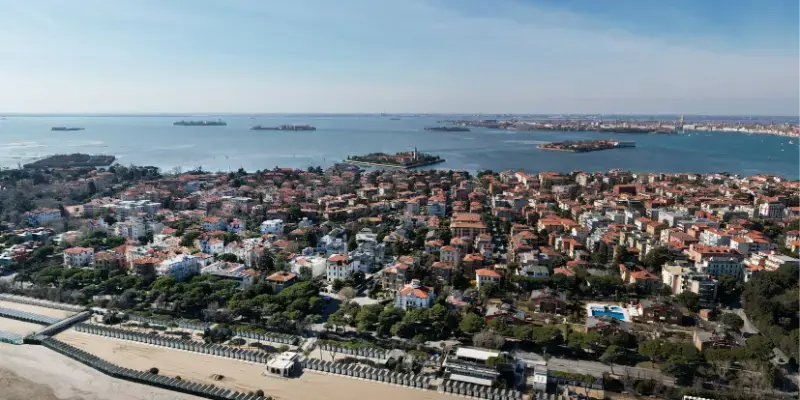
The Lido is the easiest place to add beaches, bicycles and open space to a Venice trip without leaving the lagoon. This long barrier island sits between the lagoon and Adriatic Sea, close enough to reach by vaporetto but physically and psychologically different from the historic centre. Streets have cars and buses, bicycles are practical, villas replace dense palazzi, and the sea creates a genuine beach-holiday layer that many first-time visitors never consider.
At a glance
| Best for | Beach time, bikes, families, longer Venice stays |
|---|---|
| Allow | Half day for a quick look; full day for beach and cycling |
| Getting there | Vaporetto from Venice; routes vary by origin |
| Good to know | Beach clubs and free-access areas differ; verify seasonal services |
What the Lido is — and is not
The Lido di Venezia is not another compact historic island like Burano. It is a long, inhabited strip with roads, buses, hotels, residential areas and beaches. The main arrival area around Santa Maria Elisabetta connects the lagoon landing to the Adriatic side, making the island easy to understand even on a short visit.
If this is your first visit to the area, the Venice Travel Guide explains the main sights and how to fit them into one trip.
If your priority is colourful villages and craft traditions, use our Murano, Burano and Torcello guide instead. The Lido is about space, sea and a different rhythm.
Getting to the Lido
Vaporetti connect the Lido with several points in Venice. Route patterns and frequencies change by time and season, so consult ACTV close to travel and use our Venice public transport guide to decide whether a pass makes sense.
The main Santa Maria Elisabetta terminal is a transport hub rather than a beach itself. From there you can walk, take a local bus or rent a bicycle depending on your plan.
Beaches: what to expect
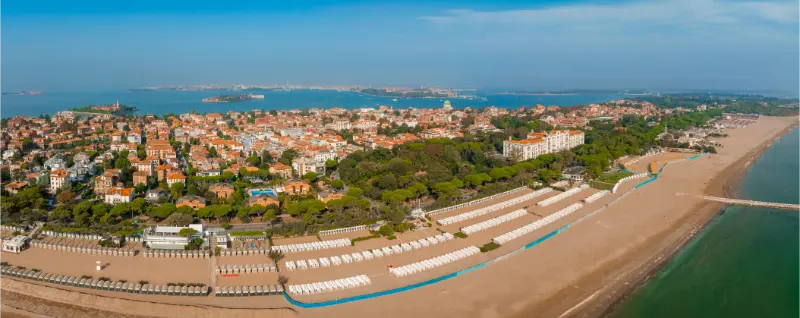
The Adriatic side includes organised beach establishments with paid services as well as areas where access arrangements differ. In summer, umbrellas and loungers at popular establishments can be expensive and may require advance booking. Read exactly what a rate includes before reserving.
Venezia Unica highlights the Lido as a beach destination between sea and lagoon. Conditions are seasonal: lifeguard coverage, facilities, water quality notices and operating dates should be checked close to your visit rather than assumed from a previous summer.
Cycling the Lido
The Lido is one of the rare parts of Venice where a bicycle is genuinely useful. Flat roads, longer distances and the linear geography make cycling a natural way to explore beyond the main beach strip. You can reach quieter southern areas and connect with views toward the lagoon.
Rent from a reputable shop, check brakes and lock provision, and ask about where cycling is permitted. Summer traffic around main roads requires normal urban cycling awareness even though the island feels relaxed.
Venice Film Festival
The Venice International Film Festival is held on the Lido and dramatically changes the atmosphere around its venues. During festival periods, accommodation demand, event security and transport flows can increase. If you are not attending, know the dates before booking a casual beach break.
For film fans, staying on the Lido can be practical, but access to screenings and red-carpet areas follows event rules. Do not assume being physically nearby guarantees admission.
Lido with children
Families often appreciate the Lido because the day can involve fewer bridges, more open space and a clear activity such as beach time or cycling. It also gives children a break from churches and museums. Pack sun protection and water, and remember that sea conditions still require supervision.
Combine a Lido day with the pacing ideas in Venice with kids. On a four- or five-night stay, alternating one intense historic-centre day with one outdoor day can transform the trip.
Where to eat
Around the main streets you will find cafés, pizzerias, seafood restaurants and hotel dining. Beach establishments may also serve food, but convenience can come with higher prices. Check menus before committing to a long seaside lunch if budget matters.
If your evening priority is a classic bacaro atmosphere, return to Cannaregio or Dorsoduro; the Lido’s food scene serves a different purpose and should not be forced into the same template.
Should you stay on the Lido?
The Lido can be an excellent base for summer travellers who want beach access, larger hotel grounds or a calmer evening environment. The trade-off is daily boat travel to Venice’s historic centre. That commute can be pleasant, but it adds time and makes spontaneous late-night wandering less convenient.
Compare the choice with where to stay in Venice. For a two-night first visit focused on San Marco and Rialto, the historic centre is usually simpler; for five nights in July with children, the Lido may be exactly right.
A simple one-day Lido plan
Take a morning vaporetto to Santa Maria Elisabetta, rent bikes or walk toward the beach, spend several hours by the sea, then explore farther along the island in the afternoon. Return before dinner or stay for sunset depending on transport and restaurant plans.
Keep the schedule deliberately light. The point of the Lido is to create contrast with Venice’s dense sightseeing environment, not to replace one checklist with another.
Lido or another lagoon island?
Choose the Lido for beaches, bikes and a resort-like break. Choose Murano for glass traditions, Burano for colour and lace, and Torcello for early lagoon history. Pellestrina is quieter and more remote, while Sant’Erasmo offers agricultural landscapes.
On a short first trip, the Lido is optional. On a longer warm-weather stay, it becomes one of the most useful tools for keeping Venice enjoyable over several days.
Practical planning notes that save time
Build the day around geography rather than around a list copied from several different itineraries. In Venice and Veneto, a route that looks short can become slow because of bridges, boat waiting times, restricted traffic zones, mountain roads or seasonal transport. Put the hardest reservation or most weather-dependent activity first, then keep secondary stops movable. This simple rule reduces missed tickets and makes it easier to respond when a museum closes a room, a vaporetto is crowded, a lift stops for wind or a road journey takes longer than the map predicted.
Check the official source again 24–48 hours before the visit. Opening days, ticket rules, event closures and transport timetables are operational information rather than permanent facts. Save the relevant official page on your phone and take a screenshot of any ticket QR code that may need to work without a reliable connection. If you are moving between cities, keep the address of your accommodation and the name of the nearest stop available offline as well.
Budget and booking strategy
Do not pre-book every hour simply because booking is possible. Reserve the attractions or activities that genuinely sell out, then leave meals, walks and secondary churches flexible. Compare the total cost of city passes with the admissions you will actually use, and include transport only when it solves a real problem. A pass that saves a few euros but forces you into extra attractions is not saving time or money.
For accommodation, compare the final price including local taxes, breakfast, cancellation conditions and transport to the places you care about. In Venice, the cheapest room can become inconvenient if it requires several bridges with luggage; in the Veneto countryside or mountains, a remote property can create daily driving. Location should reduce friction in your itinerary, not just look attractive on the booking page.
When to slow down
The most memorable part of a Veneto trip is often not another admission but the unplanned interval between them: a quiet campo, a lakeside bench, a mountain rifugio, a market conversation or a vaporetto ride after the main crowds have gone. Protect at least one such interval each day. It also acts as a practical buffer when transport is late or a visit lasts longer than expected.
A final practical check
Before leaving your accommodation, confirm the day’s first opening time, the route to the first stop and the return transport you are most likely to use. Carry a small amount of flexibility in both time and budget. Venice and Veneto are easiest when one delayed boat, unexpected closure, rain shower or longer lunch can be absorbed without collapsing the rest of the plan. That margin is part of good itinerary design, not wasted time.
Tours and activities
Bike tours, lagoon experiences and beach-oriented excursions may be available seasonally. Check whether bike rental, ferry tickets or beach facilities are included and whether the meeting point is on the Lido or in central Venice before booking.
Where to stay
For a summer stay, compare hotels on Venice Lido. Check the walking distance to Santa Maria Elisabetta and the beach separately; a hotel can be close to one side of the island but not the other.
Useful official sources
Final planning advice
Use the Lido as deliberate contrast. If Venice’s bridges and crowds are tiring, a day of sea air, cycling and fewer monuments can be more valuable than squeezing in another museum. Check seasonal beach services and boat schedules, then keep the day simple.
Last updated: October 17, 2026