
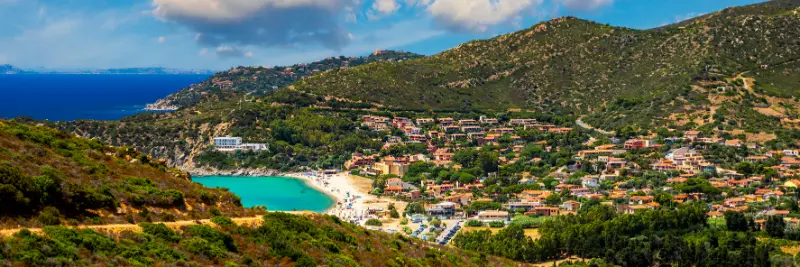
Villasimius is the kind of Sardinian destination that looks almost exaggerated in photographs: pale sand, bright blue shallows, granite headlands and a lagoon where flamingos may stand only a short distance behind the sea.
What makes it especially good as a base is variety. Porto Giunco, Punta Molentis, Simius, Cala Caterina and Capo Carbonara are close enough that you can adapt to wind, parking and mood without crossing the island. This article is built to help you decide what is worth doing, how long to stay and how this place fits naturally into a Sardinia itinerary.
If Villasimius is part of a longer route through Sardinia, our Sardinia travel guide is a useful starting point for choosing the next stop.
Quick planning summary
| Best for | families, couples, snorkeling, easy beach variety and travellers who want a dedicated south-Sardinia seaside base |
|---|---|
| Time needed | Three to five nights let you enjoy the coast without turning each day into a beach race. |
| Car | Useful for beach choice and coastal viewpoints, though a central stay plus shuttles can reduce parking stress in peak summer. |
| Main planning rule | Stay several nights and learn the local coast. Villasimius is wasted when treated as a single day trip where you spend more time searching for parking than swimming. |
Why this place feels different
The flamingo-backed landscape at Notteri and Porto Giunco gives Villasimius a visual identity that is different from Gallura. Here the beaches open into wider southern light, and Capo Carbonara creates a protected marine landscape rather than a string of tiny resort coves.
I would choose Villasimius over Chia when I want a more self-contained resort town, more restaurant choice and a compact set of beaches around one peninsula. I would choose Chia when I want a wilder road-trip feel and dunes.
Is it worth adding to your Sardinia trip?
Yes, especially for families, couples, snorkeling, easy beach variety and travellers who want a dedicated south-Sardinia seaside base. Stay several nights and learn the local coast. Villasimius is wasted when treated as a single day trip where you spend more time searching for parking than swimming.
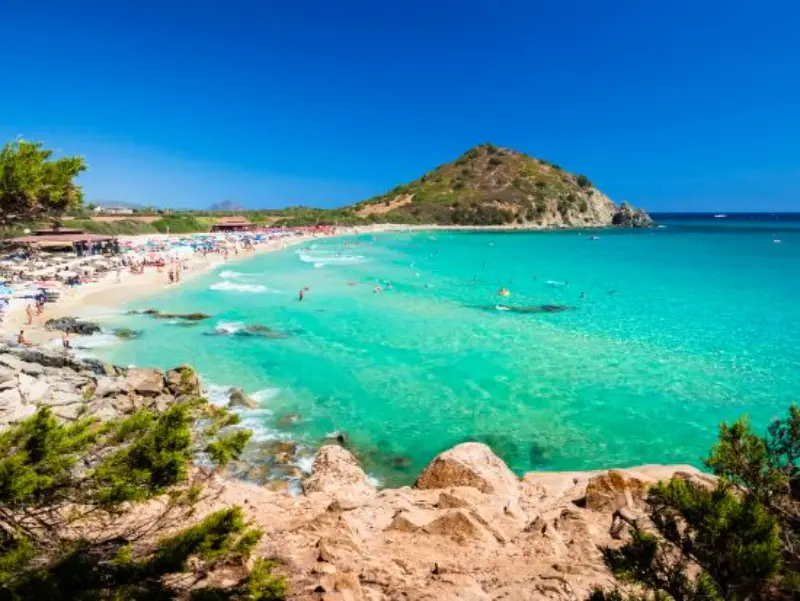
The real question is not whether the destination is beautiful—it is whether it belongs in the geographic cluster you are already visiting. Sardinia rewards coherent routes much more than long daily drives to isolated highlights.
What to see and experience
Porto Giunco
One of southern Sardinia’s defining beaches, backed by the Notteri lagoon and overlooked by a historic tower.
Give this stop enough time to feel distinct from the next one. Verify current access, parking, booking requirements or weather-sensitive conditions before travel rather than relying on an old itinerary.
Notteri lagoon
The wetland behind Porto Giunco is known for flamingos and creates a striking contrast between lagoon and sea.
Give this stop enough time to feel distinct from the next one. Verify current access, parking, booking requirements or weather-sensitive conditions before travel rather than relying on an old itinerary.
Punta Molentis
A photogenic peninsula with different water colours on either side; access can be managed in peak periods, so check current rules.
Give this stop enough time to feel distinct from the next one. Verify current access, parking, booking requirements or weather-sensitive conditions before travel rather than relying on an old itinerary.
Simius beach
A broad and convenient beach close to town, useful when you want an easier day without long driving.
Give this stop enough time to feel distinct from the next one. Verify current access, parking, booking requirements or weather-sensitive conditions before travel rather than relying on an old itinerary.
Cala Caterina
A smaller granite-framed cove with a more intimate feel than the longest sandy beaches.
Give this stop enough time to feel distinct from the next one. Verify current access, parking, booking requirements or weather-sensitive conditions before travel rather than relying on an old itinerary.
Capo Carbonara
The promontory and marine protected area add snorkeling, viewpoints and a stronger sense of landscape beyond beach towels.
Give this stop enough time to feel distinct from the next one. Verify current access, parking, booking requirements or weather-sensitive conditions before travel rather than relying on an old itinerary.
Isola dei Cavoli
Boat trips toward the island and protected waters can add a sea-focused experience when conditions are suitable.
Give this stop enough time to feel distinct from the next one. Verify current access, parking, booking requirements or weather-sensitive conditions before travel rather than relying on an old itinerary.
Villasimius town
The evening centre gives restaurants, shops and a relaxed pedestrian atmosphere that makes a multi-night stay easy.
Give this stop enough time to feel distinct from the next one. Verify current access, parking, booking requirements or weather-sensitive conditions before travel rather than relying on an old itinerary.
How to plan the day without rushing
A strong Sardinia day normally has one major experience in the morning, a proper lunch and one lighter beach, village or viewpoint later. Trying to fit three famous stops often means experiencing only parking areas and roads.
In summer, move important outdoor sightseeing earlier. Beaches become easier if you arrive before peak parking pressure, archaeological sites are more enjoyable before midday heat and old villages feel better after late-afternoon temperatures drop.
Use wind as part of the plan, not as an inconvenience. A beach that is perfect one day can be rough the next, while another coast nearby may be sheltered. Ask locally and keep one regional alternative.
Getting there and getting around
Villasimius is around the south-east coast from Cagliari. Summer traffic can make the transfer slower than expected, so avoid scheduling a flight too tightly after a beach morning.
Driving and parking
Sardinian road-trip days are slower than straight-line distance suggests. Coastal bends, narrow town approaches and beach parking can consume more time than expected. Park once and walk whenever the destination allows it.
When not to drive
Historic centres, boat days and some island experiences become easier when the car stays parked. Do not use the rental car simply because you have paid for it.
Where to stay around Villasimius
Stay in town for evening convenience, near Simius/Porto Giunco for beach access, or farther around the peninsula for quiet and a stronger reliance on the car.
Before booking, check the last part of the arrival route, parking, evening food options, stairs and how early you can start the next day. A slightly less scenic property can create a much better trip if the logistics are simple.
A realistic itinerary
Morning / Day 1
Day 1: Porto Giunco, lagoon and town evening.
Midday / Day 2
Day 2: Punta Molentis or another major beach according to access and wind.
Afternoon / Day 3
Day 3: Capo Carbonara/boat or snorkeling experience.
Evening / Extra time
Extra days: repeat the best nearby coast rather than adding long cross-island drives.
Food and local character
Seafood, bottarga, southern-Sardinian pasta and wines fit naturally. Use at least one evening in town rather than driving to a different resort every night.
Sardinia becomes much more interesting when meals change with geography. Gallura, Barbagia, the Oristano lagoons and the southern coast all tell different stories through food. Leave enough time for one unhurried regional meal rather than treating lunch as refuelling.
Best time to visit
April to June
Spring and early summer are excellent for road trips, archaeology and walking. The island is greener, temperatures are easier and major beaches are less crowded than in August.
July and August
Peak summer offers the warmest beach conditions and the fullest excursion schedule, but also the highest accommodation prices, traffic and managed-access pressure. Early starts become part of good planning.
September and October
Early autumn is outstanding for a mixed coast-and-culture trip. The sea can remain warm while towns and archaeological sites become easier to explore.
Winter
Cities, inland culture and archaeology can be rewarding with few visitors, while resort services, boat trips and small beach businesses may reduce substantially.
Costs, reservations and what deserves your budget
Spend first on the experience that defines the destination: a good boat trip, archaeological visit, guide, comfortable regional base or well-placed accommodation. Save on unnecessary daily transfers and hotel changes.
Peak-season beach parking, boat trips and controlled-access sites may require advance planning. Check the specific date rather than assuming last year’s procedure remains unchanged.
Families and accessibility
Broad sandy beaches and a developed town make Villasimius extremely family-friendly, especially for stays of several nights.
Serviced beaches can be practical, but sand, summer parking and some viewpoints remain challenging. Check exact facilities per beach.
With children or mobility needs, reduce the number of bases before reducing the quality of each day. Shorter transfers and known parking often matter more than adding another famous destination.
Common mistakes to avoid
- Day-tripping from far away in peak summer.
- Trying every beach in one day.
- Ignoring controlled access.
- Booking a flight immediately after a beach morning.
- Staying remote without considering evening transport.
How to fit this into a wider Sardinia route
For one week, two bases are usually enough. For ten days, two or three. The island becomes more enjoyable when you know one coastline well instead of sampling four distant coasts for a few hours each.
On transfer days, plan one major stop. Load the car, enjoy that place properly and reach the next base before dinner. Two or three large attractions between hotels almost always create a late, tiring arrival.
A simple decision test
Ask whether the destination adds something genuinely new to the trip. Another turquoise beach may not be as valuable as a nuragic site, mountain village or food region if the previous three days were already sea-focused.
Also compare the round-trip driving time with the time you will actually spend there. If the transfer is almost as long as the experience, either stay overnight or remove the stop.
What to verify close to travel
Recheck beach access, parking systems, reserve rules, boat schedules, archaeological opening hours, wildfire restrictions and wind forecasts. Save essential confirmations offline and keep one backup experience in the same region.
Pacing that keeps Sardinia beautiful
Alternate demanding and easy days. After a long boat excursion, major hike or cross-island drive, use the next morning locally. After a museum or archaeology day, let a beach afternoon remain genuinely slow.
The best Sardinia itineraries leave space for the thing you did not plan: a quiet cove suggested at breakfast, a longer meal, an unexpected festival or simply an evening where the town is beautiful enough that leaving would make no sense.
More practical detail that changes the experience
Before departure, put the hotel, parking point, main attraction and dinner area on the same map. This reveals whether the day is actually compact or whether every activity requires getting back into the car. A destination feels far more beautiful when you are not repeatedly solving logistics.
I would also protect one half-day without a timed reservation every two or three days. Wind, heat, road delays and simple travel fatigue can change priorities. Flexible time lets you repeat the beach you loved, stay longer in a village or move a boat trip to the day when the sea is genuinely better.
Finally, plan the end of the day. Know how far the hotel is, whether the final road is comfortable after dark and whether dinner requires another drive. Sardinia’s evening light and relaxed meals are part of the trip; do not sacrifice them to an overfilled daytime checklist.
What makes this destination worth slowing down for
Villasimius works particularly well when you stay long enough to react to wind. Porto Giunco, Simius, Punta Molentis and Cala Caterina face slightly different exposures, so local conditions can change which beach feels best. This is one reason a multi-night stay is much stronger than a single day trip from Cagliari.
Do not overlook the relationship between beach and wetland. At Notteri, flamingos and lagoon scenery sit immediately behind the coast, giving the area ecological interest that many beach resorts do not have. Early morning and late afternoon are the best times to appreciate that contrast without the strongest heat.
For a first stay, I would favour a central Villasimius base unless you know you want resort seclusion. Being able to walk to dinner makes every evening easier, while the beaches remain short drives away. A remote property can be beautiful but creates another car journey every night.
A final planning check before you book
Check the real arrival and departure times before counting this as a full day. A late flight, a slow rental-car pickup or an early departure can remove several usable hours. Protect the strongest experience by placing it on a full day, not on the margin of the trip.
Also review the route after dinner, not only the route in daylight. If the accommodation requires a long rural drive every evening, that may change where you want to stay. Sardinia is often most enjoyable when the final part of the day can be spent on foot near the hotel.
Related Sardinia guides
Cagliari — useful for continuing the route with content already published before this article.
Best Beaches in Sardinia — useful for continuing the route with content already published before this article.
7-Day Sardinia Itinerary — useful for continuing the route with content already published before this article.
Official information to check before travel
Access, parking, transport and seasonal conditions can change. Check the official or primary information source shortly before travel.
Last updated: October 17, 2026
Leave a Reply