
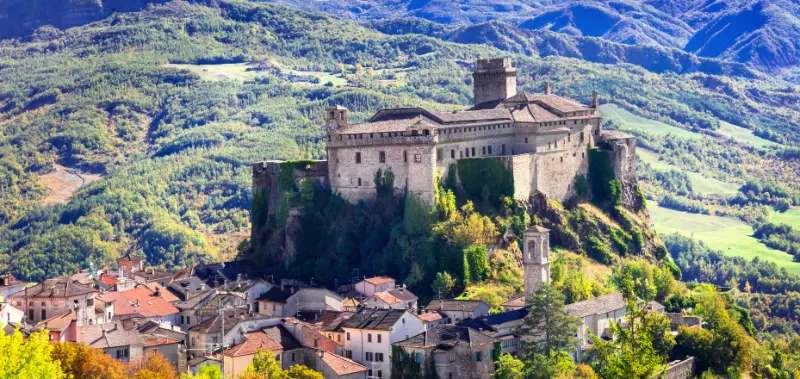
Canossa and Rossena Castles Guide: Matilda, Medieval History, Views and 2026 Visit Tips — Canossa is one of the rare medieval names that still carries meaning far beyond the physical remains of its castle. In January 1077 Emperor Henry IV came to this landscape during his conflict with Pope Gregory VII, creating the episode remembered as the “Walk to Canossa”. The ruins today are modest compared with a complete fortress, but the location, museum and surrounding Matildic hills give the site a historical weight that photographs alone do not convey.
Rossena, only a short drive away, provides the visual counterpoint. Its castle rises more intact above a volcanic crag, while the surrounding roads reveal the broken ridges and badlands that made this territory strategically important. Visiting the two together is much stronger than choosing one: Canossa supplies the political story, Rossena the architectural presence, and the landscape connects both to Matilda of Tuscany.
| Best for | medieval history, landscapes and road trips |
|---|---|
| Allow | one full day with Canossa, Rossena and nearby viewpoints |
| Canossa ticket | €4 published for Apr-Sep 2026 |
| Transport | car is the simplest option |
Why this deserves a place in your itinerary
The famous episode involved Emperor Henry IV seeking reconciliation with Pope Gregory VII after excommunication, with Matilda of Tuscany playing a central political role. Later retellings often simplify the event into a dramatic image of the emperor waiting barefoot in snow. At the site, focus on the broader Investiture Controversy and on Canossa’s role within a network of fortified Matildic places. Reggio Emilia and its province are strongest when you give each place a clear role in the trip rather than using them as interchangeable Emilia-Romagna stops. The city offers civic history, art and food; the hills and plain add landscapes and stories that cannot be reproduced in the centre.
Canossa and the 1077 encounter
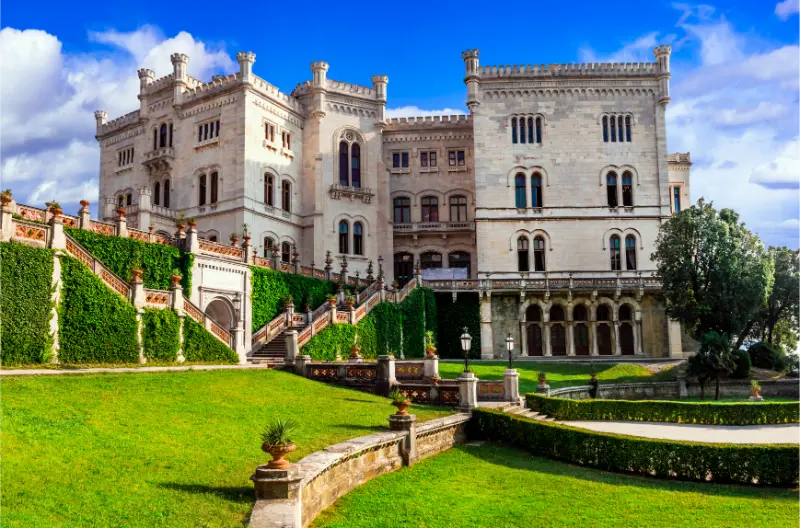
The famous episode involved Emperor Henry IV seeking reconciliation with Pope Gregory VII after excommunication, with Matilda of Tuscany playing a central political role. Later retellings often simplify the event into a dramatic image of the emperor waiting barefoot in snow. At the site, focus on the broader Investiture Controversy and on Canossa’s role within a network of fortified Matildic places.
What remains of Canossa Castle
Erosion, warfare and centuries of change mean that Canossa is a ruin rather than a preserved castle interior. This can surprise visitors expecting towers and furnished rooms. The value lies in reading the fragments against the cliff-top position and then using the Naborre Campanini museum to understand excavated material and the site’s history.
Allow a little more time than the bare walking distance suggests. Part of the appeal is noticing how the surrounding streets, squares and everyday activity change the experience of the monument. A five-minute detour for a market, bakery or viewpoint can be more memorable than squeezing in another minor interior.
The Naborre Campanini museum
The small national museum contains finds associated with excavations at the castle, including work begun in the nineteenth century. It gives context to architectural fragments that are otherwise difficult to interpret outside. Because the museum and ruins are exposed to the conditions of the site, practical access can be affected by weather or maintenance.
Rossena Castle
Rossena is dramatically positioned on a red volcanic rock outcrop and preserves a more legible fortress profile. The castle formed part of the defensive system connected with Canossa and changed through later centuries. Even when interior access is limited or scheduled, the exterior and surrounding landscape justify the detour for travellers already exploring the Matildic hills.
Allow a little more time than the bare walking distance suggests. Part of the appeal is noticing how the surrounding streets, squares and everyday activity change the experience of the monument. A five-minute detour for a market, bakery or viewpoint can be more memorable than squeezing in another minor interior.
The landscape between the castles
The roads around Canossa and Rossena move through ridges, fields, woodland and eroded clay formations. Stop at designated viewpoints rather than treating the drive as dead time. The geography explains why control of these heights mattered and why the Matildic story belongs as much to the terrain as to the surviving walls.
How to combine the day
A realistic day pairs Canossa and Rossena with one additional stop, not five. Options include a winery, a village meal, Bianello on a different route, or a short hike in the hills. If the castles operate guided or seasonal admission, protect those times first and let lunch and viewpoints remain flexible.
2026 practical information
For the period 1 April-30 September 2026, Canossa publishes opening Tuesday-Friday 10:00-17:00 and Saturday-Sunday 10:00-18:00, Monday closed, with a €4 full ticket and a €3 rate when presenting a Rossena Castle ticket. Free-entry days are scheduled on selected first Tuesdays and first Sundays from October through March and on certain local dates. Because this article is scheduled after 30 September, travellers should verify the autumn timetable directly before setting out. Accessibility is limited by the nature of the hilltop ruins.
Opening times, ticket conditions and temporary closures can still change for holidays, religious services, restoration work or special events. Recheck the official source a few days before travel whenever a specific interior is essential. This is particularly important in late 2026 because several cultural venues have restoration or seasonal changes.
A realistic way to plan the visit
- Book or verify Canossa first because seasonal hours are the key constraint.
- Arrive early enough to walk the ruins and museum without rushing.
- Drive to Rossena and allow time for exterior views even if interior access is limited.
- Have lunch in the hills rather than returning to Reggio between stops.
- Add one viewpoint, winery or short walk only if daylight and weather are favourable.
The historic centre is compact, but opening patterns matter more than distance. Churches pause tourist access during services, museums can have split or afternoon-only schedules, and specialist sites may open only on certain days. Build the day around the attraction with the narrowest opening window, then use squares, streets, food stops and exterior architecture as flexible elements. This produces a calmer itinerary and avoids crossing the centre repeatedly.
Getting there and moving around
Reggio Emilia is straightforward by regional train from Parma, Modena and Bologna, and the conventional railway station is close enough to the historic centre for most travellers to continue on foot or by local transport. High-speed trains use the architecturally striking Reggio Emilia AV Mediopadana station north of the centre, which is a different station and requires a transfer. Drivers should avoid navigating directly into restricted central streets and instead choose a signed car park on the edge of the old town.
Food and where it fits into the day
Do not leave food until the final hour of the day. Reggio Emilia is one of those cities where a bakery, trattoria or cheese tasting can be as location-specific as a museum. Erbazzone, cappelletti, tortelli, Parmigiano Reggiano, traditional balsamic vinegar and Lambrusco all add context to the territory. Reserve weekend lunch if one particular restaurant matters, especially when events or markets are taking place.
Tours and bookable experiences
Availability on organised tours changes through the year, so use a live activity widget to check whether a guided city walk, food experience or relevant province excursion is operating on your dates. For smaller Reggio destinations, self-guided travel is often the better option; the widget is most useful when a genuinely relevant experience is available.
Where to stay
For a first city visit, the historic centre gives the easiest evening experience and removes the need to use the car after dinner. If the trip is mainly about castles, dairies or the Apennines, accommodation with clearly described parking can be more useful than a central address. Compare cancellation terms when an outdoor or seasonal attraction is important to the itinerary.
Best time to visit
Spring and early autumn are the easiest seasons for combining the city with province excursions. Summer can be hot on the plain, although evening events and the Apennines provide alternatives. Winter gives the centre a quieter atmosphere and suits food-focused trips, but daylight is shorter and rural castles may reduce their schedules. Fog is part of the Po Valley climate and can change driving conditions in the Bassa.
Families and accessibility
For families, the flat central streets and short distances are a major advantage. The challenge is more about attention span than logistics: alternate a church or museum with a square, snack or open-air stop. Historic buildings can include steps and older lifts, and hilltop province sites are less accessible than the city. If step-free access is essential, verify the exact visitor route with the attraction rather than relying on a general accessibility label.
How to combine it with the rest of Emilia-Romagna
Reggio Emilia sits naturally between Parma and Modena, but a multi-city rail itinerary works best when each stop has enough time to feel distinct. If you are travelling by car, one city day plus one province day is a stronger use of two nights than commuting out to several distant regional capitals. The Matildic hills, Bassa Reggiana and food producers are the experiences that most effectively expand the city stay.
Continue planning
Mistakes to avoid
Common mistakes include confusing the central station with AV Mediopadana, assuming every church is continuously open to tourists, planning a city day around a museum that opens only in the afternoon, and trying to combine Reggio with several province attractions in one day. Another is treating the city only as a lunch stop between Parma and Modena. One well-planned day reveals far more than a rushed two-hour break.
Official sources to check before you go
- Castello di Canossa – 2026 opening information
- Regional Museums – Canossa and Naborre Campanini Museum
- Reggio Emilia Welcome – city and nearby Matildic castles
Final advice
Reggio Emilia is at its best when approached as a place to inhabit for a day rather than a collection of isolated attractions. Give the central squares time, choose one or two interiors that genuinely match your interests, eat something unmistakably local and leave enough flexibility for the rhythms of churches, markets and small museums. That slower approach is also the best preparation for exploring the province beyond the city.
Leave a Reply