
Reggio Emilia Travel Guide: Tricolore, Piazzas, Ghiara, Food and Practical Tips — Reggio Emilia is easy to underestimate because it sits between better-known Parma, Modena and Bologna, yet the city rewards travellers who prefer a compact historic centre, strong local identity and excellent food over a long checklist of blockbuster monuments. The Italian Tricolour was adopted here in 1797, the central squares still function as everyday meeting places, and a short walk connects Romanesque and Baroque churches with civic museums, contemporary art and one of Emilia’s most distinctive food traditions.
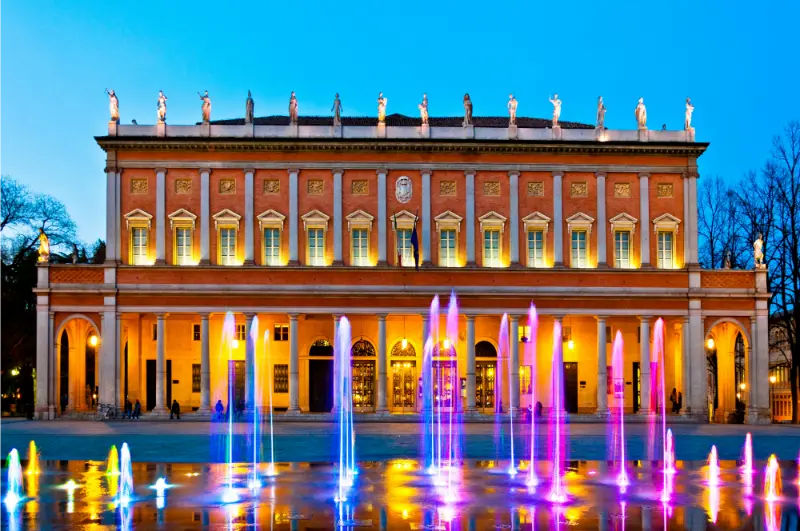
The city is particularly good for a slower one- or two-night stop. You can walk from Piazza Prampolini to Piazza San Prospero, the Basilica della Ghiara, the Teatro Valli and Palazzo dei Musei without needing a car, then use Reggio as a base for Parmigiano Reggiano dairies, the Matildic hills around Canossa or the Po-side villages of the Bassa. This guide focuses on what is genuinely worth prioritising and on the 2026 details that can affect a visit.
| Best for | art, food, Italian history and a relaxed Emilia city break |
|---|---|
| Allow | 1 full day; 2 days with museums and a nearby day trip |
| Main sights | Piazza Prampolini, Tricolore, Ghiara, San Prospero, Palazzo dei Musei |
| Best base | historic centre for walking; station area for rail convenience |
Why this deserves a place in your itinerary
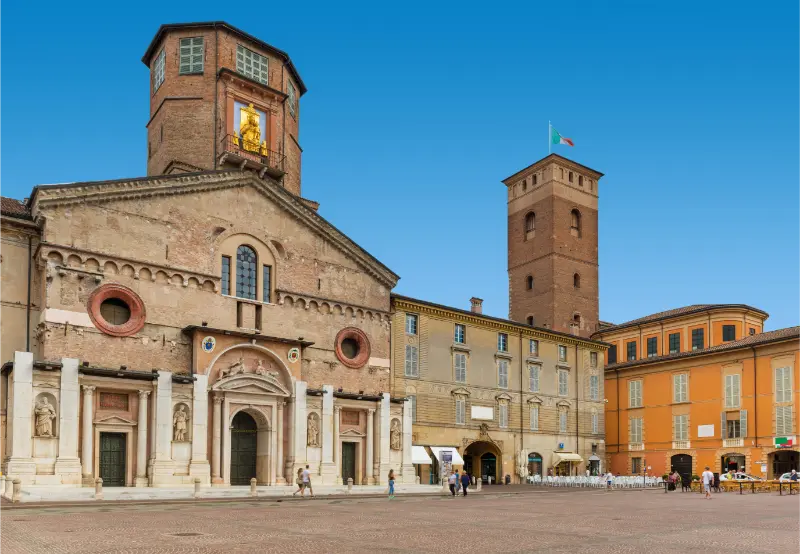
Known locally as Piazza Grande, Piazza Prampolini is the civic and religious heart of Reggio Emilia. The Cathedral, Town Hall, Baptistery and historic palaces frame a broad square that still hosts the traditional market on Tuesdays and Fridays. Inside the municipal complex are the Sala del Tricolore and Museo del Tricolore, while the Crostolo fountain adds one of the city’s most recognisable details. Start here before the centre becomes busier, then use the covered Broletto passage to reach Piazza San Prospero. Reggio Emilia and its province are strongest when you give each place a clear role in the trip rather than using them as interchangeable Emilia-Romagna stops. The city offers civic history, art and food; the hills and plain add landscapes and stories that cannot be reproduced in the centre.
Begin in Piazza Prampolini
Known locally as Piazza Grande, Piazza Prampolini is the civic and religious heart of Reggio Emilia. The Cathedral, Town Hall, Baptistery and historic palaces frame a broad square that still hosts the traditional market on Tuesdays and Fridays. Inside the municipal complex are the Sala del Tricolore and Museo del Tricolore, while the Crostolo fountain adds one of the city’s most recognisable details. Start here before the centre becomes busier, then use the covered Broletto passage to reach Piazza San Prospero.
Cross the Broletto to San Prospero
The short vaulted Broletto is one of the most atmospheric transitions in the centre. It links the monumental scale of Piazza Prampolini with the more intimate Piazza San Prospero, where porticoes, market life and the Basilica of the city’s patron create a very different mood. Inside San Prospero, the apse frescoes by Camillo Procaccini and the historic choir stalls make the church worth more than a quick exterior photograph.
Allow a little more time than the bare walking distance suggests. Part of the appeal is noticing how the surrounding streets, squares and everyday activity change the experience of the monument. A five-minute detour for a market, bakery or viewpoint can be more memorable than squeezing in another minor interior.
Make time for the Basilica della Ghiara
The Basilica della Beata Vergine della Ghiara is the city’s great Baroque interior. Its domes and vaults contain an extraordinary cycle of seventeenth-century Emilian painting, and the contrast with the more restrained Romanesque fabric elsewhere in the centre is striking. The basilica is active as a place of worship, so a flexible visit outside services works better than treating it as a museum with fixed tourist admission.
Understand the Tricolore story
The national flag is not a decorative theme added for visitors: it is central to Reggio Emilia’s civic identity. On 7 January 1797 representatives of Reggio, Modena, Bologna and Ferrara adopted the green, white and red flag of the Cispadane Republic in the hall that later became known as Sala del Tricolore. In late 2026 the Sala itself is temporarily closed for renovation, but the adjacent Museo del Tricolore remains the essential place for understanding this history.
Allow a little more time than the bare walking distance suggests. Part of the appeal is noticing how the surrounding streets, squares and everyday activity change the experience of the monument. A five-minute detour for a market, bakery or viewpoint can be more memorable than squeezing in another minor interior.
Add Palazzo dei Musei or contemporary art
Palazzo dei Musei is one of the best-value cultural stops in the city because admission is free and the collections combine archaeology, art, natural history and modern museum design. Travellers interested in photography should also check the 2026 Luigi Ghirri programme, while contemporary-art enthusiasts can consider Collezione Maramotti or the permanent urban works that give the city a surprisingly modern cultural layer.
Treat food as part of the sightseeing
Reggio Emilia’s food identity is strong even by Emilian standards. Erbazzone Reggiano IGP, cappelletti, tortelli verdi, Parmigiano Reggiano DOP, Traditional Balsamic Vinegar of Reggio Emilia, Lambrusco and Spergola belong to the place rather than functioning as generic “Italian food”. A bakery stop for erbazzone and a proper trattoria meal make the day feel more complete than adding another marginal monument.
2026 practical information
For autumn 2026, the Museo del Tricolore is open Tuesday-Friday 15:00-18:00 and Saturday, Sunday and public holidays 10:00-13:00 and 15:00-18:00, with free admission. The Sala del Tricolore is closed for renovation from 21 September 2026 through 6 January 2027. Palazzo dei Musei is also free, with autumn/winter opening Tuesday-Thursday 10:00-13:00 and Friday-Sunday/holidays 10:00-18:00. Church opening can be affected by services, so verify on the day.
Opening times, ticket conditions and temporary closures can still change for holidays, religious services, restoration work or special events. Recheck the official source a few days before travel whenever a specific interior is essential. This is particularly important in late 2026 because several cultural venues have restoration or seasonal changes.
A realistic way to plan the visit
- Morning: Piazza Prampolini, Cathedral and the Tricolore museum complex.
- Late morning: Broletto, Piazza San Prospero and the basilica.
- Lunch: erbazzone as a snack, then cappelletti or tortelli at a traditional restaurant.
- Afternoon: Basilica della Ghiara and Palazzo dei Musei or Teatro Valli exterior.
- Early evening: Piazza Fontanesi and the lanes of the historic centre.
The historic centre is compact, but opening patterns matter more than distance. Churches pause tourist access during services, museums can have split or afternoon-only schedules, and specialist sites may open only on certain days. Build the day around the attraction with the narrowest opening window, then use squares, streets, food stops and exterior architecture as flexible elements. This produces a calmer itinerary and avoids crossing the centre repeatedly.
Getting there and moving around
Reggio Emilia is straightforward by regional train from Parma, Modena and Bologna, and the conventional railway station is close enough to the historic centre for most travellers to continue on foot or by local transport. High-speed trains use the architecturally striking Reggio Emilia AV Mediopadana station north of the centre, which is a different station and requires a transfer. Drivers should avoid navigating directly into restricted central streets and instead choose a signed car park on the edge of the old town.
Food and where it fits into the day
Do not leave food until the final hour of the day. Reggio Emilia is one of those cities where a bakery, trattoria or cheese tasting can be as location-specific as a museum. Erbazzone, cappelletti, tortelli, Parmigiano Reggiano, traditional balsamic vinegar and Lambrusco all add context to the territory. Reserve weekend lunch if one particular restaurant matters, especially when events or markets are taking place.
Tours and bookable experiences
Availability on organised tours changes through the year, so use a live activity widget to check whether a guided city walk, food experience or relevant province excursion is operating on your dates. For smaller Reggio destinations, self-guided travel is often the better option; the widget is most useful when a genuinely relevant experience is available.
Where to stay
For a first city visit, the historic centre gives the easiest evening experience and removes the need to use the car after dinner. If the trip is mainly about castles, dairies or the Apennines, accommodation with clearly described parking can be more useful than a central address. Compare cancellation terms when an outdoor or seasonal attraction is important to the itinerary.
Best time to visit
Spring and early autumn are the easiest seasons for combining the city with province excursions. Summer can be hot on the plain, although evening events and the Apennines provide alternatives. Winter gives the centre a quieter atmosphere and suits food-focused trips, but daylight is shorter and rural castles may reduce their schedules. Fog is part of the Po Valley climate and can change driving conditions in the Bassa.
Families and accessibility
For families, the flat central streets and short distances are a major advantage. The challenge is more about attention span than logistics: alternate a church or museum with a square, snack or open-air stop. Historic buildings can include steps and older lifts, and hilltop province sites are less accessible than the city. If step-free access is essential, verify the exact visitor route with the attraction rather than relying on a general accessibility label.
How to combine it with the rest of Emilia-Romagna
Reggio Emilia sits naturally between Parma and Modena, but a multi-city rail itinerary works best when each stop has enough time to feel distinct. If you are travelling by car, one city day plus one province day is a stronger use of two nights than commuting out to several distant regional capitals. The Matildic hills, Bassa Reggiana and food producers are the experiences that most effectively expand the city stay.
Continue planning
Mistakes to avoid
Common mistakes include confusing the central station with AV Mediopadana, assuming every church is continuously open to tourists, planning a city day around a museum that opens only in the afternoon, and trying to combine Reggio with several province attractions in one day. Another is treating the city only as a lunch stop between Parma and Modena. One well-planned day reveals far more than a rushed two-hour break.
Official sources to check before you go
- Reggio Emilia Welcome – city overview
- Reggio Emilia Welcome – Piazza Prampolini
- Musei Civici – opening hours
- Reggio Emilia Welcome – Sala del Tricolore
Final advice
Reggio Emilia is at its best when approached as a place to inhabit for a day rather than a collection of isolated attractions. Give the central squares time, choose one or two interiors that genuinely match your interests, eat something unmistakably local and leave enough flexibility for the rhythms of churches, markets and small museums. That slower approach is also the best preparation for exploring the province beyond the city.
Leave a Reply