
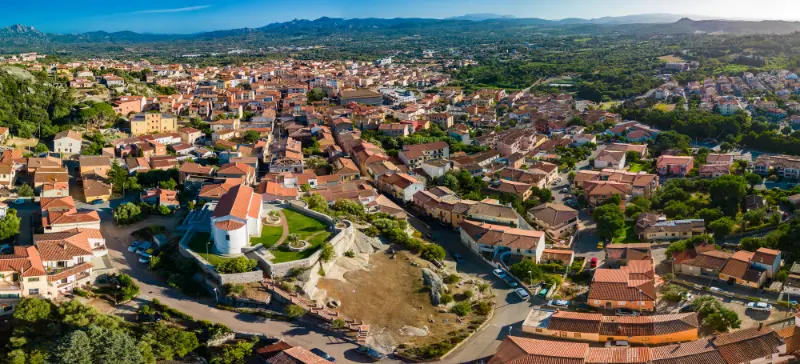
Long before Porto Cervo and Costa Smeralda reshaped Gallura’s global image, communities were building tomb circles, nuraghi, villages and monumental burial structures among these granite hills. Arzachena is where the north-east coast reveals its ancient foundations.
The archaeological park spreads across several sites dating from the Neolithic and Bronze Age into later periods. La Prisgiona and Coddu Vecchju are the headline pair, but Li Muri, Albucciu and Malchittu show that prehistoric Gallura was far more complex than a single monument. This article focuses on what makes the destination distinctive, how to experience it without rushing and where it belongs in a wider Sardinia route.
To see where Arzachena Before the Resorts fits into a wider Sardinia itinerary, use our Sardinia travel guide for transport, bases and possible neighbouring stops.
Quick planning summary
| Best for | nuragic archaeology, history, Gallura landscapes and travellers who want cultural depth behind the Costa Smeralda coast |
|---|---|
| Time needed | One full day is ideal for two or three major sites plus Arzachena town; serious archaeology lovers can use two days. |
| Car | Essential for efficiently moving between the dispersed archaeological sites around Arzachena. |
| Main planning rule | Choose two or three archaeological sites and give them real time. Do not try to visit every park component plus several famous beaches in the same day. |
What makes this place special
La Prisgiona changes the way Costa Smeralda is perceived because a substantial nuragic settlement sits only a short drive from one of Europe’s best-known resort coasts. The contrast between ancient granite architecture and modern luxury development is one of Gallura’s most interesting stories.
Coddu Vecchju and Li Lolghi show another side of nuragic society through Giants’ Tombs: monumental collective burial architecture whose stone façades feel remarkably integrated into the same granite landscape that defines today’s Gallura.
Why it is worth adding to your Sardinia trip
Choose two or three archaeological sites and give them real time. Do not try to visit every park component plus several famous beaches in the same day. The archaeological park spreads across several sites dating from the Neolithic and Bronze Age into later periods. La Prisgiona and Coddu Vecchju are the headline pair, but Li Muri, Albucciu and Malchittu show that prehistoric Gallura was far more complex than a single monument.
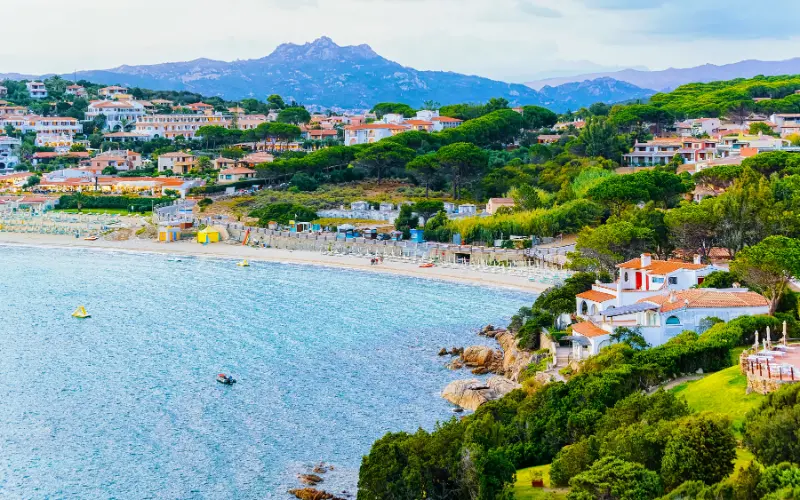
The best decision is geographic as much as emotional. Sardinia is large, so a beautiful destination adds more value when it fits the same coast, mountain region or transfer direction as the rest of your trip.
What to see and experience
La Prisgiona
A major nuragic village and complex with a central tower, surrounding structures and evidence of organized settlement life.
Give this stop enough time to have its own identity. Check current access, parking, opening hours, weather or reservation requirements shortly before travel, especially for protected beaches, parks, ferries and archaeological sites.
Coddu Vecchju
One of Gallura’s best-known Giants’ Tombs, particularly impressive for its tall central stele and monumental forecourt.
Give this stop enough time to have its own identity. Check current access, parking, opening hours, weather or reservation requirements shortly before travel, especially for protected beaches, parks, ferries and archaeological sites.
Li Muri necropolis
A much earlier Neolithic necropolis with circular tombs, revealing prehistoric Gallura long before the nuragic period.
Give this stop enough time to have its own identity. Check current access, parking, opening hours, weather or reservation requirements shortly before travel, especially for protected beaches, parks, ferries and archaeological sites.
Nuraghe Albucciu
A distinctive nuraghe integrated with a granite outcrop, showing how builders adapted monumental architecture to natural rock.
Give this stop enough time to have its own identity. Check current access, parking, opening hours, weather or reservation requirements shortly before travel, especially for protected beaches, parks, ferries and archaeological sites.
Malchittu temple
A small religious structure in a granite landscape, useful for understanding that nuragic sacred architecture was not limited to towers.
Give this stop enough time to have its own identity. Check current access, parking, opening hours, weather or reservation requirements shortly before travel, especially for protected beaches, parks, ferries and archaeological sites.
Li Lolghi
Another monumental Giants’ Tomb in the Arzachena countryside, valuable when you want to compare burial forms.
Give this stop enough time to have its own identity. Check current access, parking, opening hours, weather or reservation requirements shortly before travel, especially for protected beaches, parks, ferries and archaeological sites.
Arzachena town
The town itself offers cafés, the Santa Lucia staircase and local museums/interpretation between archaeological stops.
Give this stop enough time to have its own identity. Check current access, parking, opening hours, weather or reservation requirements shortly before travel, especially for protected beaches, parks, ferries and archaeological sites.
Costa Smeralda contrast
Pairing archaeology with one nearby coastal stop creates a much more complete understanding of Gallura than a beach-only itinerary.
Give this stop enough time to have its own identity. Check current access, parking, opening hours, weather or reservation requirements shortly before travel, especially for protected beaches, parks, ferries and archaeological sites.
How to plan the day without flattening the experience
A good Sardinia day usually has one clear centre of gravity. Make the main beach, archaeological area, hike, boat trip or cultural district the priority, then add one complementary experience nearby instead of chasing a second headline destination across the map.
In summer, use cooler hours for archaeology, old towns and exposed walking. Beach parking and managed-access systems often reward earlier starts. Late afternoon is especially valuable for villages, viewpoints and waterfronts because day-trip pressure falls and the light becomes softer.
Keep weather-sensitive plans movable. Wind changes beach comfort, ferries and boat excursions; heat changes hiking; fire restrictions can affect nature areas. A flexible regional alternative is far more useful than an ambitious fixed schedule.
Getting there and getting around
The sites are dispersed; use a car and check current ticket combinations/opening arrangements. Avoid trusting one old timetable because managed hours can change seasonally.
Driving strategy
Use the car to connect regions, not to move between every sight. Once you have reached a compact town or archaeological cluster, park and walk. The constant search for the closest parking space can consume more time than a ten-minute walk.
Transfer-day rule
When changing hotels, choose one substantial stop between bases. Luggage, check-out, road time, parking and check-in all make transfer days slower than normal sightseeing days.
Where to stay around Arzachena
Arzachena/Cannigione are practical for archaeology and coast, while Costa Smeralda resorts are stronger for beach luxury but often require more driving inland.
Check evening logistics before booking. A spectacular remote room may be perfect for silence but frustrating if every dinner requires a dark rural drive. In a town, a central room can justify higher pricing by removing repeated parking and taxi costs.
A realistic itinerary
Start / Day 1
Begin at La Prisgiona before the strongest heat.
Midday / Day 2
Continue to Coddu Vecchju and have lunch in Arzachena or nearby countryside.
Afternoon / Day 3
Choose one additional site such as Li Muri, Albucciu or Malchittu rather than all of them.
Evening / Extra time
Use late afternoon for San Pantaleo, Cannigione or a nearby coast stop if energy remains.
Food and local character
An inland Gallura lunch or agriturismo meal fits the archaeology day better than rushing back to Porto Cervo between sites.
Food should reinforce the geography of the trip. North-west fishing traditions, Gallura’s inland cuisine, Barbagia pastoral dishes and Sulcis island food are not interchangeable. One place-specific meal often tells you more than another generic sightseeing stop.
Best time to visit
April to June
Spring and early summer are excellent for culture, hiking and road trips. Landscapes are greener, temperatures are easier and the busiest beach-management period may not yet be at full pressure.
July and August
Peak summer brings the warmest sea, busiest ferries and fullest excursion schedules, but also the strongest heat, highest prices and greatest need for parking or reservation planning.
September and October
Early autumn is one of Sardinia’s best periods for combining sea and culture. Later in autumn, exposed islands and boat plans require more weather flexibility.
Winter
Cities, archaeology and inland culture can be rewarding, while small-island services and beach-resort infrastructure become much quieter.
Costs and what is worth booking
Spend first on the experience that defines the destination: a qualified park visit, meaningful boat trip, archaeological ticket, guide or strategically located accommodation. Save money by reducing unnecessary hotel changes and unused rental-car days.
Peak-season ferries, protected beaches, small-island rooms and capacity-managed experiences may require advance booking. Always check the current official procedure rather than assuming last year’s system still applies.
Families and accessibility
Nuraghi can be visually engaging for children, but uneven stones and exposed heat make shorter site combinations more successful.
Ancient sites include irregular ground and steps; verify current accessible routes and visitor-centre options for each monument.
Families and travellers with mobility needs benefit from fewer bases and exact last-mile research. The return climb from a beach, distance from legal parking or ferry boarding can matter more than the headline attraction itself.
Common mistakes to avoid
- Seeing Costa Smeralda without any Gallura archaeology.
- Trying all archaeological sites in one day.
- Visiting ruins at peak midday in August.
- Assuming one ticket or timetable never changes.
- Treating La Prisgiona as a ten-minute photo stop.
How to fit it into a wider Sardinia route
For one week, two regional bases are usually enough. Ten days can support three. If this destination requires a long out-and-back from the opposite side of the island, it probably belongs in a different trip or deserves an overnight stay.
Count not only kilometres but also the number of mornings that begin with luggage. A route can look efficient geographically while feeling exhausting because every night is somewhere new.
The beauty test
Ask whether your schedule leaves time to experience the quality that made you choose the destination in the first place. If a famous beach gets forty-five minutes because the next town is waiting, or a village is reduced to one photograph from the car, the route is working against the destination.
A better itinerary protects one memorable period each day: an uncrowded morning, a long lunch, a late-afternoon walk or an evening when you can stay because the light and atmosphere are better than expected.
A practical backup plan
For every sea or weather-dependent day, keep one nearby cultural or landscape alternative. The backup should be in the same region so that a cancelled boat or windy beach does not trigger a cross-island emergency drive.
Before setting out, save the parking point, official access page and the final return option offline. This is particularly useful in protected areas and rural coast where reception may be weaker.
A slower version of this visit
If Arzachena is one of the destinations you are genuinely excited about, give it more time than the minimum. The places that define Sardinia are often most beautiful before the first excursion arrives, during a long midday meal, or in the hour before sunset when there is no reason to move on.
I would also separate the main experience from the transfer day whenever possible. Arriving the night before a major hike, protected beach or ferry excursion gives you control of the start time and avoids losing the reservation because of road delays, parking or rental-car queues.
When choosing accommodation, compare the real morning departure rather than the hotel description. A room only a few kilometres away can still require a slow road, limited parking or a difficult walk. Conversely, a central base may let you leave the car untouched for an entire evening and make the destination feel much more relaxed.
What I would remove if the day becomes too full
Remove the secondary viewpoint, the second beach or the extra village first. Keep the experience that is unique to this place. A Sardinia trip improves dramatically when you stop treating every pin on the map as equally important.
That rule also protects driving safety. Long coastal or mountain roads are more demanding after heat, swimming or a large lunch, and reaching the hotel before dark can be more valuable than squeezing in one last stop.
Which Arzachena sites should a first-time visitor choose?
If you only have one archaeology day, I would start with La Prisgiona and Coddu Vecchju because they show two complementary aspects of nuragic culture: settlement and collective burial. Add Li Muri if you want to reach further back into the Neolithic, or Albucciu if you are especially interested in how buildings interact with natural granite.
This is a better strategy than racing through every ticketed site. Prehistoric architecture becomes more intelligible when you have time to look at construction, landscape and relationships between monuments instead of collecting entrance stamps.
Why archaeology improves a Costa Smeralda holiday
A day in Arzachena changes the tone of a north-east Sardinia trip. After marinas, beach clubs and famous coves, seeing a Bronze Age village and monumental tombs makes Gallura feel much older and more culturally specific. The contrast also prevents Costa Smeralda from becoming the only story of the region.
For families, archaeology can work especially well in the morning followed by one beach later. Children often respond better to towers, tombs and granite forms when the visit is short and focused, while adults still get the historical depth that a beach-only itinerary lacks.
One final archaeology tip
Take a few minutes between sites to look at the granite landscape itself. The same stone that shapes Gallura’s beaches and luxury-coast scenery also frames the prehistoric monuments, and noticing that continuity makes the archaeological day feel connected to the rest of the region.
Related Sardinia guides
Costa Smeralda — useful for extending the route with content already public by this article’s publication date.
Olbia — useful for extending the route with content already public by this article’s publication date.
Su Nuraxi di Barumini — useful for extending the route with content already public by this article’s publication date.
Official information to verify before travel
Access rules, ferries, protected-area procedures and opening hours can change. Check the official or primary information source close to your travel date.
Last updated: October 17, 2026
Leave a Reply