
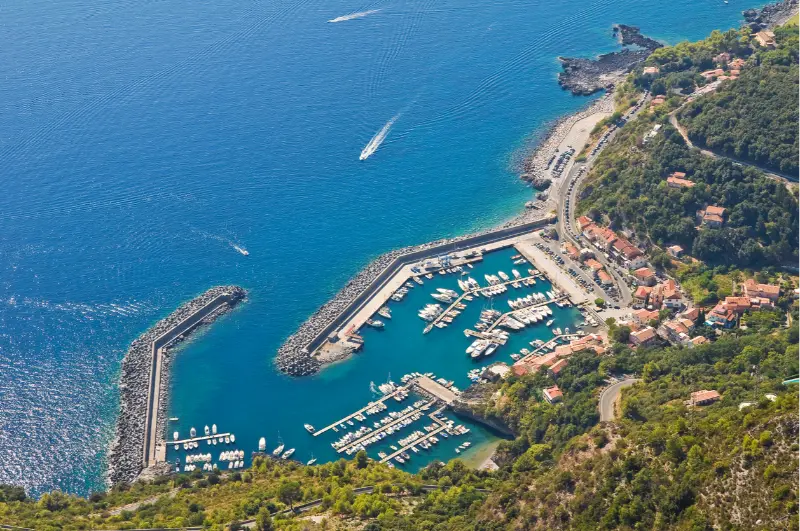
Maratea offers a different Basilicata from the stone city of Matera. The western edge of the region drops toward the Tyrrhenian Sea in a succession of steep slopes, coves, harbors and hill settlements, and the great Cristo Redentore statue looks out from Mount San Biagio above the town. Travelers who see a beach photograph and book a room marked simply Maratea sometimes arrive surprised: the historic center, waterfront, harbor and coastal hamlets are separate places, joined by winding roads and changes in elevation. This guide explains how to choose a practical base, combine the statue with the old town, select a beach for your own travel style and avoid wasting a summer day looking for parking or a cove whose access is less convenient than it appears online.
In this guide
- First understand Maratea's scattered geography
- Discover the historic center rather than skipping it
- Cristo Redentore: plan access to Mount San Biagio
- San Biagio and the town's deeper history
- Choose a beach by access, not a dramatic picture
- The harbor: boats, dinner and an evening walk
- Snorkeling and coastal safety
- Where to stay in Maratea
- Arriving by train and traveling without a car
- A balanced two-day Maratea plan
- Add Maratea to a wider Basilicata itinerary
- Best time to visit and seasonal trade-offs
- Food, environment and respectful travel
- Frequently asked questions
First understand Maratea's scattered geography
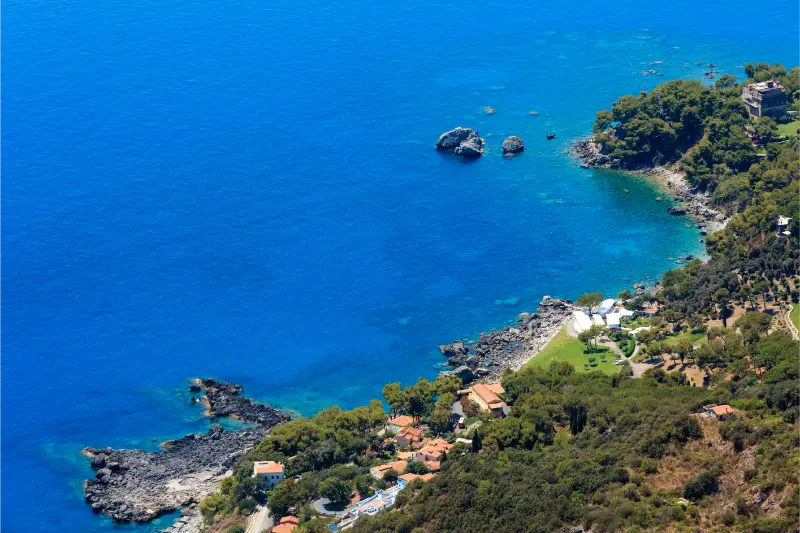
Maratea is a municipality of distinct neighborhoods rather than one compact beachfront resort. The historic town sits above the shore, the Porto area has its own small waterfront scene, and bathing spots are scattered along an indented coast with short access roads. A map that shows the straight-line distance between your accommodation and the sea may hide substantial altitude change. Before booking, locate the front door, the public beach approach and the nearest road or parking point. Staying in the old center makes sense for evenings among restaurants and churches; staying near a selected cove works better if your plan is to swim every morning. Do not assume a property advertised as having a sea view includes walkable beach access. In peak summer, a short car journey can require extra time because of traffic, parking limits and the number of visitors using the same narrow approach.
Our Basilicata travel guide places Maratea Travel in the context of the wider region, including travel times and alternative bases.
Discover the historic center rather than skipping it
Maratea’s old town deserves more than a hurried meal after a beach day. Explore its sloping streets, squares and churches to appreciate a settlement whose identity is rooted in the hills as much as the sea. Shops and cafés bring everyday life to the streets, particularly in the evening when temperatures fall. Instead of treating every church facade as another stop on a list, choose a relaxed walking circuit and pay attention to the different views toward mountains and coast. If you are staying outside the center, confirm parking and how far the walk climbs from the practical arrival point. Visitors with limited mobility should ask about slopes and irregular steps before planning a long circuit. Restaurants can be busy during the main holiday period, and reservations are wise if the evening schedule depends on a particular place. A sunset visit here combines naturally with the Cristo Redentore outing, subject to conditions on the mountain road.
Cristo Redentore: plan access to Mount San Biagio
The imposing statue of Christ the Redeemer is the town’s most recognized landmark, located high on Mount San Biagio. The views of sea, hills and coastline are an important part of the experience, and they are best enjoyed without a rushed schedule. Road access, local traffic restrictions, shuttle arrangements and visitor management can vary, especially in busy months. Confirm the current system through the municipality’s tourism information before setting off: do not assume that private vehicles are always permitted to drive to a parking space beside the monument. Choose sturdy shoes for steps and outdoor surfaces and check the weather because wind can be strong at elevation even on a seemingly calm beach day. A cloudy or stormy forecast may make the outing unrewarding or unsuitable. Treat the visit as a half-day experience when combined with the historic center, not a guaranteed five-minute roadside stop.
San Biagio and the town's deeper history
Mount San Biagio is more than a platform for one modern landmark. Religious history, the earlier fortified settlement and the mountain setting help explain why the site became so significant to Maratea. The sanctuary area should be approached respectfully, especially during religious celebrations. Read local interpretation material and look outward to the geography: the high settlement and the lower town express how communities historically balanced protection, cultivation, maritime contact and access to water. Many travelers arrive focused on the statue’s photograph and overlook these stories. Do not enter closed structures or unstable remains, and remember that a sacred site is not just a viewpoint. Weather and crowd conditions can change the atmosphere substantially between an early morning visit and the middle of a summer afternoon.
Choose a beach by access, not a dramatic picture
Maratea’s shoreline includes pebble beaches, rocky swimming entries, coves and more developed bathing areas. Each requires a different plan. Families may prefer an established beach with services, predictable access and lifeguard coverage, while confident swimmers might choose a site known for snorkeling on a suitable day. Some coves are reached by steps or paths unsuitable for strollers or people with mobility limitations; others require a journey down narrow roads with limited parking. Consult a detailed map and recent official local information for your chosen beach rather than assuming that every beautiful photo represents the same easy approach. Consider shade, toilets, rental umbrellas, water conditions and the walk back uphill with wet equipment. A beach that is perfect for two adults traveling light can be frustrating for a family carrying supplies.
The harbor: boats, dinner and an evening walk
Maratea’s Porto is an atmospheric contrast to the old hilltop town. Boats, waterfront tables and small-scale maritime activity make it pleasant for a slower evening, especially if you want to end a beach day without another ascent through the historic center. Boat outings may provide views of the coastline that road travelers cannot easily see, but availability depends on sea conditions and the operating season. Check where a tour departs, how long it lasts, whether swimming stops are actually included and what happens if the weather turns. Do not treat photographs of distant caves or coves as a promise that every vessel enters them. Parking can be tight in popular periods; consider walking from nearby accommodation or arriving before dinner demand increases. The harbor is also a practical reminder that Maratea is a maritime community rather than simply a collection of beach establishments.
Snorkeling and coastal safety
The clear water and rocky environments of the Tyrrhenian coast can be appealing for snorkeling, but conditions are not uniformly safe. Underwater visibility varies with weather and waves, and rock entries may be slippery or exposed. Use suitable footwear where needed, avoid entering the water alone in remote areas and respect any boating exclusion zones or local marine rules. Choose an accessible swimming site with a clear exit point rather than attempting to reach an isolated cove because it appears close from above. Families should check water depth and entry gradient, while visitors unfamiliar with open-water swimming may be happiest using a supervised beach. Boat tours and snorkeling excursions should be booked with reputable operators who explain safety procedures. A good sea day is one adapted to the conditions, not forced to match the itinerary.
Where to stay in Maratea
Accommodation falls into several practical types: old-town guesthouses for walkable evenings, harbor-area properties for a maritime atmosphere, and coastal hotels or apartments for selected beaches. Hillside resorts may offer extraordinary views but require a vehicle for almost every outing. Ask whether there is on-site parking, whether access roads are steep, and whether public transportation realistically reaches the beach or restaurant you intend to use. A room with a panoramic balcony can be wonderful if you prioritize quiet, while a small hotel within walking distance of a lido may be better for children. Verify actual route distance instead of accepting claims such as a five-minute drive without knowing the road. In August, reservations and cancellation terms deserve extra scrutiny because demand and congestion are higher. Outside summer, confirm that any promised beach-related services will be operating during your stay.
Arriving by train and traveling without a car
Maratea has a railway connection on the Tyrrhenian corridor, which can make an arrival by train possible, but the station is not a substitute for door-to-door transport to every hamlet or the upper town. Check the exact station, train service, accommodation transfer and onward journey before deciding to travel entirely without a vehicle. A property near the old center might not be within comfortable walking distance of the platform when altitude and luggage are considered. Seasonal local connections can vary, and taxis should not be assumed instantly available late at night. If you have no car, choose lodging with practical transfers and limit the beach plan to locations you can reach reliably. Drivers should be aware that narrow coastal approaches and summertime parking demand may matter more than the nominal road distance from their room.
A balanced two-day Maratea plan
On the first day, explore the historic center at a measured pace, then head toward Mount San Biagio after confirming the access arrangements and weather. Take time for the sanctuary setting and viewpoints instead of rushing to another beach before sunset. In the evening, enjoy dinner around the center or Porto depending on where you are staying. On the second day, choose one bathing area deliberately and stay long enough to relax; if a licensed boat excursion appeals to you and sea conditions cooperate, substitute it for part of the beach schedule. Keep a flexible afternoon for a second cove or a quiet waterfront walk. Two days is enough to understand Maratea’s contrasts. Trying to visit every beach listed online in one day turns the coast into a parking and driving exercise rather than a vacation.
Add Maratea to a wider Basilicata itinerary
Maratea pairs most naturally with a Tyrrhenian coastal route and nearby areas of southern Campania or northern Calabria. It can also provide a coastal ending to a Basilicata trip that starts in Matera and crosses the mountains, but this requires more travel time than people often expect. Do not schedule the Maratea beach day as an effortless side trip from Matera without looking at the actual route. For a week that prioritizes heritage, Matera and the Vulture may be a more coherent pairing; for a summer vacation that needs swimming, Matera plus Maratea makes sense if you accept a transfer day and choose your departure gateway carefully. Stay overnight rather than trying to compress the town, statue, port and multiple beaches into one hurried stop.
Best time to visit and seasonal trade-offs
Late spring and early fall are attractive for mixed sightseeing and coastal views, with milder conditions for hill walks. Summer is the period when beaches and boat services usually have the fullest tourist offering, but parking and accommodation can be more competitive. Swimming conditions depend on the sea rather than the calendar alone. Winter and the low season offer quieter scenery, though coastal services, restaurants and boat operations may be reduced. The exposed summit can be windy even when the harbor feels sheltered. Always check the actual conditions and local access notices before planning a day centered on the statue or a boat trip. A little flexibility lets Maratea remain enjoyable when the original beach forecast changes.
Food, environment and respectful travel
Coastal menus naturally feature seafood, while nearby hill communities contribute regional vegetables, cured products, bread and pasta traditions. Look for small places cooking seasonal food and ask about daily catches rather than assuming every seafood dish is locally sourced. Do not leave litter on paths leading to coves or park illegally on narrow roads that emergency vehicles may need. Natural beaches are not stages for elaborate photo sessions; avoid fragile vegetation and respect private coastal properties. Bring water on exposed paths, follow lifeguard advice, and do not climb barriers around viewpoints. The coast’s appeal depends on both natural quality and the functioning communities that care for it, so choose responsible operators and spend time in the town as well as at the beach.
At a glance
| Suggested stay | Two or more nights for town, statue and a beach |
|---|---|
| Main decision | Old town, harbor or a coastal hamlet |
| Getting around | Car or verified transfers between separated districts |
| Before visiting | Check summit road and beach access arrangements |
Related guides on MyItalyExperience
- Basilicata Travel Guide: Matera, Mountains, Coast and Vulture
- Where to Stay in Basilicata: Best Bases for Every Type of Trip
- Seven Days in Basilicata: A Realistic Matera-to-Vulture Road Trip
- Best Time to Visit Italy: A Month-by-Month Guide for Every Kind of Trip
Official sources for up-to-date details
Coastal access and the Mount San Biagio approach can depend on weather and local traffic arrangements. Recheck these official Maratea and national tourism resources near your visit.
Frequently asked questions
Is Maratea a good alternative to the Amalfi Coast?
It offers a different, quieter-feeling mix of hill settlements, coves and dramatic coastline, but transport and road access work differently. Choose it for its own character rather than expecting an exact copy of the Amalfi Coast.
Can I walk from Maratea old town to the beach?
Not necessarily. The historic center is uphill and beaches are scattered along the municipality. Check the exact property and bathing area’s route before booking a car-free stay.
Can I drive directly to Cristo Redentore?
Traffic arrangements and access restrictions may change by season and event. Confirm current vehicle, shuttle or pedestrian access with Maratea’s official visitor information before setting out.
How many days are enough in Maratea?
Two nights let you see the old town, the statue setting and a selected beach without excessive rushing. Extra days suit travelers who want multiple coastal outings or relaxing swimming time.
Are the beaches sandy and easy for children?
They vary from pebbly or rocky coves to more managed bathing spots. Choose a specific supervised beach with suitable entry and facilities rather than assuming the entire coastline has the same conditions.
Last updated: October 17, 2026