

Matera is not simply a town of cave hotels and scenic stairways. Its Sassi preserve a striking relationship between rock, architecture, water storage and human settlement, while the limestone Murgia across the Gravina ravine holds a landscape of rupestrian churches, paths and archaeological traces. UNESCO recognizes the Sassi and the Park of the Rupestrian Churches together, and a good visit should honor that connection. First-time travelers often make two mistakes: trying to cover everything in a rushed afternoon and underestimating the number of steps between attractions that appear close on a map. This guide offers a practical way to explore both Sasso Barisano and Sasso Caveoso, choose meaningful interiors, find viewpoints without unsafe shortcuts and decide whether sleeping in a cave room fits your actual travel needs.
In this guide
- Understand Matera's three main historic areas
- Start with a panorama before entering the Sassi
- Explore Sasso Barisano as a lived-in urban system
- Sasso Caveoso: dramatic terraces and cave churches
- The cathedral and the Civita ridge
- Discover the water system and former cave dwellings
- Visit the rupestrian churches with context
- Cross the ravine in planning, not by improvisation
- A realistic one-day Matera itinerary
- Two days in Matera: add the plateau and slower discovery
- Where to stay: cave rooms and practical alternatives
- Arriving from Bari and traveling without a car
- Photography, accessibility and respectful visiting
- Frequently asked questions
Understand Matera's three main historic areas
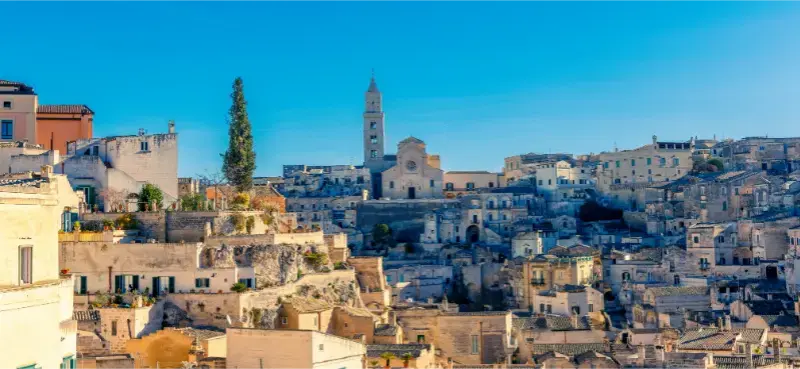
The old settlement is organized around Civita, the elevated historic nucleus with the cathedral, and two Sassi districts descending around its sides. Sasso Barisano occupies one branch of the urban hollow; Sasso Caveoso curves toward the ravine on the other side. The streets often function as roofs for homes beneath them, so a route that appears direct on a flat map can involve steep stairs, changes of level or a long detour. The newer historic center, sometimes called the Piano, runs above the Sassi with broader streets, squares, shops and easier access to vehicles. A useful first walk begins on that upper edge, where you can see the basic geography, then descends into one Sasso and gradually climbs back toward the central spine. The cathedral between the two districts makes a reliable orientation point. Avoid using a single famous viewpoint as your navigation system; instead locate the district and entrance of each museum.
If Matera Sassi is part of a longer route through Basilicata, our Basilicata travel guide is a useful starting point for choosing the next stop.
Start with a panorama before entering the Sassi
A viewpoint from the upper town allows you to understand Matera’s construction: tiers of houses, rock cavities, churches and terraces connected by passages rather than conventional city blocks. Piazza Vittorio Veneto and accessible overlooks near the central historic spine can be logical starting areas, depending on temporary works and local access. Take a few minutes to identify the cathedral and the deep line of the ravine, then watch how the houses follow the natural landform. This context turns the rest of the visit into more than a sequence of photogenic corners. At peak summer midday, stone surfaces reflect strong heat; morning or late afternoon is more comfortable for longer walks. Wear shoes with dependable grip because polished paving and shallow steps can be slippery after rain. A panoramic view can be enjoyed with less effort than a full descent, which is particularly valuable for visitors with reduced mobility.
Explore Sasso Barisano as a lived-in urban system
In Sasso Barisano, look beyond the doors of restaurants and accommodations to understand how living spaces were carved, enlarged and connected over time. A dwelling might incorporate an excavated room behind a constructed frontage, while cisterns and gutters reveal the importance of conserving water. Restored buildings show only selected moments in a much longer history, so a reputable house museum or guided historical explanation adds valuable perspective. Keep to public streets and recognized visitor interiors. Many cave openings are private, and the fact that something looks ancient does not make it an attraction open to tourists. The best approach is to walk slowly between a handful of sites, with stops to examine how the street level changes. Trying to enter every advertised cave venue often becomes repetitive and expensive without adding much understanding.
Sasso Caveoso: dramatic terraces and cave churches
Sasso Caveoso often offers some of Matera’s most recognizable ravine-side scenes. Homes, steps and rock-cut spaces descend toward open views, while the historic churches add a record of changing faith traditions. Choose one or two churches whose art or architecture interests you instead of assuming every rupestrian interior contains the same frescoes. Some are managed collectively, while special openings or access requirements may vary. A guided visit can be worthwhile when it explains the function of the spaces and the conservation challenges of painted plaster in rock cavities. The lanes are steeper than they may appear online, and certain viewpoints approach unprotected drops. Keep children close, avoid barriers and do not walk onto unstable ledges merely for a better camera angle. The Sassi reward patience, not speed.
The cathedral and the Civita ridge
Matera Cathedral occupies a raised position on the Civita, between the two main Sassi districts. It provides an architectural contrast with the excavated spaces below and a strong sense of the old city’s civic and religious center. The building’s Romanesque origins can be appreciated in the exterior, while interior access and religious functions should be treated respectfully. Do not assume a church is open for tourism throughout the day, particularly during worship or special services. From nearby streets you can look into different quarters of the Sassi without descending to the bottom each time. This is a good stop after a morning walking circuit, giving the legs a break while reconnecting the individual districts into a coherent cityscape. On a shorter visit, the cathedral area helps you understand Matera even if you enter few museums.
Discover the water system and former cave dwellings
One of Matera’s central historical achievements was surviving in a stony environment through management of rainwater and underground storage. Cisterns and channels adapted to the geology reveal the ingenuity—and difficulties—of everyday life. Selected underground spaces and interpreted house museums can help explain how rooms housed families, animals, tools and household goods under conditions very different from the restored boutique hotels seen today. The historical story includes poverty, sanitation problems and relocation in the twentieth century, followed by later restoration and renewed habitation. A responsible guide does not romanticize deprivation as authentic charm. Look for museums that explain those social changes alongside architecture. Exhibits may have narrow passages or damp environments, so accessibility and comfort should be checked beforehand. The most valuable indoor stop is the one that teaches you something you cannot learn from a viewpoint alone.
Visit the rupestrian churches with context
The rock churches are part of the area’s wider cultural landscape, not simply unusual chapels for photography. Different spaces reflect medieval religious communities and a long exchange of artistic traditions, including influences associated with the Byzantine world. Frescoes are vulnerable to moisture, human contact and unstable conditions, making controlled entrance and restricted photography reasonable conservation measures. Choose a small number of high-quality visits based on the official site list and current operating conditions. An interpretation-led tour may be especially useful if religious art is new to you. Never touch painted stone, carve marks or venture into caves with no legitimate public access. Some churches are within the town; others belong to the wider Murgia landscape, so avoid assuming one combined ticket or walking route automatically includes every site.
Cross the ravine in planning, not by improvisation
Across the Gravina lies the Murgia Materana, a plateau with rock churches, prehistoric evidence, grazing traces and wide views back toward the city. It can be reached through authorized approaches and designated trails, but access conditions and routes require careful verification. The river gorge is not a casual shortcut and weather can make rocky footpaths unsafe. Research the exact trailhead, distance and elevation before starting. Bring water, sturdy shoes, sun protection and an offline map; exposed terrain offers little shade. In very hot weather or with visitors unable to manage rough paths, a legal roadside overlook or guided excursion may be the better choice. The greatest reward is seeing the Sassi as one side of a broader inhabited landscape. UNESCO’s inscription protects this relationship, rather than only the stone houses tourists photograph from within the town.
A realistic one-day Matera itinerary
Begin with a short upper-town circuit and panorama, then descend into Sasso Barisano for one meaningful interior visit. Spend the late morning exploring historic lanes, allowing time to stop for photographs without losing your sense of direction. Climb back toward Civita for the cathedral area and lunch. In the afternoon, focus on Sasso Caveoso and a selected rupestrian church, using viewpoints rather than racing to cover every alley. Finish with an evening walk from the upper edge, when the lights offer a second view of the same landscape. This is a full day on uneven surfaces even though the map looks compact. If you travel with children or anyone with limited stamina, reduce the number of cave interiors and make the route circular rather than descending and climbing multiple times. Avoid pairing a demanding Murgia hike with the busiest part of this day.
Two days in Matera: add the plateau and slower discovery
A second day is most worthwhile when it adds depth, not more of the same Sassi photographs. In good conditions, choose a recognized Murgia excursion, a conservation-focused visit or a local craft experience. Alternatively, concentrate on the museums and churches you missed on day one and leave time for the quieter upper-town streets. This approach helps spread physical effort and avoids planning every outdoor activity in the hottest hours. Check the actual opening of the museum or site you want to see; small institutions can have different schedules and occasional special closures. Two nights also mean enjoying Matera’s evenings without leaving after dinner to drive a long distance. Staying in one place for a second morning can be more restful and informative than adding a distant day trip simply because you have a rental car.
Where to stay: cave rooms and practical alternatives
A cave room can be unforgettable, but booking one should be an informed decision. Ask about air circulation, humidity, heating or cooling, window availability, steps, baggage access and the distance to a legal taxi drop-off. Some restored cave accommodations are beautiful yet poorly suited to heavy suitcases, young children or reduced mobility. Hotels and apartments in the upper historic center may be more practical while remaining an easy walk from several viewpoints. If parking matters, verify whether the property offers an actual legal space or merely suggests public parking elsewhere in town. Never enter restricted lanes based only on the building’s address. The right base allows you to enjoy the Sassi without turning each departure or return into a stressful stairway climb.
Arriving from Bari and traveling without a car
Matera is often visited from Bari, and Ferrovie Appulo Lucane operates relevant local transport services. Confirm which station, operating day and travel mode appear on the itinerary; services may include different train and bus arrangements and should not be confused with every national rail connection. From a station or bus stop, the historic center may still require a walk or taxi depending on where your accommodation is located. A rental car offers flexibility for wider Basilicata touring, but gives little advantage inside the pedestrian Sassi themselves. Drivers should arrange parking in advance and ask the host about luggage logistics. If visiting as a day trip, leave enough time for the return connection instead of assuming transport continues late into the evening. Check official schedules close to travel because timetables and service notices change.
Photography, accessibility and respectful visiting
Early and late light works particularly well on Matera’s terraces, but successful photography should never come at the expense of safety or residents’ privacy. Homes, guest rooms and small terraces may look like viewpoints yet remain private property. Keep public pathways clear, lower voices late at night and do not set tripods in narrow lanes where they block access. Matera’s steps and changing levels present real challenges for wheelchairs and some strollers. Before booking a ticketed attraction, ask whether it offers a step-free route, accessible restrooms and a practical approach from the nearest vehicle stop. Treat descriptions of accessible Sassi walks with caution unless they specify an exact route. The upper town provides worthwhile views even for those who cannot complete long descents.
At a glance
| Suggested stay | Two nights for the Sassi and Murgia |
|---|---|
| Getting around | Primarily on foot over steps and uneven stone |
| Parking | Confirm ZTL and legal parking with accommodation |
| Before visiting | Check church and guided park entry separately |
Related guides on MyItalyExperience
- Basilicata Travel Guide: Matera, Mountains, Coast and Vulture
- Best Things to Do in Basilicata: 20 Places Worth Your Time
- Where to Stay in Basilicata: Best Bases for Every Type of Trip
- Train Travel in Italy: Tickets, Stations and Routes Explained for Visitors
Official sources for up-to-date details
Before entering churches or hiking near the Gravina, check the current rules of each site and the latest railway notices; the UNESCO and transport resources below provide the relevant starting points.
Frequently asked questions
Do I need a guide to visit the Sassi of Matera?
No, the public streets can be explored independently. A knowledgeable guide adds context about water systems, social history and rupestrian art; restricted interiors or certain park experiences may require organized access.
How many days should I stay in Matera?
One full day covers key viewpoints and a few interiors, while two days allow a less hurried visit plus the Murgia or additional museums. Staying overnight improves the experience dramatically.
Is Matera suitable for travelers with limited mobility?
Some viewpoints and the upper historic center can be manageable, but much of the Sassi involves stairs and uneven stone. Plan a verified accessible route rather than assuming all sites can be reached step-free.
Can I drive into the Sassi to unload luggage?
Vehicle access is regulated and depends on specific rules and permissions. Ask your accommodation about legal drop-off points and luggage arrangements; do not rely on ordinary navigation instructions.
Are all cave churches open every day?
No. Management, seasonal hours and preservation arrangements vary. Check the official operator for the particular church or guided route you want to enter before setting out.
Last updated: October 17, 2026