
Ravenna was Dante Alighieri’s final home. He died here in 1321, and the city preserves not only his tomb but an entire small “Dante district” where the mausoleum, museum, Casa Dante, San Francesco and Franciscan cloisters can be visited on foot in a compact, reflective route.
At a glance
| Main stop | Dante’s Tomb in the Zone of Silence |
|---|---|
| Tomb admission | Free |
| 2026 tomb hours | Generally 10:00–19:00 in warmer months, shorter in winter |
| Museo Dante ticket | €5 adult combined ticket with Casa Dante |
| Allow | 1.5–3 hours for the full Dante cluster |
Why Dante ended his life in Ravenna
Dante spent the final part of his exile in Ravenna under the protection of Guido Novello da Polenta. By then he had lived away from Florence for years, moving through different courts and political environments. Ravenna offered a final period of relative stability while he completed the work that became the Divine Comedy.
Before adding Dante in Ravenna to your plans, explore our Ravenna Travel Guide for nearby attractions and a realistic sightseeing route.
He died in September 1321 after returning from a diplomatic mission to Venice. The city’s relationship with Dante therefore is not based on a passing visit or later cultural branding; Ravenna was the place of his final residence, death and burial. That gives the small cluster of monuments unusual emotional weight.
Dante’s Tomb and the Zone of Silence
The present tomb is a small neoclassical structure designed by Camillo Morigia in the eighteenth century. It stands beside the Basilica of San Francesco within the so-called Zone of Silence, an urban area intentionally kept calmer than the surrounding streets. The tomb is free to visit and is normally open daily, with longer hours from spring through October.
Do not expect a large memorial complex. The power comes from scale and context: a compact mausoleum, a lamp, the nearby cloisters and the knowledge that Florence repeatedly sought the poet’s remains. The Franciscans famously protected them by hiding the bones at different moments in history.

Museo Dante and Casa Dante
The Museo Dante is the best place to add context if you are not already a Dante specialist. Exhibits focus on the poet’s life, exile, works, iconography and the long history of his memory in Ravenna. Casa Dante complements the museum rather than functioning as a preserved medieval domestic interior.
According to the current city tourism information, the combined Museo Dante + Casa Dante ticket costs €5 for adults, with reduced categories available. The museum is normally open Tuesday to Sunday and closed Monday. Check official Dante Museum page before visiting because special openings occur on selected holidays.
Basilica of San Francesco
San Francesco is historically associated with Dante’s funeral and is an important part of the literary route even though it is not a Dante museum. The church’s most atmospheric feature is its crypt, where water often covers the floor and creates reflections around the early mosaic pavement. Conditions vary, so what you see depends partly on groundwater levels.
The church is an active religious site. Enter quietly, avoid treating the crypt as a staged attraction and check for services. The shift from the museum’s interpretation to a functioning medieval church helps restore the spiritual and civic context of Dante’s burial.
The story of Dante’s remains
The fate of Dante’s bones is almost as famous as the tomb itself. Florence wanted the remains returned, especially after Dante’s reputation became central to Italian culture. Franciscan friars in Ravenna concealed them to prevent removal, and the bones were rediscovered in the nineteenth century. During the Second World War they were again moved for protection.
The small mound visible in the nearby Quadrarco di Braccioforte recalls the wartime safeguarding of the remains. This history turns the site into a story about ownership, memory and civic identity, not merely literary pilgrimage.
A practical 2-hour Dante walk
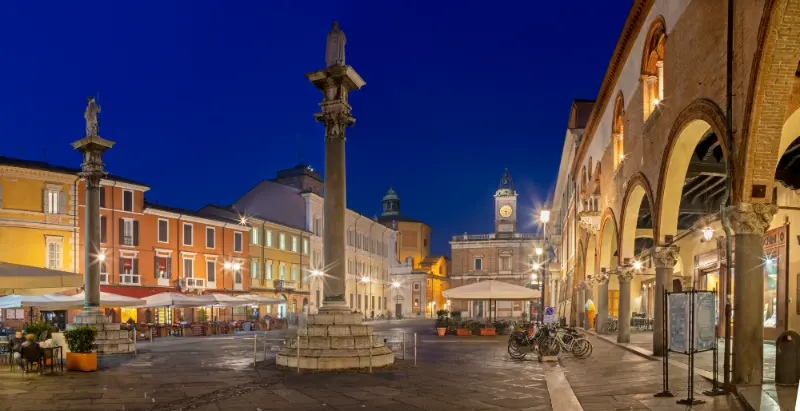
Start at the Museo Dante and Casa Dante while your concentration is fresh, then walk the few steps to the tomb and Quadrarco di Braccioforte. Continue into San Francesco and, if open, pause at the crypt. End with coffee or a quiet walk toward Piazza del Popolo rather than immediately returning to the mosaic circuit.
This sequence works well late afternoon after a morning of UNESCO monuments. The subject matter changes from imperial and theological imagery to language, exile and memory, giving the day a more human scale. It also avoids overloading a single morning with both major museums and churches.
How Dante fits a Ravenna itinerary
With one day in Ravenna, allow at least thirty minutes for the tomb area even if you skip the museum. With two days, give the museum and Casa Dante a dedicated slot. Literature lovers may want to join a specialist guided walk or attend one of the city’s readings and commemorative events.
The Dante cluster lies close to the central UNESCO monuments and station, so no special transport is required. Use our one-day itinerary or two-day plan to place it between the mosaic sites without backtracking.
Visiting respectfully and with children
The Zone of Silence is not an amusement attraction; voices should be kept low and the tomb treated as a memorial. With children, frame the story around exile, a long journey and the survival of a famous poem rather than expecting them to absorb literary history through labels alone.
For older children and teenagers, the story of the hidden bones and the rivalry with Florence can make the site surprisingly memorable. Combine the literary visit with gelato or an open piazza afterward rather than adding another indoor museum immediately.
Dante events and living literary culture
Ravenna’s relationship with Dante is not limited to static monuments. Readings, anniversaries, exhibitions and scholarly events regularly animate the district, and the city maintains a tradition of public engagement with the Divine Comedy. Check the official calendar if your dates are flexible because a reading can add meaning to the physical sites.
Even without attending an event, reading a short passage before the visit changes the experience. The goal is not to complete the Comedy on holiday but to connect a living voice with the place where its author spent his final years.
Extra planning notes for a smoother visit
For a trip centred on Dante Ravenna guide, leave a little margin around the main visit rather than scheduling the next admission immediately. Ravenna’s centre is compact, but ticket checks, church services, a short queue or simply wanting another look at a mosaic can change the pace. A ten- to fifteen-minute buffer usually improves the day more than adding one more minor stop.
Use official pages for opening times on the morning of the visit and keep the rest of the plan flexible. Seasonal timetables are useful for planning, but religious buildings can close temporarily for services, funerals or institutional events. The safest itinerary has one or two fixed reservations and treats everything else as movable.
If you are combining Ravenna with other Emilia-Romagna cities, avoid comparing the trip only by the number of famous attractions. Ravenna rewards close looking and short walking distances, so a slower day here can balance a busier museum schedule in Bologna, Ferrara or another art city.
Crowds, timing and common planning mistakes
The most common mistake when planning Dante Ravenna guide is treating every opening hour as usable sightseeing time. Last admission may be earlier than closing, ticket checks take time and active churches can pause tourist access for services. Build the day around the official admission rules, not around a map that assumes you can walk straight through every doorway.
A second mistake is stacking visually demanding interiors without a break. Ravenna is unusually compact, so it is easy to move from one monument to another faster than your attention can recover. A coffee, a short walk through Piazza del Popolo or twenty minutes outdoors often makes the next visit more rewarding than squeezing in another minor stop.
Season also changes the best rhythm. In summer, use the hottest part of the day for interiors and museums, then walk more in late afternoon. In winter, shorter opening hours reward an earlier start. Spring and autumn can bring school groups and weekend visitors, making advance booking more valuable even when temperatures are comfortable.
If you are travelling from Bologna, Ferrara or the Adriatic coast, protect your first reservation with a generous arrival margin. Regional transport is convenient but not immune to delays. A flexible return ticket or a later train usually produces a calmer day than an itinerary built around the earliest possible departure home.
Finally, keep one element optional. Ravenna has enough depth that changing the plan is not a failure: skipping one museum because you spent longer at a mosaic, or postponing a church until the next morning, often improves the trip. The goal is to understand the city, not to maximise the number of scanned tickets.
Continue planning your Ravenna trip
After Dante, return to the wider city with our Ravenna travel guide and best things to do in Ravenna. The literary cluster also fits naturally into a two-day stay.
Final practical checks
The official Dante Tomb page currently lists free admission to the tomb, with daily opening and seasonal hours; the Museo Dante is normally closed on Mondays. Check both official pages on the day of your visit because commemorations can affect access.
Dante’s Ravenna is most effective when approached as a small connected landscape rather than one photograph of a tomb. Give the museum, church, cloister area and quiet streets enough time to show how the city has cared for the poet’s memory for seven centuries.
Last updated: October 17, 2026
Leave a Reply