
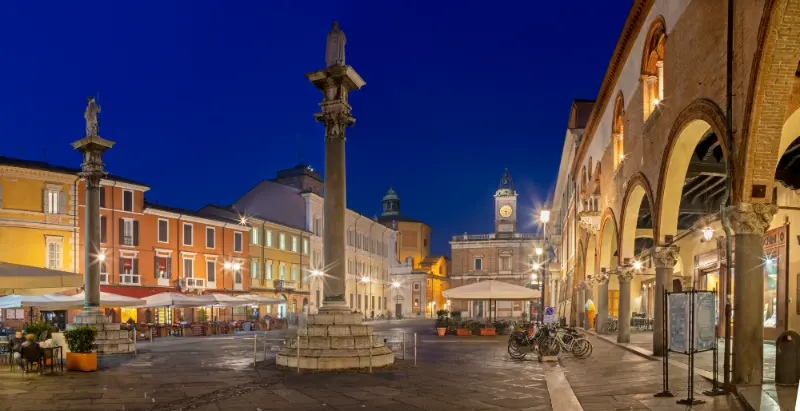
Two days is the sweet spot for a first trip to Ravenna. It lets you see the central mosaic circuit without rushing, gives Dante’s Ravenna proper space and makes it realistic to add Sant’Apollinare in Classe or Theodoric’s Mausoleum without sacrificing meals and rest.
At a glance
| Day 1 focus | Central UNESCO mosaics + Dante |
|---|---|
| Day 2 focus | Classe + outlying monuments + museum choice |
| Best base | Historic centre |
| Transport | Walk day 1; bus/train/taxi/bike useful day 2 |
| Ticket advantage | 2026 combined mosaic tickets remain valid 7 days |
Before arrival: choose the right ticket and hotel
Book the 4- or 5-monument combined mosaic ticket before travel if you are visiting on a busy date. In 2026 the full prices are €12.50 and €14.50 respectively, and both remain valid for seven days. That validity is perfect for a two-day stay because you can divide the central sites instead of compressing them.
For a fuller understanding of the surrounding area, use our Ravenna Travel Guide alongside these more focused recommendations.
Stay in the historic centre if possible. A central base lets you return for a midday break and makes the evening more enjoyable. Compare current accommodation on Booking.com and use our Ravenna neighbourhood guide before booking.
Day 1 morning: San Vitale, Galla Placidia and the baptistery
Start with San Vitale and a reserved Galla Placidia slot. Spend enough time in San Vitale to look beyond Justinian and Theodora, then step outside before entering the darker mausoleum. The contrast between the two spaces is one of Ravenna’s strongest experiences.
Continue to the Neonian Baptistery and, with the 5-site ticket, the Archiepiscopal Museum and Chapel. Because you have two days, there is no reason to rush Sant’Apollinare Nuovo before lunch. This slower pace makes the iconography easier to retain.
Day 1 afternoon: Dante and Sant’Apollinare Nuovo
After lunch, visit Dante’s Tomb, San Francesco and, if literature interests you, Museo Dante and Casa Dante. The museum is normally closed on Mondays, so swap the order of the itinerary if necessary. The tomb itself is free and open daily under the current schedule.

Finish the major sightseeing day at Sant’Apollinare Nuovo. Its long processions are a different visual experience from San Vitale and work well in late afternoon. If your concentration is fading, stop after the basilica rather than adding another museum simply because it is open.
Day 1 evening: let Ravenna become a city again
The centre changes character after the day-trip groups depart. Have an aperitivo near Piazza del Popolo, then choose a Romagna dinner without a fixed sightseeing deadline. An overnight stay is valuable partly because it restores normal rhythm to a destination often consumed in a six-hour visit.
Walk through the Dante area after dinner if you still have energy. Quiet streets, brick architecture and soft lighting provide a useful counterpoint to the gold-heavy interiors of the morning.
Day 2 morning: Sant’Apollinare in Classe
Use the second morning for Sant’Apollinare in Classe, several kilometres south of the centre. Plan transport in advance by checking current regional train, bus or taxi options. The basilica’s broad nave and green apse mosaic feel spacious after the tighter central circuit.
Classe was historically tied to Ravenna’s port and imperial logistics. If archaeology interests you, add the relevant museum or archaeological context rather than visiting the basilica as an isolated object. This turns the half-day into a story about why Ravenna became important in the first place.
Day 2 afternoon option A: Theodoric and the Arian Baptistery
Back in the city, visit the Mausoleum of Theodoric for an architectural contrast. Its massive stone construction has none of the glittering mosaic surface you may now associate with Ravenna. Then add the Arian Baptistery to reconnect with Theodoric’s religious world and compare its dome with the Neonian Baptistery.
This combination is best for visitors who want historical coherence. It completes the Ostrogothic layer that can otherwise be overshadowed by the Byzantine masterpieces.
Day 2 afternoon option B: art museum or archaeology
If you prefer collections to additional churches, choose MAR or the Domus of the Stone Carpets. MAR broadens the city’s artistic timeline, while the Domus offers archaeological flooring below modern urban space. Either choice gives your eyes a different visual language after the mosaics.
Do not attempt both plus Theodoric and the Arian Baptistery unless you are a particularly energetic museum traveller. A two-day itinerary works because it leaves room for depth; overloading the second afternoon defeats that advantage.
How to include children or reduced mobility
With children, shorten museum blocks and make the second day more varied. Classe can work well because the journey itself breaks up the pattern, while open spaces around outlying monuments give children room to move. Turn mosaic viewing into a detail hunt rather than a lecture.
For reduced mobility, confirm step-free routes, transport and accessible entrances with the official sites. Ravenna has accessibility resources, but the combination of historic paving, small interiors and outlying locations means the route should be designed around individual needs rather than copied unchanged.
If you have a third morning
A third morning changes the trip substantially. In warm weather, use it for the Ravenna coast and pinewoods. Nature-focused travellers can look toward wetlands and the Po Delta, while art specialists may prefer a second museum or a return to a favourite neighbourhood.
Do not use an extra half-day only to add more monuments. Ravenna’s appeal comes from the relationship between extraordinary heritage and an easy-going modern city. Breakfast, a market stop or a bicycle ride can be as valuable as another ticketed interior.
A slower alternative for repeat visitors
Repeat visitors can invert the usual priorities: spend the first morning at Classe, explore the Darsena or a museum, and return to one or two favourite mosaics rather than repeating the entire circuit. Ravenna has enough depth to reward selective revisiting, especially when you already understand the broad historical sequence.
You can also use the second day for cycling or a nature excursion if the weather is good. The point of two days is flexibility; there is no prize for maximising the number of admission scans.
Extra planning notes for a smoother visit
For a trip centred on two days in Ravenna, leave a little margin around the main visit rather than scheduling the next admission immediately. Ravenna’s centre is compact, but ticket checks, church services, a short queue or simply wanting another look at a mosaic can change the pace. A ten- to fifteen-minute buffer usually improves the day more than adding one more minor stop.
Use official pages for opening times on the morning of the visit and keep the rest of the plan flexible. Seasonal timetables are useful for planning, but religious buildings can close temporarily for services, funerals or institutional events. The safest itinerary has one or two fixed reservations and treats everything else as movable.
If you are combining Ravenna with other Emilia-Romagna cities, avoid comparing the trip only by the number of famous attractions. Ravenna rewards close looking and short walking distances, so a slower day here can balance a busier museum schedule in Bologna, Ferrara or another art city.
Crowds, timing and common planning mistakes
The most common mistake when planning two days in Ravenna is treating every opening hour as usable sightseeing time. Last admission may be earlier than closing, ticket checks take time and active churches can pause tourist access for services. Build the day around the official admission rules, not around a map that assumes you can walk straight through every doorway.
A second mistake is stacking visually demanding interiors without a break. Ravenna is unusually compact, so it is easy to move from one monument to another faster than your attention can recover. A coffee, a short walk through Piazza del Popolo or twenty minutes outdoors often makes the next visit more rewarding than squeezing in another minor stop.
Season also changes the best rhythm. In summer, use the hottest part of the day for interiors and museums, then walk more in late afternoon. In winter, shorter opening hours reward an earlier start. Spring and autumn can bring school groups and weekend visitors, making advance booking more valuable even when temperatures are comfortable.
If you are travelling from Bologna, Ferrara or the Adriatic coast, protect your first reservation with a generous arrival margin. Regional transport is convenient but not immune to delays. A flexible return ticket or a later train usually produces a calmer day than an itinerary built around the earliest possible departure home.
Finally, keep one element optional. Ravenna has enough depth that changing the plan is not a failure: skipping one museum because you spent longer at a mosaic, or postponing a church until the next morning, often improves the trip. The goal is to understand the city, not to maximise the number of scanned tickets.
Continue planning your Ravenna trip
The detailed monument guides for San Vitale, Galla Placidia and Sant’Apollinare Nuovo help you prepare the two days without carrying a guidebook into every church.
Final practical checks
Before each day, check the official monument pages for temporary closures and confirm transport to Classe. Keep the second afternoon flexible because energy, weather and museum opening days can change the best choice.
Two days gives Ravenna enough time to become more than a collection of mosaics. By the end you should understand why the city mattered politically, how its religious art changed, why Dante belongs here and how the modern city lives around that extraordinary inheritance.
Last updated: October 17, 2026
Leave a Reply