
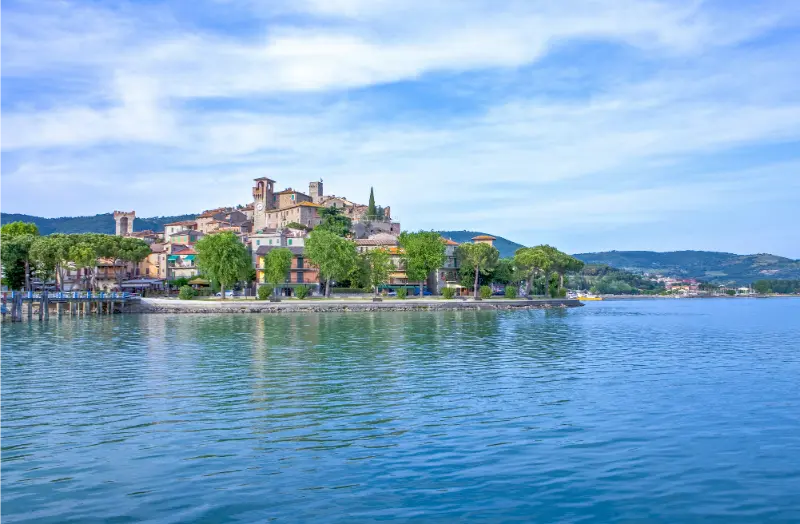
Plan Lake Trasimeno with the best bases, ferries, islands, cycling, swimming, food and current navigation caveats, including where to stay around the lake. This guide is designed for travellers who want to know not only what to see in Lake Trasimeno, but how to sequence the day, what deserves time, where logistics become awkward and which apparently minor details can change the experience.
Lake Trasimeno works best when you choose a clear purpose rather than collecting every point on a map. The practical anchor is Choose the right base before choosing attractions. Build the rest of the visit around opening hours, walking effort and transport, then leave some unassigned time for views, food and the small streets that make Umbria rewarding.
| Best for | Slow travel, lake views, cycling, small towns, islands and families |
|---|---|
| Realistic time | 2–3 days for the lake; 1 day only if choosing one shore and one town |
| Main planning challenge | Seasonal ferries and changing water levels can disrupt island plans |
| Best anchor | Choose the right base before choosing attractions |
| Planning style | One or two strong experiences plus flexible walking, not a checklist |
Why Lake Trasimeno deserves its own place in an Umbria itinerary
Many itineraries compress Lake Trasimeno into the gap between larger names. That can work for a photograph, but it usually misses the reason the place is distinctive. The better approach is to identify one cultural or landscape experience that cannot be replaced elsewhere and then let the surrounding streets, food and views support it.
This also makes the day more resilient. Museums can change hours, churches can close for services and transport can be disrupted. If your plan has one anchor and several movable pieces, a closure becomes a small adjustment rather than a ruined day.
Choose your base first: Passignano, Castiglione del Lago or a quieter shore
Lake Trasimeno is too large to treat as one compact attraction. Passignano is strongest for ferry access and a lively waterfront; Castiglione del Lago adds a major fortress and historic centre; San Feliciano and smaller villages feel more local and are useful for sunsets, fishing culture and relaxed stays.
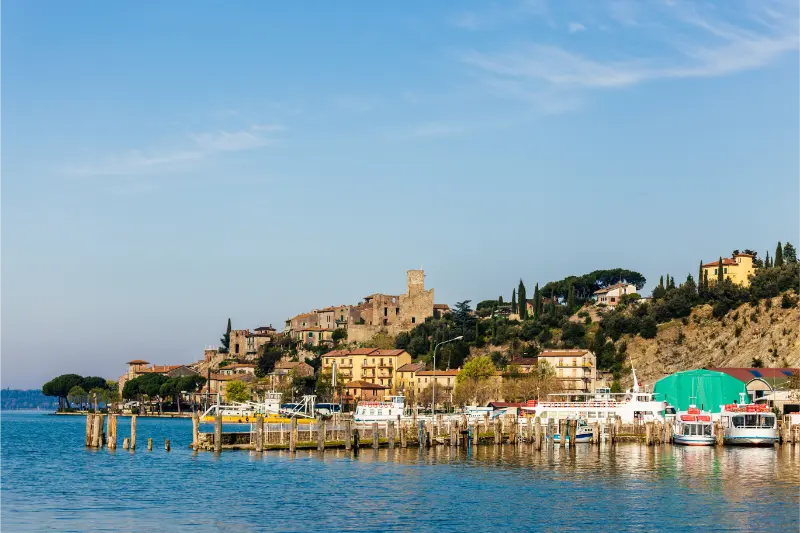
If you have no car, prioritise rail-linked towns such as Passignano or Castiglione del Lago. With a car, rural agriturismi become practical, but evening meals and ferry departures require more planning.
Ferries and islands: check the timetable the week you travel
Navigation is part of the Trasimeno experience, especially for Isola Maggiore. Busitalia publishes seasonal timetables rather than one permanent schedule, and routes can change with weather, vessel type and lake conditions. In 2026 the severe water crisis temporarily suspended some connections, including Castiglione del Lago–Isola Maggiore for a period.
This is important enough to shape the itinerary: never book a non-refundable lunch or tour on an island without checking the current boat service. Passignano and Tuoro have historically offered the most useful connections to Isola Maggiore.
The cycle route: flatter than hill-town Umbria, but not one continuous promenade
The Trasimeno Cycle Path is organised around access points and seven sections averaging roughly eight kilometres each. That makes the lake unusually approachable for recreational cyclists, with the option to ride one segment rather than attempting a full circuit.
Surface quality varies and some sections feel rural rather than like a polished urban cycleway. Wind, heat and seasonal mud matter. Rent an e-bike if your plan includes hill villages as well as the flat lakeshore.
Isola Maggiore: the easiest island to understand in a half day
Isola Maggiore combines a small lakeside village, woodland paths, the Lace Museum, churches and views. It is lived-in and walkable, which makes it more immediately rewarding than treating an island trip as only a boat ride.
Allow at least two to three hours including ferry buffers. The hill to San Michele Arcangelo adds effort, while Castello Guglielmi is currently not visitable, so do not plan the island around entering the neo-Gothic castle.
Swimming and beaches: lake expectations matter
Trasimeno offers beaches and bathing areas, but the experience is different from an alpine lake or the sea. Water depth, vegetation, seasonal conditions and facilities vary by location. Families often appreciate the gentle shoreline, while travellers seeking dramatic clear-water swimming may prefer the lake for landscape and atmosphere rather than pure bathing.
Check local bathing information and beach services shortly before travel. If swimming is central to your trip, choose accommodation near a known lido instead of assuming every waterfront village has the same access.
Food around the lake: fish, legumes, oil and practical restaurant timing
Lake fish distinguishes Trasimeno from inland Umbrian hill towns. Traditional preparations include carp and other local species, while legumes, olive oil and torta al testo link the lake to the wider regional table. The point is not to chase one famous dish but to notice how fishing culture changes menus around the shore.
Reserve waterfront restaurants on summer weekends and do not expect continuous afternoon kitchen hours. If a ferry timetable is tight, eat before or after the crossing rather than relying on a fast island lunch.
A realistic way to structure the visit
For two days, base yourself in Passignano or Castiglione del Lago. Use day one for the historic town, lakefront and a cycle segment; use day two for Isola Maggiore, Tuoro or a quieter western/southern shore. This is far better than driving the entire circumference simply to “see the lake.”
With three days, add Panicale/Paciano or a wine-and-olive-oil hill route. The lake is most rewarding when you alternate water-level landscapes with one or two elevated viewpoints.
What is actually worth booking in advance
In Lake Trasimeno, advance booking is most useful when an experience has a fixed start time, limited capacity or transport dependency. Guided museum entries, winery visits, special underground routes, island boats and small-group excursions can justify a reservation. Ordinary streets, viewpoints and most open squares should remain flexible so the day can adapt to weather and energy.
Before paying, check exactly what a tour includes. A listing may use the name of a famous monument while the entrance ticket is extra, or it may offer transport without a guided interior visit. Compare the meeting point with your parking or accommodation plan and make sure the end time does not collide with the final bus, ferry or museum admission.
Common mistakes to avoid
- Assuming ferry routes and departure times are permanent.
- Driving the whole lake in one day without stopping long enough anywhere.
- Renting a bike without asking about surface and wind conditions.
- Booking rural accommodation without thinking about dinner transport.
- Expecting Castiglione del Lago, Passignano and San Feliciano to offer the same atmosphere.
When to go
Late spring and September are excellent for cycling and village walking. High summer has the most active lakefront atmosphere and broad ferry schedules, but heat and crowds matter.
Autumn brings softer light and food culture; winter is quiet and attractive for road trips, but navigation and tourism services can be reduced. Water-level issues can occur in any warm season, so current ferry notices matter more than old travel blogs.
Getting there and moving around
Passignano and Castiglione del Lago are accessible by rail, making a car-free lake break possible. Reaching smaller villages, wineries and southern shores is easier by car or bike.
Busitalia’s navigation service publishes separate seasonal schedules and information on bicycle carriage. Bike transport can depend on vessel type, crowding and weather and requires a supplement, so confirm before arriving with a loaded touring bike.
How it fits with the rest of Umbria
Lake Trasimeno is the natural western counterpoint to Perugia. Two nights at the lake after several days of cities slows the pace and adds water, cycling and sunset landscapes.
It also works as a bridge into Tuscany, especially for travellers continuing toward Cortona or the Val di Chiana.
Useful related guides
If you are building a wider Umbria itinerary, these existing guides can help you connect the trip without duplicating stops: Perugia Travel Guide; Where to Stay in Perugia.
Accessibility, heat and comfort
Historic Umbria rewards walking, but Lake Trasimeno can involve cobbles, steps, uneven paths or steep gradients even when distances look short. Travellers with reduced mobility should check the exact entrance route to the main attraction rather than relying only on a general accessibility label. If lifts, escalators, ferries or taxis are part of the route, verify their current operation before committing to a tight schedule.
In warm weather, move exposed climbs and fortress walls to the morning or late afternoon, carry water and protect a longer lunch or indoor visit for the hottest hours. In rain, polished stone and old steps can become slippery. Comfortable shoes with grip are a better investment than trying to minimise walking.
Where to stay
Choose Passignano for ferry convenience and a walkable waterfront; Castiglione del Lago for a stronger historic-town experience; rural or southern-shore stays for quiet and car-based exploration.
Do not choose only by lake view. Check walking distance to restaurants, railway station, ferry pier and bicycle rental because these details determine whether the stay feels relaxing or car-dependent.
Official sources and last checks
- Busitalia – Lake Trasimeno navigation
- Umbriatourism – Trasimeno cycle access
- Umbriatourism – Lake Trasimeno
Opening hours, ticket prices, transport services and temporary access rules can change. Check the official source shortly before travel.
Final planning advice
Lake Trasimeno is not one attraction and should not be planned as a loop to complete. Choose a shore, one island experience and one active element such as cycling or walking.
The single most important practical rule is to verify navigation close to travel. In a shallow lake, water level and seasonal operations can change the transport map, and a flexible plan is more valuable than a perfect old timetable.
Leave a Reply