
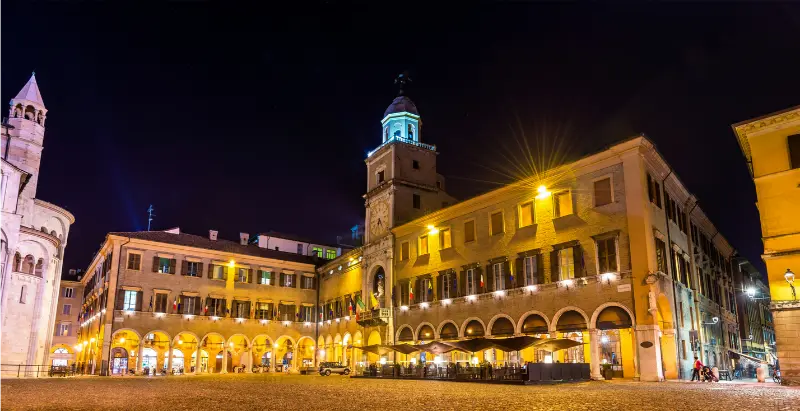
Modena Travel Guide: UNESCO Old Town, Ferrari, Balsamic Vinegar, Food and Practical Tips — Modena rewards travellers who look beyond the famous Ferrari badge. Its historic core is compact enough to explore on foot, yet unusually rich: a Romanesque cathedral and bell tower protected by UNESCO, the former Este capital around Palazzo Ducale, a superb covered food market, museums, porticoes and a cuisine built around tortellini, Parmigiano Reggiano, Lambrusco and traditional balsamic vinegar. Add the Museo Enzo Ferrari within walking distance of the centre and the wider Motor Valley around Maranello, and Modena becomes one of Emilia-Romagna’s strongest short-break destinations.
This guide is written for independent travellers who want useful detail without turning the trip into a race. Hours, ticket prices and guided-tour calendars can change, especially for working institutions, seasonal attractions and producer visits. The 2026 information below is based on official sources available at the time of writing; confirm the final slot or price on the linked official page before travelling.
| Ideal stay | 1–2 days for Modena city; 2–4 days if adding Motor Valley, food producers and hill towns |
|---|---|
| Best transport | walk and train for the city; car for Maranello, Castelvetro, Vignola and countryside producers |
| Best seasons | spring and early autumn for comfortable walking; winter for food and museums |
| Key planning rule | book timed monuments, Ferrari tickets and producer visits before building the rest of the day |
Why this deserves time in your itinerary
For a first visit, organise the day around three anchors: the Cathedral-Piazza Grande-Ghirlandina UNESCO complex, one food experience and either the Museo Enzo Ferrari or Palazzo Ducale. The Ghirlandina is not a casual walk-in attraction in 2026: the official tourism office requires a reserved time slot, with admission currently €6 full price. The cathedral itself is free in the main areas, while the presbytery and sacristy route costs €3. Palazzo Ducale is now the Military Academy and is normally accessible only through pre-booked guided tours on Saturdays and Sundays. Those practical constraints should shape the itinerary before restaurant reservations or shopping.

History and context
Modena grew from Roman Mutina into a medieval commune and later became a capital of the Este duchy after the court moved from Ferrara in 1598. That change explains the monumental scale of Palazzo Ducale and the city’s long relationship with courtly art, music and food. Earlier layers survive around the cathedral, begun in 1099 under architect Lanfranco and sculptor Wiligelmo. The UNESCO listing, granted in 1997 to the Cathedral, Ghirlandina and Piazza Grande, recognises the exceptional coherence of this medieval civic and religious ensemble rather than a single isolated monument.
How to visit and explore
The most satisfying walking loop begins at Piazza Grande, enters the Cathedral, continues up the Ghirlandina if you have a reservation, then crosses the lanes to Mercato Albinelli. From there, follow Via Emilia through the commercial heart, detour to the synagogue area and Piazza Mazzini, then head toward Piazza Roma and Palazzo Ducale. The Ducal Gardens offer a green pause before continuing to the Museo Enzo Ferrari. The route is manageable in one day, but it is better split across two days if you want museums, tastings and a relaxed lunch instead of a sightseeing sprint.
What else to add nearby
Modena is also an excellent base for the province. Maranello is the obvious choice for Ferrari enthusiasts; Castelvetro combines a medieval hill town with Lambrusco Grasparossa and balsamic vinegar; Vignola pairs a richly decorated fortress with cherry-growing country. Other strong second-day options include Sassuolo’s Ducal Palace, Nonantola Abbey, Formigine Castle and the Apennine towns farther south. Travellers using trains can also combine Modena with Bologna, Parma or Reggio Emilia, but the province itself becomes much easier with a car.
Food and drink to include
Food is not a side activity here. Tortellini in broth, tortelloni, gnocco fritto, crescentine, prosciutto, Parmigiano Reggiano, cotechino and zampone all belong to the local table, while Lambrusco provides the classic wine pairing. Traditional Balsamic Vinegar of Modena DOP is made from cooked grape must and requires long ageing; official tourism information states a minimum of 12 years for the traditional product. Visit an acetaia if you want to understand the difference between everyday balsamic products and the protected traditional vinegar rather than simply buying an expensive bottle by appearance.
2026 practical information
Modena Centrale railway station is roughly a 15–20 minute walk from Piazza Grande, while the Museo Enzo Ferrari is closer to the station than the cathedral. A car is unnecessary for the historic centre but useful for Maranello, Castelvetro, Vignola and countryside producers. The centre includes limited-traffic zones, so use signed public car parks rather than following a navigation app to your hotel door. Spring and autumn are particularly comfortable; midsummer can be hot. For late 2026, always recheck timed attractions because guided-tour calendars and temporary exhibitions can change while general opening patterns remain stable.
How long should you allow?
For a single major attraction, allow at least two to three hours once walking, ticket collection, queues and a coffee stop are included. For Modena city, one full day covers the essentials only if you reserve the time-sensitive sights in advance; two days give much more room for museums, markets and food. A province day trip should usually contain no more than two principal stops. Distances on the map are short, but parking, tasting appointments, hill roads and fixed museum entrances quickly consume the spare time.
Travellers who enjoy food should deliberately leave an unscheduled block around lunch or late afternoon. Modena is not a destination where every memorable moment happens behind a museum ticket. Markets, small food shops, porticoes, a glass of Lambrusco and a conversation during a producer visit often provide the local context that turns a list of monuments into an actual travel experience.
Getting around
The historic centre of Modena is best explored on foot. The main railway station is close enough for most travellers to walk to the centre, and the Museo Enzo Ferrari is conveniently positioned on the station side of town. Buses can reach several provincial destinations, but a car makes the Motor Valley, wineries, acetaie and hill towns substantially easier. When driving, pay attention to ZTL restricted-traffic areas and use signed public parking rather than following navigation directly through the oldest streets.
For day trips, group places geographically. Maranello and Castelvetro combine well; Vignola belongs naturally with the Panaro valley; Sassuolo and Formigine make another efficient pair. Trying to connect opposite sides of the province simply because each stop is “near Modena” creates unnecessary driving. If you are relying on public transport, check the evening return before leaving the city, especially on Sundays and holidays.
Best time to visit
April to June and September to October are the easiest months for a balanced trip: daylight is generous, restaurant terraces are pleasant and countryside excursions are comfortable. July and August can be hot on the plain, although Ferrari museums and indoor cultural sights remain good options. Autumn suits Lambrusco, balsamic and hearty food experiences. Winter has shorter days and occasional fog but fewer crowds, strong restaurant appeal and excellent museum conditions. Seasonal produce, particularly Vignola cherries, can make a specific month much more rewarding.
Where to stay
For a first trip, central Modena is the most versatile base. You can walk to the UNESCO area, restaurants and many museums, while retaining access to the railway station and roads out of town. Motor Valley enthusiasts may prefer one night in Maranello, while travellers focused on wine and hill scenery might enjoy Castelvetro. Before booking a central hotel with a car, confirm exactly how parking and restricted-zone access work; the cheapest room can become inconvenient if arrival instructions are unclear.
Families and accessibility
Families can build an excellent Modena itinerary around the tower, market, cars and one hands-on food experience instead of expecting children to enjoy a sequence of formal galleries. Ferrari museums are especially easy to understand visually, while the historic centre has short walking distances and frequent places to stop. For accessibility, separate the destination from individual monuments: the city itself may be manageable even when a tower or medieval fortress is not.
Historic sites vary significantly. The Ghirlandina climb involves about 200 steps and is not suitable for wheelchair users; old fortresses can have uneven floors and staircases; Palazzo Ducale visits follow security-controlled routes. Contact the attraction directly when step-free access is essential. In summer, heat can be a bigger practical barrier than distance, so use early mornings for exposed walking and keep indoor attractions for the hottest part of the afternoon.
Suggested planning sequence
- Reserve the hardest fixed-time experience first: Ghirlandina, Palazzo Ducale, Ferrari museum add-ons or a producer visit.
- Place flexible churches, squares, markets and street walks around that reservation.
- Protect enough time for lunch instead of treating Modenese food as a snack between attractions.
- If driving into the province, combine places in the same direction and avoid unnecessary backtracking.
- Recheck official opening information 24–48 hours before travel, particularly for guided sites and seasonal activities.
How this guide connects with the Modena cluster
This is the first article in the Modena and Province cluster. The related city, food, Ferrari and day-trip guides below will be published on later dates so this article does not link to content that is not yet live.
Common mistakes to avoid
- Assuming the Ghirlandina, Palazzo Ducale or producer visits work as unrestricted walk-in attractions.
- Driving into restricted central streets without checking the hotel or parking access route.
- Scheduling Maranello, central Modena, Castelvetro and Vignola in a single rushed day.
- Buying “balsamic vinegar” by label design without understanding the protected categories and ageing rules.
- Leaving restaurant, Ferrari or tasting reservations until the last minute on weekends and event dates.
Tours and bookable experiences
Modena has a genuine market for guided food walks, balsamic-vinegar experiences, Ferrari-related transfers and city tours. The live activity widget is useful for checking what is actually available on your dates, but compare the itinerary carefully with attractions you have already booked. Producer-direct reservations can be better for specialist dairy, winery or acetaia visits, while organised tours are most valuable when transport would otherwise be inconvenient.
Official sources to check before you go
- VisitModena official tourism
- Modena Cathedral – VisitModena
- Ghirlandina Tower – VisitModena
- Enzo Ferrari Museum – VisitModena
Final advice
Modena works best when you let its four identities overlap: medieval UNESCO city, Este capital, food territory and Motor Valley. A trip built around only one of them is still enjoyable, but combining two or three creates a much richer sense of place. Reserve the few things that truly require a slot, keep the rest flexible and leave enough time to eat well. That balance is more valuable than adding one extra museum simply to say you saw it.
Leave a Reply