
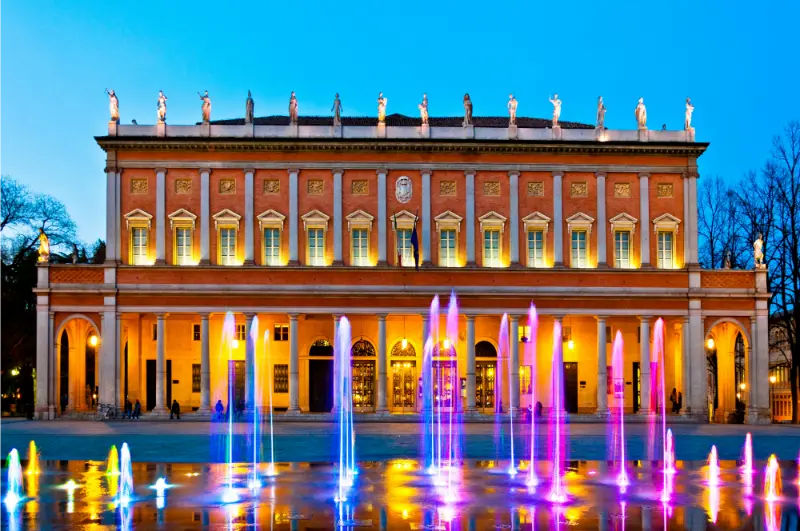
Reggio Emilia with Kids: Museums, Parks, Reggio Children and Easy Family Day Trips — Reggio Emilia is unusually interesting for families because children are not treated only as visitors who need entertainment. The city is internationally associated with the Reggio Emilia educational approach, and local museums, libraries and cultural programmes regularly include workshops, storytelling and hands-on activities. At the same time, the historic centre is compact and mostly flat, so adults can still enjoy architecture, food and museums without building the entire trip around amusement attractions.
This guide is designed for independent travellers who want a realistic day rather than a checklist. Opening hours in small towns can be seasonal, churches may close for services, and guided monuments often require a reservation. Use the 2026 notes below as a planning framework, then confirm the final timetable on the official source shortly before travelling.
| Best for | culture, local food and a slower look at Reggio Emilia province |
|---|---|
| Ideal time | half a day to one full day, depending on booked visits |
| Transport | car gives the most flexibility; some town centres also work by train or bus |
| Planning rule | confirm timed visits first, then build meals and walks around them |
Why this stop deserves a place in your itinerary
The Musei Civici are a strong starting point. Official tourism information notes that the municipal museum network has free admission, which makes short family visits low-pressure: you can leave when attention fades without feeling obliged to “get value” from an expensive ticket. Check the current museum programme for workshops and temporary exhibitions. Palazzo dei Musei is particularly useful as part of a central walking day because it can be paired with Piazza Prampolini, the Tricolore area and a food stop without long transfers.
History that explains what you are seeing
The Centro Internazionale Loris Malaguzzi is the place that most directly connects visitors with the city’s educational identity. It is not a standard children’s museum open in the same way every day, so check the programme carefully. Official tourism information highlights family openings, workshops and explorations on selected Sundays from September to May. Educators may want a deeper professional visit, while families should focus on public events designed for children rather than expecting access to schools.
How to explore on foot
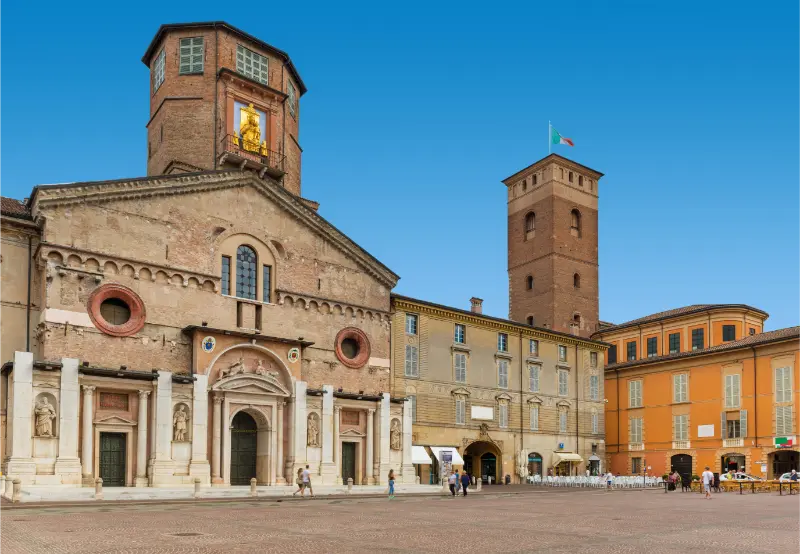
Build the city day in short segments. Start with one museum or square, pause for a snack, continue through the Broletto and pedestrian streets, then use a park or open space before another indoor stop. Reggio Emilia’s flat centre is stroller-friendly compared with hill towns, although cobbles, church thresholds and historic buildings can still create occasional barriers. Public toilets and family services listed by the tourism office are useful details to check before a full day out.
What else to add nearby
Day trips add variety. Brescello works well for older children who enjoy the Don Camillo and Peppone story or film locations; Bianello and Quattro Castella mix a guided castle with nature; Montecchio has a history of family workshops even though its castle is currently listed as closed to normal visits; dairies can be excellent when they explicitly accept children; and Boretto adds boats and river engineering. In summer, the Baracca e Burattini festival brings children’s theatre to multiple towns across the province.
What to eat and drink
Family eating is straightforward in Emilia because many local foods are easy to share: erbazzone, fresh pasta, Parmigiano Reggiano and simple bakery items work well without turning every meal into a formal event. Reserve dinner earlier than local peak time if younger children need predictable schedules. A dairy visit can be more educational than a long restaurant tasting, while gelato or a bakery stop can break up museum-heavy mornings.
2026 practical information
The best family plan leaves margin. Do not schedule two timed guided visits back to back, especially if you are moving by car. Check age limits and stroller rules for castles, confirm whether workshops require booking, and remember that many small museums reduce weekday hours outside peak season. The official tourism page for families lists breastfeeding and changing facilities and points visitors toward current children’s events. In 2026, always use the live programme for the Malaguzzi Centre and local festivals rather than relying on last year’s calendar.
How long should you allow?
For most travellers, a half day is the minimum useful amount of time because it allows one principal visit, a proper walk and a meal or coffee stop. A full day is better when you add nature, a second town, a tasting or a scheduled guided experience. Avoid measuring the destination only by the number of museums: travel time, parking, opening windows and lunch hours are part of the real itinerary in provincial Emilia.
If you are staying in Reggio Emilia city, use this destination as one focused excursion rather than adding three distant stops simply because the road distances look short. The plain is easy to drive, but hill roads and river detours slow the day. One strong morning plus one complementary afternoon stop usually produces a better experience than five rushed photographs.
Getting there and parking
Driving is generally the simplest option for exploring the province because it lets you connect small towns, castles, dairies and landscapes that do not share one convenient public-transport line. In historic centres, follow local signs for public parking and restricted-traffic zones rather than driving directly to a monument. If you are travelling by train or bus, check the return connection before starting the visit, especially on Sundays and public holidays.
Do not leave luggage visible in a parked car and avoid assuming that a castle forecourt is a public parking area. Hill sites often require a short uphill walk from designated spaces, while Po-river destinations can have temporary access changes after bad weather. In summer, shaded parking can make a noticeable difference if you are travelling with children or food purchases.
Best time to visit
Spring and early autumn are the easiest seasons for combining outdoor walks with cultural visits. Late May and June bring long daylight but also events and school-group activity. July and August can be very hot on the plain, so use mornings for exposed walking and reserve indoor or shaded activities for the hottest hours. Autumn is excellent for food, misty landscapes and harvest-season atmosphere. Winter can be rewarding for museums and restaurants, but daylight is short and fog may affect driving.
Where to stay
Reggio Emilia city is the most versatile base if this is one of several provincial day trips. It gives you more evening restaurants, rail connections and accommodation choice while keeping most destinations within practical driving range. Staying locally makes more sense when you have an early dairy visit, a late cultural event, a long walking route or a multi-day itinerary focused specifically on the Bassa, hills or Apennines.
Families and accessibility
Families will usually enjoy one strong story or activity more than a sequence of formal interiors. Castles, boats, dairies, river landscapes and short nature walks all work well when the timing is realistic. Bring water, allow snack breaks and check whether guided visits have a fixed duration. Historic sites vary greatly in accessibility: cobbles, stairs, steep hill approaches and narrow towers are common, so contact the operator when step-free access is essential.
For travellers with reduced mobility, separate the accessible parts of the experience from the inaccessible ones instead of cancelling the whole destination. A castle interior may be difficult while the town centre, viewpoint or museum ground floor remains workable. Official pages increasingly publish accessibility notes, but direct confirmation is still worthwhile for older buildings.
A simple itinerary
- Arrive early enough to park without rushing and begin with the main cultural or natural sight.
- Use the late morning for the historic centre, a short walk or a second nearby attraction.
- Stop for a local lunch rather than driving through the middle of the meal period.
- Spend the afternoon on the complementary experience: nature, another town, a tasting or a scenic route.
- Before leaving, check the next day’s opening hours if you are continuing through the province.
How to combine it with other Reggio Emilia guides
This article belongs to the wider Reggio Emilia province cluster. For a city base, start with the Reggio Emilia travel guide. For medieval history, use the Canossa and Rossena castles guide. For mountain scenery, continue with the Reggio Apennines guide. If you are building a longer route, the three-day Reggio Emilia province road trip helps connect the zones without excessive backtracking.
Common mistakes to avoid
- Using old blog opening hours instead of the current official calendar.
- Assuming every castle or museum is open continuously through the day.
- Adding too many towns and spending more time parking than exploring.
- Treating local food as an afterthought and arriving after kitchens have closed.
- Ignoring weather, river conditions or trail surfaces when outdoor sections are part of the plan.
Tours and bookable experiences
Organised experiences around Reggio Emilia change by season and availability. The live activity widget can be useful for checking food experiences, guided visits or family-friendly activities on your dates, but only choose an option that genuinely matches the place you are visiting. Many of the best provincial experiences still require direct booking with a museum, dairy or local guide.
Official sources to check before you go
- Reggio Emilia – a child-friendly city
- Reggio Emilia official tourism
- Parmigiano Reggiano official site
Final advice
The best reason to include this stop is not that it competes with Bologna, Parma or Florence for headline monuments. It adds scale and context to an Emilia-Romagna trip. Here the region becomes easier to read through working landscapes, smaller courts, river engineering, food production and communities that still use historic centres every day. Plan one or two anchor experiences, leave room for the unexpected, and the visit will feel more personal than a rushed list of famous sights.
Leave a Reply