
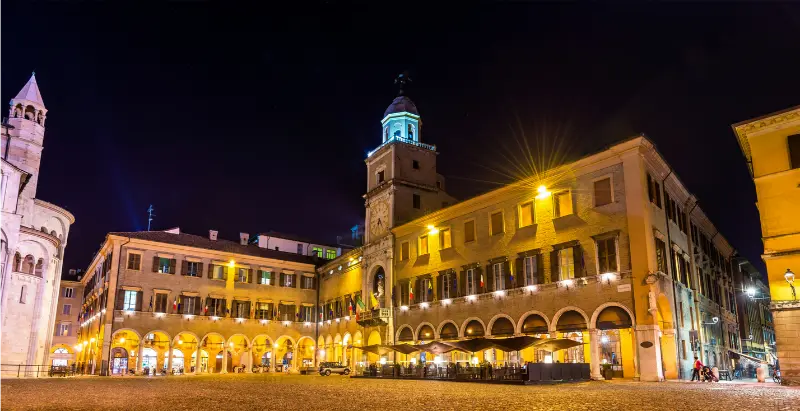
Modena with Kids: Ferrari, Terramara, UNESCO Sights, Parks and Easy Family Day Trips — A family-focused Modena guide with realistic pacing, Ferrari and archaeology ideas, UNESCO sights, parks, food breaks and day trips by age and interest. This guide focuses on what is actually useful when planning the day: how much time to allow, what works well together, what should be checked before travel and which details are seasonal rather than permanent.
| Best for | families who want a flexible mix of culture, cars, archaeology, outdoor time and food rather than a museum-heavy schedule |
|---|---|
| Suggested time | two days for Modena city plus one family day trip; one day works if you choose only two major anchors |
| Transport | walk in the historic centre; use a car for Terramara, Ferrari combinations and most province day trips |
| Best planning habit | anchor the day around one fixed visit or walk, then keep the remaining stops flexible |
Why this place is worth your time
Modena works surprisingly well with children because its strongest themes are easy to make tangible. Medieval stone lions, a climbable city tower, racing cars, reconstructed Bronze Age houses, trading-card collections, food markets and open piazzas offer variety without requiring children to appreciate long sequences of paintings. The key is not finding ten child-specific attractions; it is pacing ordinary Modena in a way that keeps everyone engaged.
The strongest small-town trips in Emilia-Romagna usually work because they reveal how landscape, history and food fit together. This destination is no exception. Instead of trying to collect every possible sight, choose the element that gives the area its identity and use the rest of the day to understand the surroundings. That approach produces a more memorable visit and makes changes in opening hours much easier to absorb.
History and landscape in context
Official VisitModena family itineraries emphasise exactly this variety, linking the UNESCO complex with prehistoric settlements, racing technology, figurine culture and playful details in the city. The tourism office also promotes a dedicated 1.5-hour city tour for families with children roughly aged 6–12, using quizzes and activities in the historic centre. Availability is date-dependent, so it should be treated as an optional bookable experience rather than a guaranteed daily service.

That context also explains why a car journey of only a few dozen kilometres can feel like a genuine change of region. South of Modena, the plain gives way to river valleys, ridges and wooded slopes; in the northern lowlands, the horizon opens and the history is tied more closely to waterways, agriculture and fortified border towns. Reading the landscape is part of the sightseeing rather than merely the transfer between attractions.
What to see and do
Piazza Grande, Cathedral and stone lions
Start with the UNESCO heart of Modena because it gives children space to move and adults the city’s most important architecture. The sculpted lions at the cathedral portals and the strange medieval creatures carved into stone are easier hooks for children than an abstract art-history lecture. Keep the first visit short and return later if curiosity lasts.
Ghirlandina
For children comfortable with stairs and heights, the Ghirlandina can turn sightseeing into an objective. Book according to current access rules and check age, mobility or safety restrictions before promising the climb. Families with toddlers can enjoy the tower from Piazza Grande without making the ascent the measure of a successful visit.
Ferrari museums
The Museo Enzo Ferrari in Modena and Ferrari Museum in Maranello are obvious family attractions for children interested in cars, design or technology. They are separate museums in different locations, so visiting both on one day is possible but not mandatory. Many families will get more from one Ferrari museum plus a completely different activity.
Terramara di Montale
The reconstructed Bronze Age village is one of the best province experiences for school-age children because archaeology becomes three-dimensional. Guided visits explain houses, defences and daily objects. Opening is seasonal, so check the calendar before telling children it will be part of the trip.
Parks, food and unstructured time
A good family itinerary needs places where nothing is scheduled. Modena’s parks, piazzas and pedestrian streets provide that breathing room. Food can be part of the experience too: watching fresh pasta, choosing gelato or sharing gnocco fritto often creates stronger memories than adding another formal attraction.
Do not read the list above as a compulsory order. The best sequence depends on opening times, weather and where you are sleeping. Fixed guided visits should come first in the planning process; outdoor viewpoints, old streets and food stops can then fill the flexible parts of the day.
Important 2026 planning information
VisitModena currently promotes both a general family itinerary and a specific City Tour Kids aimed at ages 6–12, lasting about 1.5 hours. It also publishes ideas for families with very young children. These resources are useful because they reflect current local access and programming, but individual tour dates and museum timetables must still be checked for the exact travel period.
Opening hours in small towns are often seasonal, weekend-based or linked to guided visits. Recheck the official source 24–48 hours before departure when a specific interior is essential. Restoration work, religious services, weather and special events can alter normal access without making the destination itself unsuitable for a visit.
A realistic itinerary
For a first day, stay central: Piazza Grande and the Cathedral in the morning, a relaxed lunch, then either the Museo Enzo Ferrari or another child-friendly museum, with park or gelato time before dinner. On day two, choose one province anchor: Maranello for Ferrari, Terramara for archaeology, Castelvetro/Vignola for a castle atmosphere, or a nature day in the hills. Do not try to combine all four.
If you are travelling from central Modena, avoid scheduling the first appointment at an unrealistically early hour after a late arrival or breakfast. A relaxed start, one substantial morning activity, lunch and one different afternoon experience is usually stronger than three ticketed attractions. If you stay locally, use the extra time for an evening walk or an early-morning landscape stop rather than simply adding more driving.
Food and what to look for
Modena is family-friendly at the table if you order with flexibility. Tortellini, tortelloni, tagliatelle, Parmigiano Reggiano, gnocco fritto and simple cured meats are easy entry points for many children. Balsamic vinegar tastings can be interesting for older children when presented as a production story rather than a long adult tasting session.
Menus vary by season and by altitude, so it is better to ask what is local that day than to insist on a checklist assembled from several parts of the province. A traditional lunch can be a central part of the itinerary, but allow enough time: rural restaurants are not always designed for a quick thirty-minute stop. If you are driving, plan wine or liqueur tastings conservatively.
How to get there and move around
Modena province changes character quickly. Roads on the plain are straightforward, but hill and mountain journeys take longer than their kilometre count suggests because of bends, village crossings and weather. If a visit has a fixed start time, build in a margin instead of trusting the fastest navigation estimate. Parking is normally easier outside the historic core of small towns; once parked, walking is usually the best way to understand the centre.
Public transport may be useful for some larger towns, but it is rarely the best tool for a day combining villages, trailheads and rural attractions. If you do not want to drive, reduce the geographical ambition: choose one town with a reachable centre rather than trying to reproduce a car itinerary by connecting several infrequent buses.
Best time to visit
Spring and autumn are easiest for city walking and day trips. Summer requires shade, water and midday breaks, while winter works well for museums and food but has shorter daylight for province excursions. Family travel also benefits from checking school-holiday and weekend demand when booking Ferrari museums or popular guided experiences.
Keep a backup plan for bad weather. A short shower may be manageable on a village walk but can make roots, sandstone and river paths slippery. In the Apennines, conditions can change much faster than in Modena city. If an outdoor route becomes unsuitable, shorten it and use a church, museum, food stop or lower-elevation town instead of trying to force the original schedule.
Visiting with children
The most important rule is to match the day to the children you actually have, not to an ideal itinerary. A six-year-old fascinated by cars may happily spend hours at Ferrari; another child may need a park after forty minutes. Use one major morning activity, a real lunch break and one lighter afternoon activity. Strollers handle central Modena better than medieval hill villages, while tower stairs and archaeological terrain require separate judgment.
Build in genuine breaks rather than calling the walk between attractions a break. A playground, open piazza, picnic or gelato stop can reset the day better than another educational activity. Families also benefit from reserving only the experience that would genuinely disappoint them if sold out and leaving the rest adaptable.
Accessibility and comfort
Accessibility varies greatly between modern museums, medieval streets and natural trails. Cobbles, stairs, steep lanes, roots and wet rock are common in the hill destinations. If step-free access is essential, check the attraction directly before travelling and ask about the exact route from parking to entrance. A building described as accessible may still sit inside a historic area with uneven approaches.
Comfort also means carrying the basics that the setting requires: water for a trail, a light layer for altitude, sun protection in exposed areas and footwear that can cope with wet or uneven ground. Small changes in preparation make a much bigger difference in the province than in a compact city centre.
How to combine it with the rest of Modena province
The existing Modena Travel Guide, Best Things to Do in Modena, one-day itinerary, Ferrari museum guides and where-to-stay article provide the adult logistics. This family guide should sit above them as a filter: choose from the wider cluster rather than duplicating every attraction.
For a broader framework, start with Modena Travel Guide and Best Day Trips from Modena. Food-focused travellers should also use Modena Food Guide, while drivers building a longer stay can compare bases in Where to Stay in Modena.
Where to stay
For a first visit to the province, Modena city remains the easiest base because it offers the widest choice of hotels, restaurants and evening options. Staying in the hills or mountains becomes more attractive when the outdoor destination is the main purpose of the trip, especially if you want an early trail start or a quiet dinner without driving back at night. Compare the actual next morning’s route before choosing accommodation only on price.
Tours and bookable experiences
When you reserve an experience, read what is actually included. A guided walk, museum ticket, tasting and transport are different products even when they are marketed under a similar destination name. Confirm meeting point, language, duration and cancellation terms, and leave enough transfer time between separate bookings.
Budget and practical expectations
A day in the province does not have to be expensive. Historic streets, landscapes and many churches can be enjoyed without admission, so the largest costs are often transport, food and one or two ticketed experiences. Spend money where it changes the visit—a guided archaeological explanation, a producer tour or a specialist museum—rather than paying for several rushed attractions simply because they are nearby.
Fuel, parking and meals can easily exceed the cost of admission on a rural day. If travelling as a family or group, compare the total cost of driving with the value of a guided tour rather than looking only at the ticket price. For hikers, the most important investment is often suitable footwear and time, not another paid attraction.
Photography and local atmosphere
For photography, the most useful habit is to give the place time. Early and late light work especially well in hill villages and river landscapes, while woodland waterfalls are often easier to photograph under softer cloud. In memorials, churches, working producers and museums, follow local photography rules and avoid blocking paths or treating residents as part of a staged scene.
Common mistakes to avoid
- trusting an old timetable for a seasonal museum, castle or guided interior
- adding too many geographically scattered stops because the map makes the province look compact
- underestimating mountain driving, short winter daylight or summer heat
- starting a trail without enough water or suitable footwear
- planning lunch so tightly that a normal restaurant service makes the next booking stressful
- assuming every famous building can currently be visited inside
A better plan is simple: identify the one element that would make the day worthwhile, confirm that element, and let the rest remain flexible. This approach is especially effective in Modena province, where a closed interior can often be replaced by a village walk, landscape stop or food experience without wasting the journey.
Official sources to check before you go
- Family travel – VisitModena
- A day in Modena with the family – VisitModena
- Modena City Tour Kids – VisitModena
Use the official pages above for the final check before departure, particularly when a guided visit, archaeological site, memorial event, winter facility or interior restoration is central to your plans.
Final planning advice
This destination is strongest when treated as part of a real journey through Modena province rather than as another box to tick. Leave room for a longer lunch, a viewpoint you did not expect or a change of plan caused by weather. The province rewards travellers who combine one precise booking with enough unstructured time to notice the landscape between the famous names.
Leave a Reply