
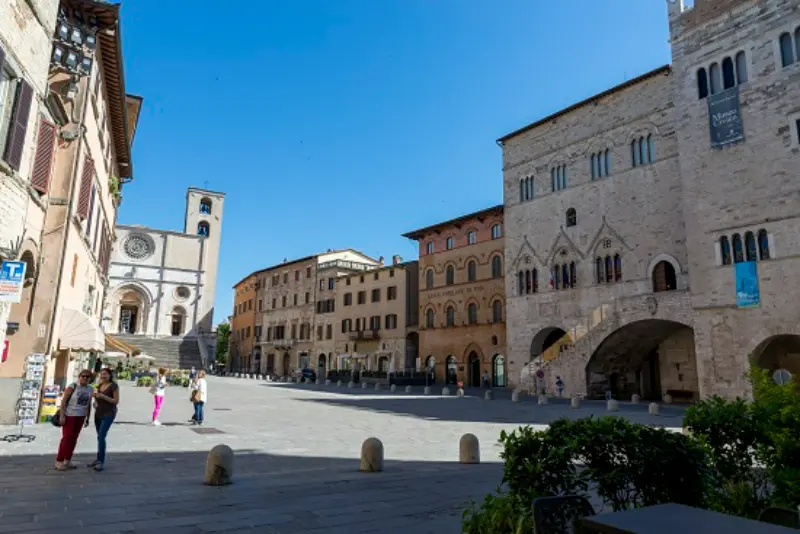
Plan Montecchio in Umbria around its medieval village and the Vallone San Lorenzo necropolis, with access notes, realistic timing, archaeology context and nearby combinations.
Montecchio rewards travellers who plan for depth rather than a checklist. The practical question is not how many nearby places can be squeezed into the same day, but which experience deserves protected time and which stops can remain optional. This guide is designed around that decision, with realistic timing, access cautions and combinations that work on the road.
| Best for | independent road trips, repeat visitors to Umbria, small-town culture, history and travellers who prefer realistic pacing |
|---|---|
| Realistic time | Half a day for the village and necropolis; allow most of a day if you include a museum stop, lunch or Lake Corbara. |
| Main planning challenge | The archaeological area is outside the village and may require specific visiting arrangements, so it cannot be treated like an always-open roadside ruin. |
| Best anchor | Verify access to the Vallone San Lorenzo necropolis before departure; if it is unavailable, make the medieval village and Tiber landscape the focus. |
Why Montecchio deserves more than a quick photo
Montecchio combines two experiences that are often separated elsewhere in Umbria: a compact medieval hill village and a significant pre-Roman archaeological landscape. The Vallone San Lorenzo necropolis extends the story far beyond the Middle Ages and shows the cultural connections that developed around the Tiber. This makes Montecchio particularly worthwhile for travellers who want archaeology without the scale or crowds of a major city site.
The medieval village
Montecchio sits on a hill above the Tiber valley and preserves narrow lanes, walls and a clear fortified character. The village circuit is short, but the changes in level and viewpoints make it feel more substantial. Do not rush directly to the archaeology; start in the centre so that the later visit to the necropolis has a medieval and geographic frame.
Vallone San Lorenzo necropolis
The necropolis was discovered in the nineteenth century and contains a dense group of tombs connected with communities that occupied this strategic zone between Umbrian and Etruscan spheres. Later archaeological work has continued to refine the picture. The value for a visitor lies not only in individual tombs but in seeing how burial, settlement, trade and the Tiber corridor interacted.
Access to the archaeological area
The official municipal information notes that the site can be reached by car to the parking area, while the final path to the necropolis is on foot. Hours and service arrangements should be confirmed directly because archaeological access can change with staffing, research and maintenance. Build a backup plan around the village rather than driving a long distance for a single unverified opening.
How to read the site
At a necropolis, it is easy to see a series of stone cuts and lose the story. Think instead about the repeated arrangement of tombs, the relationship with the slope and the objects that once accompanied burials. The site becomes more meaningful when connected to the wider trade routes toward Orvieto, Todi and Amelia rather than treated as an isolated cemetery.
Tiber Valley context
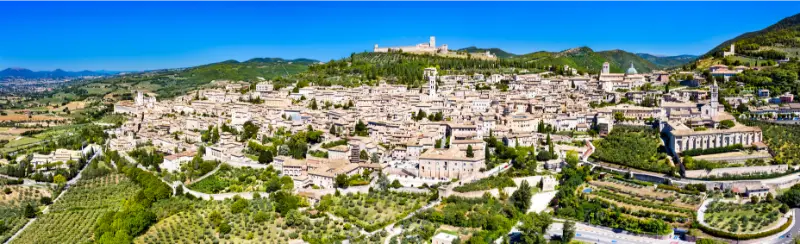
Montecchio occupied a useful position near river and land routes. From viewpoints around the village, the broad valley makes that strategic logic visible. This is a good place to pause with a map and understand why so many fortified villages and archaeological sites sit within a relatively short drive of one another.
Combine Montecchio with Lake Corbara
Lake Corbara and Baschi are natural extensions if you have a car. The lake provides open landscape after the enclosed lanes and tombs of Montecchio, while Baschi adds a small museum and the Scoppieto archaeological story. Do not try to include Orvieto as well unless you are prepared for a long day; it deserves a more protected time block.
Who should prioritize Montecchio
Archaeology enthusiasts, repeat visitors to Umbria and travellers who like small villages will get the most from Montecchio. For a first visit with limited time, it sits below Orvieto, Marmore and Narni in priority. But on a slower south-Umbria itinerary, it offers exactly the kind of layered history that generic routes often miss.
Getting there and parking strategy
A car is the most useful way to reach Montecchio and combine it with the surrounding villages. In small Umbrian centres, the final few hundred metres matter more than the road distance: old streets can be narrow, restricted or unsuitable for through traffic. Aim for a signed public parking area outside the tightest historic core and walk in. Do not follow a navigation app blindly into medieval lanes just because the route appears shorter.
Before departure, check current municipal notices for road works, events or temporary traffic restrictions. On market days and festival weekends, a parking area that is easy on an ordinary weekday may fill early. Build ten to twenty minutes of buffer into arrival time so that parking does not eat into a museum or guided-visit slot.
When to visit
Spring and early autumn are the easiest seasons for Montecchio: walking temperatures are comfortable, the countryside is active and daylight is still generous. Summer can work well with an early start, a shaded lunch break and a lighter afternoon. Winter is quieter and atmospheric, but short daylight and reduced opening schedules make advance checks more important.
Weekdays are usually calmer, while weekends can be better for small museums and restaurants that operate limited hours outside the main season. If one attraction is essential, let its confirmed schedule choose your day rather than assuming every component of the itinerary will be open simultaneously.
Where to stay
For an overnight stop, choose accommodation according to the next morning’s plan. Staying in or near Montecchio, Baschi or Orvieto countryside gives you more time for the surrounding roads and lets you experience the countryside after day-trippers leave. If you are moving on to Orvieto, Terni or the motorway the next day, easy parking and a straightforward exit may be more valuable than a room deep inside a historic centre.
Food and pacing the day
Small-town lunch is part of the experience, but it can also be the biggest scheduling variable. A full restaurant meal may take well over an hour, and kitchens can have narrow service windows. If a museum, archaeological area or managed nature site has limited hours, visit it first and eat afterward. If the meal itself is a priority, reserve and deliberately reduce the sightseeing list.
Look for local olive oil, seasonal vegetables, handmade pasta, legumes, cured meats and dishes that reflect the surrounding hills. In the Orvieto and Amerino areas, wine and truffle traditions can also be part of the meal. The practical rule is simple: do not order a long lunch fifteen minutes before the one attraction you came to see is due to reopen or close.
Travelling with children or limited mobility
Families generally do better with one clear story—castle, archaeology, murals, lake or forest—than with a sequence of churches. Give children a visual target and leave room for a snack or open space. Pushchairs can be awkward on steep cobbles and steps, so a carrier may be more practical for very young children in the oldest lanes.
Travellers with limited mobility should distinguish between the accessible village centre and any ruins, forest paths or archaeological sites outside it. Distances may be short while gradients and surfaces remain demanding. Contact the relevant attraction directly when step-free access is essential; generic map distances do not describe the physical reality of a hill town.
Easy places to combine nearby
Good combinations depend on the direction of travel and on what is already open that day. The following guides are useful starting points:
- Alviano
- Lugnano in Teverina
- Guardea
Choose one or two of these rather than all of them. The best day usually has one structured attraction with fixed hours and one open-ended village or landscape stop. That gives you enough flexibility to absorb delays without turning the trip into a sequence of arrivals and departures.
Common planning mistakes
- Assuming a small village requires no planning because it looks compact on the map.
- Driving into the oldest streets instead of using signed parking outside the historic core.
- Treating a castle, church, museum or archaeological site as guaranteed to be open without checking current access.
- Adding too many nearby villages simply because the driving distances look short.
- Leaving the most important stop until after a long lunch or late-afternoon drive.
- Ignoring heat, rain, uneven stone and trail conditions when the visit includes outdoor or ruin sites.
Official sources and what to recheck
- Comune di Montecchio – Vallone San Lorenzo necropolis
- Comune di Montecchio – history and territory
- Comune di Montecchio – official site
Practical details were checked against official or institutional information available in 2026. Because this article is scheduled for later publication, recheck opening hours, admission prices, guided-tour dates, road restrictions, parking, trail conditions and temporary closures shortly before travel.
The decision that makes this visit better
Verify access to the Vallone San Lorenzo necropolis before departure; if it is unavailable, make the medieval village and Tiber landscape the focus. Build the rest of the day around that priority, leave at least one optional stop, and accept that a slower visit often reveals more than a longer checklist.
Leave a Reply