
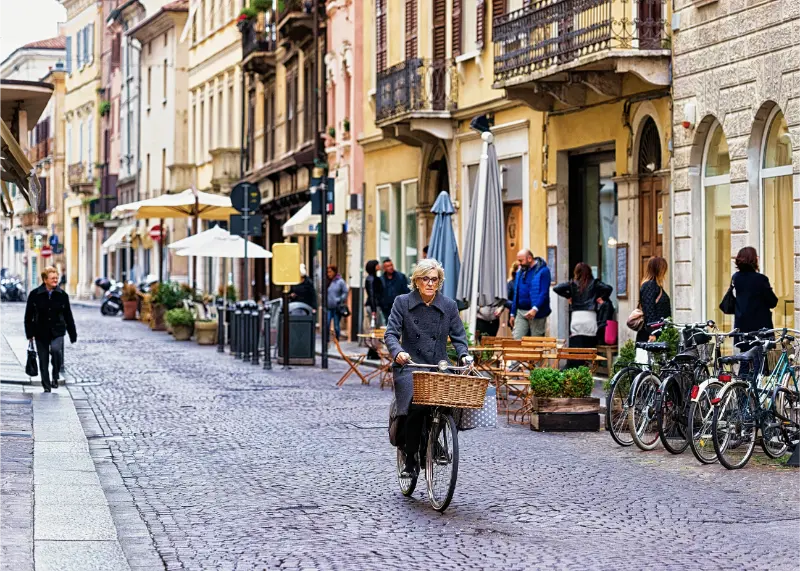
One day in Mantua is enough to see the city’s essential Renaissance story if you reserve Palazzo Ducale in advance and resist the temptation to enter every museum. The strongest first-time route links Piazza Sordello, Mantegna, the central squares and Sant’Andrea in the morning, then gives Palazzo Te its own focused afternoon slot.
This itinerary assumes you can walk comfortably for much of the day. Times are flexible because museum reservations, church access and meal preferences vary. The goal is a coherent route, not a minute-by-minute race.
To connect One Day in Mantua with the rest of the destination, our Mantua Travel Guide offers a broader overview of what to see and how to get around.
08:30–09:00: arrive and orient yourself
If you arrive by train, walk toward the historic centre and use the first part of the journey to understand the scale of Mantua. Travellers staying overnight should leave luggage at the hotel and begin without bags. Coffee and a light breakfast near the centre are useful if your Palazzo Ducale slot is not immediate.
Do not start with a long sit-down breakfast if you have a timed palace reservation. The museum is the most schedule-sensitive part of the day; cafés and streets are flexible.
09:00–11:30: Palazzo Ducale and Camera degli Sposi
Begin at Palazzo Ducale because it contains the single most important artistic experience in Mantua and can require timed access to the Camera degli Sposi. The complex is large enough that two to two and a half hours passes quickly.
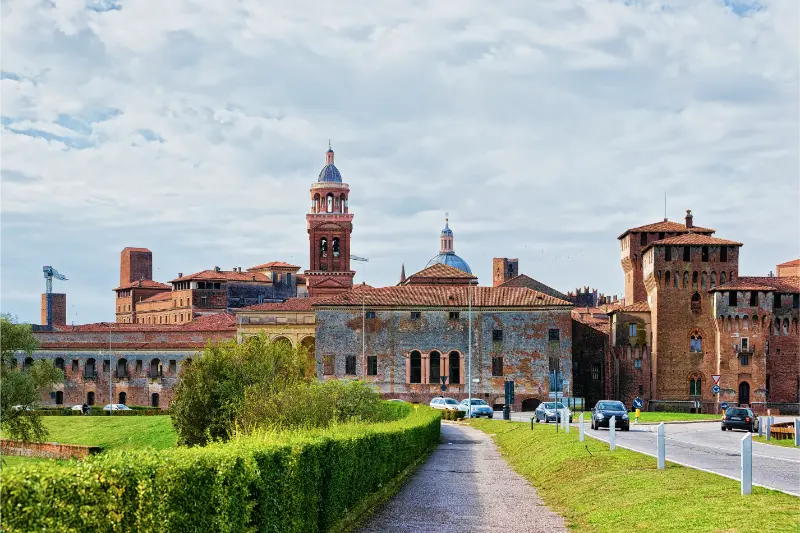
Check the official website for the route and opening conditions on your date. For room-by-room planning, use our Palazzo Ducale Mantua guide.
11:30–11:50: Piazza Sordello
When you leave the palace, stay in Piazza Sordello rather than immediately navigating to the next pin. Look back at the façades, cathedral and relationship between court and civic space. The square makes much more sense after you have seen the palace from inside.
If your visit is on a hot summer day, refill water here or in the nearby streets before continuing.
11:50–12:30: Piazza Broletto and Piazza delle Erbe
Walk south through the connected civic spaces toward Piazza delle Erbe. This sequence is one of the pleasures of Mantua: monumental court architecture gives way to tighter medieval streets, arcades and commercial life within a few minutes.
Pause at the Rotonda di San Lorenzo if open and admire the Torre dell’Orologio. Do not force a tower visit if the timing jeopardises lunch or Palazzo Te; you can still appreciate the architecture from the square.
12:30–13:00: Basilica di Sant’Andrea
Visit Sant’Andrea before lunch if access is compatible with religious services. Alberti’s architecture provides a strong contrast to both the medieval rotunda and the residential palaces. Give yourself enough time to look at the scale of the nave rather than treating the church as a five-minute photo stop.
If a service is underway, return later. Churches are living religious spaces, and access can be limited without warning.
13:00–14:15: lunch with Mantuan food
Use lunch to make the regional cuisine part of the itinerary. Tortelli di zucca are the obvious first dish to try, but risotto alla pilota, agnolini and seasonal meat dishes also belong to the Mantuan table. Finish with sbrisolona if you want the full local sequence.
Our Mantua food guide explains the dishes in more detail. Keep lunch enjoyable but not excessively long because Palazzo Te deserves at least ninety minutes.
14:15–14:45: walk toward Palazzo Te
Walk south to Palazzo Te rather than taking a taxi by default. The transition out of the tight historic centre helps you understand why this was conceived as a suburban villa. The route also gives your eyes a break after the dense palace interiors.
In extreme heat, rain or limited mobility, use an APAM bus or taxi. The itinerary should serve your energy level, not become an endurance test.
14:45–16:45: Palazzo Te
Spend the afternoon with Giulio Romano. Give the Sala di Psiche, courtyards and architectural details enough attention before reaching the Sala dei Giganti. If you rush directly to the famous room, the theatrical progression of the palace is lost.
The official visitor page is Palazzo Te; see also our Palazzo Te guide for practical detail.
16:45–17:30: coffee, gelato or a rest
After two major palace visits, stop. Museum fatigue is real, and adding another ticketed attraction immediately is rarely the best use of your only day. A café or gelato break makes the final part of the itinerary more enjoyable.
If you are staying overnight, this is also a good time to return briefly to the hotel before the evening walk.
17:30–18:30: lakeside walk
Head toward the lakes for a broad view of Mantua’s skyline. The waterfront reveals the city’s geographic setting in a way the central streets cannot. Depending on season and light, choose Lago di Mezzo or Lago Inferiore and walk only as far as feels pleasant.
This hour is intentionally flexible. If a museum visit ran long, shorten the walk rather than cutting dinner or rushing across town.
18:30 onward: aperitivo and dinner
Return to the centre for aperitivo and dinner. Piazza delle Erbe and the surrounding streets are convenient, but do not feel obliged to eat directly on the most famous square. A short walk can lead to quieter restaurants with stronger regional menus.
If you are catching an evening train, check the departure before ordering a multi-course dinner and leave enough time to walk back to the station.
If Palazzo Ducale is closed
Palazzo Ducale is normally closed on Monday. If Monday is your only available day, reverse the emphasis: make Palazzo Te the major interior, spend more time on Sant’Andrea, the central squares and lakes, and add a smaller museum or historic theatre if open.
Do not try to replace the Ducale with five minor attractions. A slower city day can still be rewarding, and it gives you a reason to return.
If it rains
Mantua works well in rain because its main attractions are indoors and parts of the centre have arcades. Keep both palaces, use cafés strategically and shorten the lakeside section. Waterproof shoes matter more than an umbrella alone on historic paving.
Severe weather can affect transport and outdoor access, so check local conditions rather than following the itinerary mechanically.
If you arrive from Milan
A day trip from Milan is possible but long. Trenord currently lists roughly two hours each way on the Mantova–Milano route, so a same-day visit means around four hours on trains before local transfers. Start early and reserve Palazzo Ducale for a time that allows for realistic delays.
Our Mantua from Milan guide explains when the day trip makes sense and when an overnight stay is better.
If you have a second day
Do not repeat the same pace. Use day two for smaller museums, more lakeside time, food, cycling or Sabbioneta. This gives the trip a different rhythm and turns Mantua from a checklist into a destination.
See the two days in Mantua itinerary for that slower version.
Budget for the day
The main paid costs are Palazzo Ducale, Palazzo Te, meals and transport to and from Mantua. The historic squares, exterior architecture and lakeside walk are free, so the day can remain moderate in cost even with both major museums. A city pass is not automatically the best value for a single fast day because you may not have time to use enough included sites.
Spend where it saves time: a reserved museum slot, a taxi in extreme heat or a central lunch can be more valuable than adding another paid attraction simply because it is discounted.
Final advice
A successful one-day Mantua itinerary is not the one with the most museum entrances. It is the one that lets you understand the Gonzaga court, experience both major palaces, walk the Renaissance centre and still have enough attention left to enjoy the city beside its lakes.
What to book in advance
If you reserve only one thing, make it the Palazzo Ducale route that includes the Camera degli Sposi. Palazzo Te is also worth checking in advance during exhibitions and busy weekends, but the Ducale timing has the greatest effect on the structure of the day. Once that slot is fixed, lunch and the walk to Palazzo Te can be arranged around it.
The biggest threat to a one-day Mantua itinerary is not the walk between attractions but an awkward ticket combination. Begin by checking whether the day is suitable for Palazzo Ducale, then reserve its required route if you want the Camera degli Sposi. The palace normally closes on Mondays, which makes the standard schedule unsuitable on that day unless an exceptional opening is announced. An early entrance can work well, but a traveller arriving from Milan should leave a margin for train delays and the walk through town.
Palazzo Te lies beyond the central core, so avoid placing its admission immediately after lunch if the morning museum visit might overrun. If you can comfortably visit only one paid palace, choose according to your interests and use the spare time for the lakeside and churches. This is a real improvement over a timetable that allocates impressive numbers of attractions without allowing time to appreciate any of them.
Save digital tickets offline and carry identification if a reduced ticket requires proof. A portable battery is useful because a one-day visit often depends on maps, train tickets and museum confirmations all on the same phone.
How to shorten the itinerary without ruining it
If you arrive late, keep Palazzo Ducale, Piazza Sordello, Sant’Andrea and either Palazzo Te or the lakes, depending on your interests. Do not try to recover lost time by running through every square. The central streets are compact, so the city still feels coherent even if one major stop is removed.
A full itinerary can be shortened without losing Mantua’s identity. Start at Piazza Sordello, visit one museum, then stroll through Piazza Broletto and Piazza delle Erbe to Sant’Andrea. Have a proper lunch and allow for a slow walk toward the lake, gelato or a shaded rest. Palazzo Te can become the first stop on a second day rather than a rushed obligation at the end of the afternoon.
In summer, the broad historic squares can be tiring in the hottest part of the day. Carry water, plan a seated break and use museum interiors deliberately when conditions are uncomfortable. With a stroller or mobility concerns, check the route and entrances to individual museums rather than assuming every cobbled street or old doorway is step-free. A shorter route that feels comfortable will make it easier to notice the city itself.
If art is your main interest, keep both palaces and shorten the lakeside section. If you prefer urban atmosphere, keep Ducale, the central squares and the lakes, then save Palazzo Te for another visit. The best shortened itinerary protects your priority rather than pretending nothing changed.
Practical clothing and comfort
Wear shoes suitable for several hours of walking and standing. Historic paving can become slippery in rain, while summer heat makes breathable clothing and water important. Churches require respectful dress, so a light layer can be useful even on warm days.
Carry less than you think you need. A heavy daypack makes long palace visits tiring, and large bags may have to be stored before entry. One small bag with water, phone, charger and essential documents is enough for most visitors.
Last updated: October 18, 2026