

Piedmontese food is not one cuisine but a set of local traditions shaped by royal Turin, rice-growing plains, vineyard hills and Alpine valleys. The same trip can move from bicerin and chocolate in Turin to tajarin in the Langhe, panissa around Vercelli and robust cheeses in the mountains. The best way to eat well is to understand where dishes belong and to order seasonally rather than hunting a fixed list in every town.
Quick planning overview
| Signature pasta | tajarin and agnolotti del plin |
|---|---|
| Cold-season classic | bagna cauda |
| Autumn icon | Alba white truffle |
| Key products | hazelnuts, cheeses, rice, chocolate and cured meats |
| Drinks | Barolo, Barbaresco, Barbera, Moscato, Erbaluce and vermouth |
Tajarin and agnolotti
Tajarin are fine egg-rich noodles associated especially with the Langhe and surrounding areas. They may be served simply with butter, meat ragù or seasonal truffle. Because the pasta itself is delicate, the best versions do not need a heavy sauce. In autumn, restaurants may price truffle separately by weight, so ask before ordering if budget matters.
Agnolotti vary across Piedmont. Agnolotti del plin are small pinched parcels strongly associated with Langhe and Monferrato. Fillings reflect household traditions and can include roasted meats or vegetables. Order them with roast juices or butter before assuming tomato sauce is the default.
Bagna cauda and shared meals
Bagna cauda is a warm anchovy-and-garlic preparation served with vegetables and associated with the colder months. It is social food rather than a quick starter, and restaurants may serve it only on certain days or for a minimum number of people. If you specifically want it, call ahead.
The dish is rich and salty, so build the rest of the meal lightly. Travellers sensitive to garlic should not expect a token flavour: garlic is central to the identity of the dish.
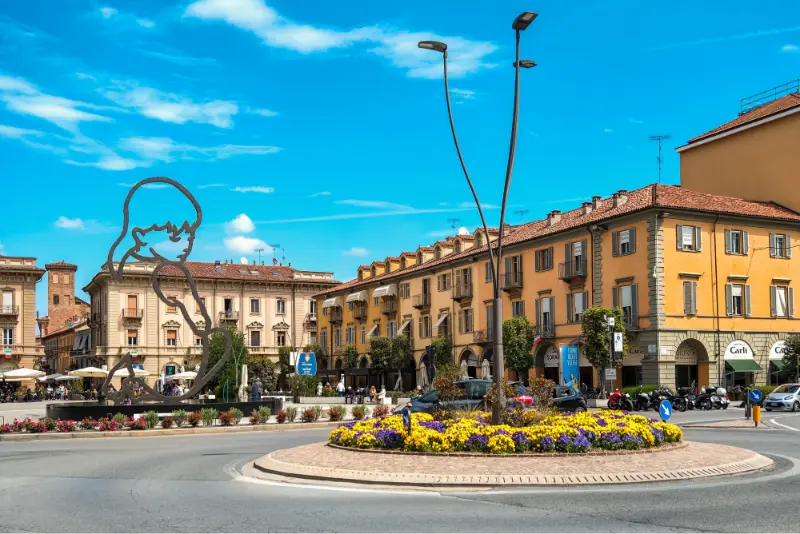
White truffle season in Alba
The Alba white truffle is one of Piedmont’s most famous seasonal products. The Alba white truffle guide explains fair planning, markets and tasting. The season is autumn rather than year-round, and supply and price vary with weather and harvest conditions.
A restaurant should show or shave the truffle in a transparent way and explain the supplement. Simple dishes such as tajarin, eggs or fonduta are often better vehicles than elaborate recipes. Avoid buying truffle products that use vague flavouring language if you want the real seasonal ingredient.
Cheese from the plains to the Alps
Piedmont’s cheeses change with altitude and livestock traditions. Castelmagno is linked to Valle Grana, while toma-style cheeses appear across many Alpine valleys. Robiola has several local expressions in the hills. Rather than ordering a generic cheese board, ask the restaurant where each cheese comes from and whether it is at the ideal stage of maturation.
If buying cheese for travel, ask about refrigeration and vacuum packing. A product that is perfect for a short drive may not be suitable for a full day in a warm car.
Rice culture around Vercelli and Novara
The eastern plains create a different food landscape from the wine hills. Rice fields around Vercelli and Novara underpin dishes such as panissa and regional risotti. Spring flooded paddies are visually striking, but rice culture is not just scenery: farm schedules, irrigation and harvest shape local life.
Use the Vercelli rice fields guide to combine food with a respectful countryside route. Buy rice from established producers rather than walking into working fields for photographs.
Hazelnuts, gianduja and chocolate
The Langhe are closely associated with hazelnuts, while Turin is central to Piedmont’s chocolate identity. Gianduja combines chocolate and hazelnut into a flavour that appears in pralines, spreads and gelato. A good tasting compares products with different cocoa and nut proportions rather than simply buying the sweetest souvenir.
Turin’s historic cafés add another layer with drinking chocolate, bicerin and pastries. These are best treated as a separate snack or breakfast ritual instead of forcing them after a large multi-course lunch.
Vermouth, aperitivo and Turin
Turin has a deep connection with vermouth and the culture of aperitivo. Modern bars may serve classic or creative versions, but the practical rule is the same: aperitivo is a pre-dinner moment, not necessarily a replacement for dinner unless the venue clearly offers a substantial food format.
If you plan wine tasting later in the trip, use Turin to explore lower-alcohol or mixed-drink traditions carefully and stay on foot or public transport. Never combine a tasting-heavy day with driving.
Wine and food matching by territory
In the Langhe, use the Langhe food guide and wine routes around Barolo and Barbaresco. Monferrato adds Barbera, Ruchè, Grignolino and sparkling traditions, while Canavese introduces Erbaluce. The goal is not to memorize pairings but to taste a local wine beside the food produced in the same landscape.
Book winery visits rather than turning up unannounced, and keep tastings limited if you are the driver. Spitting is normal and responsible during professional-style tastings.
Markets, bakeries and simple meals
Not every memorable Piedmont meal needs a tasting menu. Covered markets, bakeries, cheese shops and delis are useful for picnic supplies and for learning everyday products. Ask before eating purchased food at café tables, and never picnic inside vineyards without permission.
A simple lunch also leaves room for a more substantial dinner. This pacing matters because Piedmontese menus can be multi-course and wine-focused.
Where to stay while using this guide
Food-focused travellers should stay at least two nights in Turin and two or three in the Langhe or Monferrato. An agriturismo can add breakfast and farm products, while a town base like Alba makes it easier to walk to dinner without driving. In mountain valleys, half-board can be practical where restaurants are scattered. Compare accommodation on Booking.com
How to keep the plan flexible
Build one major meal per day and keep the other flexible. Truffle availability, market days and restaurant closures can change the ideal order. Reserve destination restaurants and winery lunches, but leave room for a spontaneous market snack or bakery stop.
Useful links for planning
- Official Piedmont tourism information — Piedmont’s official tourism resources present food and wine as a core part of the region, from vineyard landscapes and truffles to rice plains and Alpine products.
- Langhe food guide
- Alba white truffle guide
- Turin food guide
- Monferrato wine guide
Responsible travel and local context
Respect producers’ time by booking tastings, arrive sober and use a designated driver. Buy seasonal products from traceable sellers, avoid entering working fields or vineyards without permission, and ask how perishable food should be transported. Food tourism is most sustainable when money reaches local farms, restaurants and artisans rather than only souvenir chains.
Final planning advice
Use this Piedmont food guide as a map of regions rather than a list to complete. Eat tajarin in the hills, rice on the eastern plain, chocolate in Turin and mountain cheese close to where it is made. Seasonal timing matters, especially for truffles and produce, and the best meals usually come from leaving enough space in the itinerary to sit down properly.
How to structure a Piedmontese meal
Traditional Piedmontese meals can move through antipasti, a primo, a secondo, cheese and dessert, but visitors do not need to order every course. One of the best strategies is to share a couple of starters, choose either pasta or a main course, and leave room for a local dessert or cheese. In wine country, tasting menus may already include several small courses; ask how long the meal is expected to last before scheduling another visit. A leisurely lunch can easily occupy two hours and should be treated as an attraction in its own right.
Menus often reflect season more than tourist expectations. Vitello tonnato and carne cruda may appear as starters, mushrooms and truffles become more important in autumn, and richer braised meats suit colder months. Ask whether dishes contain raw egg, raw meat, anchovy, nuts or unpasteurised cheese if those ingredients matter for health, pregnancy or allergy reasons. For children, simple pasta, bread, cheese and gelato are widely available, but formal restaurants may not use a separate kids’ menu. Booking an earlier table can make family dining much easier.
Planning by geographic clusters
Piedmont rewards geographic clustering. Turin and its royal residences form one group; Langhe, Roero and Monferrato another; the northern lakes and Ossola another; the western Alpine valleys another. Put consecutive days in the same cluster and avoid crossing the region simply to add one famous stop. This reduces fuel, protects time for meals and walks, and makes the itinerary much more resilient when weather or opening hours change.
Booking strategy
Reserve only what has a genuine capacity or timing constraint: major museum slots, selected winery visits, popular restaurants, seasonal boats or guided mountain activities. Leave ordinary village walks and scenic drives flexible. This balance prevents the trip from becoming a chain of deadlines while still protecting the experiences that sell out first during weekends, harvest season and school holidays.
Final pre-trip checklist
Forty-eight hours before departure, confirm the weather, exact opening hours, transport return, parking rules and any reservation that cannot be moved. Save tickets offline and check whether a local event changes access. On the morning itself, reassess the plan rather than following it mechanically. This simple review is particularly important in Piedmont because a city museum, vineyard road, lake ferry and Alpine lift each respond to different seasonal and operational conditions.