
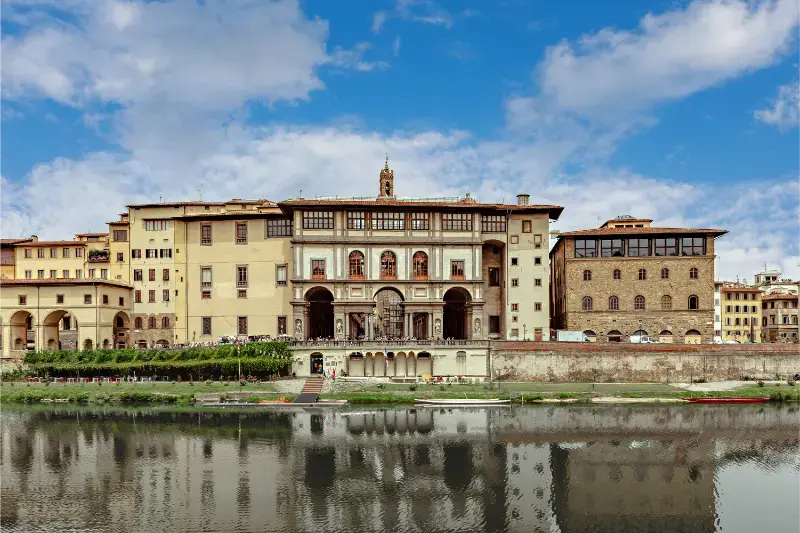
The Uffizi is one of those museums where poor planning can turn world-class art into corridor fatigue. The solution is not to memorize every room before you arrive, but to know what period matters most to you, reserve a sensible entrance time and leave enough energy to look slowly at a limited number of works. Botticelli, Leonardo, Michelangelo, Raphael, Titian and Caravaggio are not a checklist; they are anchors for understanding how Italian painting changed across centuries.
At a glance
| Ideal visit | 2.5–4 hours for most first-time visitors |
|---|---|
| 2026 regular hours | Tuesday–Sunday, 8:15–18:30; last entry 17:30 |
| Closed | Mondays, 1 January and 25 December, subject to special openings |
| 2026 full ticket | Official site lists €25 same-day or €29 advance purchase; afternoon promotion may apply |
| Official information | Uffizi Galleries |
Book the right ticket, not just any ticket
The official Uffizi site lists a named single ticket and several combined options, including a five-day PassePartout for the Uffizi, Pitti Palace and Boboli Gardens. In 2026, the standard full ticket is listed at €25 when purchased on the day and €29 when purchased in advance. An afternoon offer introduced for 2026 reduces the price for entries from 16:00, which can be useful for experienced museum visitors who are comfortable with a shorter window.
For a fuller understanding of the surrounding area, use our Florence Travel Guide alongside these more focused recommendations.
For a first visit, a normal reserved entry is usually the simplest choice. Buy through the official channel if possible and treat the entrance time as fixed. Special openings and temporary restrictions do occur; for example, extreme heat and major events have produced exceptional access rules in 2026. Check again a few days before the visit rather than assuming the conditions from the day you booked are unchanged.
How to choose what to see
The Uffizi collection ranges far beyond the handful of paintings reproduced on souvenirs. A first route can follow the development of Tuscan and Italian painting from medieval altarpieces through the early Renaissance, Botticelli’s mythological works, Leonardo’s experiments, the High Renaissance and later rooms. This chronological logic gives the famous works context and reduces the temptation to sprint between only the most photographed canvases.

Before entering, choose perhaps six to ten works or artists you care about. The Birth of Venus and Primavera attract intense attention, but the experience becomes richer when you also notice changes in spatial construction, portraiture, light and human expression around them. If a room is crowded, move on and return later rather than forcing yourself into a wall of phones.
Botticelli without the crush
Botticelli’s rooms are among the natural pressure points of the museum. Arriving early helps, but the bigger advantage is psychological: accept that you may need to circle back. Stand away from the central crowd first, look at less famous works, and wait for the room to breathe. Seeing Primavera from a little distance can reveal composition better than fighting for the front row.
The Uffizi works best when you alternate concentration with recovery. Windows and corridors provide views over the Arno, Palazzo Vecchio and the historic centre, giving your eyes a break from dense galleries. This is not wasted time. Museum fatigue reduces what you remember, so a five-minute pause often improves the next thirty minutes of looking.
Leonardo, Michelangelo, Raphael and beyond
The museum lets you compare artists who are often studied separately. Leonardo’s early work shows experimental observation and atmosphere; Michelangelo’s Doni Tondo brings sculptural bodies into painting; Raphael demonstrates a different balance of clarity and grace. Later rooms add Venetian colour and dramatic Baroque approaches, helping the visit move beyond the simplified idea that the Renaissance was one uniform style.
Do not worry if temporary loans or rearrangements change the exact sequence. The Uffizi regularly carries out restoration and display work, and the official site publishes notices about rooms or works that may be unavailable. Build your visit around themes and artists rather than a rigid room-by-room script copied months earlier.
The Vasari Corridor: understand the option before buying
The reopened Vasari Corridor is now tied to specific ticketing and reservation conditions. The official 2026 ticket page lists a combined Uffizi + Vasari Corridor ticket with a mandatory reservation and entry to the Uffizi two hours before the corridor time. This can be a fascinating addition for repeat visitors or architecture lovers, but it also makes the day more structured.
Do not add the corridor simply because it sounds exclusive. If this is your first morning in Florence, the main Uffizi collection may already be enough. Travellers with only two or three days often gain more from leaving time for the Duomo complex, Oltrarno or a relaxed walk than from stacking every available museum product into the same schedule.
A practical museum rhythm
Eat before entering, carry only what is permitted and use the facilities before the densest part of the route. Groups, school visits and temporary exhibitions can change the flow. If you are travelling with children or a companion who is less interested in art, agree in advance on the works you will prioritize and a maximum visit length.
Photography rules, baggage rules and group requirements can change, so read the visitor regulations on the official website. Accessibility information is also published by the museum. The important planning principle is to remove preventable friction before arrival so that your attention inside is reserved for the art rather than logistics.
Getting there and moving around
The Uffizi sits beside Piazza della Signoria and the Arno in the pedestrian core of Florence. It is an easy walk from the Duomo, Ponte Vecchio and Santa Croce. From Santa Maria Novella station, walking is often simpler than using local transport if you have light luggage. Avoid scheduling a rental-car pickup before or immediately after the museum because central ZTL and parking logistics add unnecessary pressure.
Where to stay
The historic centre is convenient for an early Uffizi entry, while Oltrarno works well if you want quieter evenings and easy access across Ponte Vecchio. Santa Maria Novella can be practical for rail-heavy itineraries. Compare central accommodation on Booking.com and pay attention to elevators, stairs, street noise and air conditioning rather than choosing only by straight-line distance.
Food and meal planning
A museum morning pairs well with a simple lunch around Sant’Ambrogio, Santa Croce or Oltrarno rather than the most crowded stretch beside the gallery. Try ribollita, pappa al pomodoro, crostini, lampredotto or a seasonal pasta depending on appetite and time. See our Tuscan food guide for a regional overview before assuming bistecca is the only Florentine meal worth seeking.
Best time to visit
Tuesday through Thursday mornings often feel easier than peak weekend periods, but Florence has few truly quiet museum days. Summer heat can make an indoor visit attractive to everyone at once. Reserve the time that fits your itinerary, then arrive rested. Late-day tickets can offer value in 2026, but only if the shorter available visit suits the depth you want.
A realistic itinerary
For a balanced Florence day, visit the Uffizi in the morning, take a real lunch break, then cross the Arno for Santo Spirito, Palazzo Pitti exterior spaces or a walk toward Piazzale Michelangelo. Put the Duomo on another half-day. This spacing follows the approach in our Florence travel guide: one major museum plus street-level Florence is usually more memorable than three major museums without daylight.
Mistakes to avoid
The biggest mistakes are arriving without a plan, trying to see every room equally, booking another major museum immediately afterwards, and buying a ticket from a reseller without checking the official alternative. Also avoid treating the last hour before closing as equivalent to a full visit unless you already know exactly what you want to see.
Continue planning your Tuscany trip
- Florence Travel Guide
- Florence Duomo Guide
- Accademia Gallery Guide
- Best Day Trips from Florence
Frequently asked questions
How long do you need at the Uffizi?
About 2.5–4 hours works well for most first-time visitors. Art specialists can easily stay longer.
Is advance booking worth it?
Yes when your Florence dates are fixed, particularly in busy months, because it protects the rest of your day from an uncertain queue.
Can I see the Uffizi and Accademia on the same day?
Yes, but it is better to separate them with lunch and outdoor time instead of scheduling them back-to-back.
Is the Uffizi suitable for children?
It can be if you shorten the route and choose a small number of paintings with stories, rather than expecting children to follow an adult-length museum marathon.
Official information
For current visitor information, use the official source before travelling.
Opening hours, ticket rules, transport schedules and access conditions can change. Check the official operator close to your travel date, especially for timed-entry attractions, seasonal buses, ferries and special events.
Planning the wider trip around this experience
Tuscany rewards geographical discipline. Keep Florence and its close day trips together, central Tuscany around Siena and Val d’Orcia together, and the western coast or islands as separate travel zones. Repeatedly crossing the region for one famous stop creates more driving, station time and parking than most first-time itineraries anticipate. A slower route also makes restaurant reservations, weather changes and spontaneous stops easier to absorb without damaging the rest of the trip.
Leave at least one flexible block every two or three days. It can become a longer museum visit, a market, a swim, an unplanned village, a rest at the hotel or simply time lost to transport. This margin is not empty time: it is what turns an itinerary from a timetable into a holiday. If you are choosing between one extra destination and one extra night in a place you already care about, the extra night is often the more rewarding choice.
Last updated: October 17, 2026