
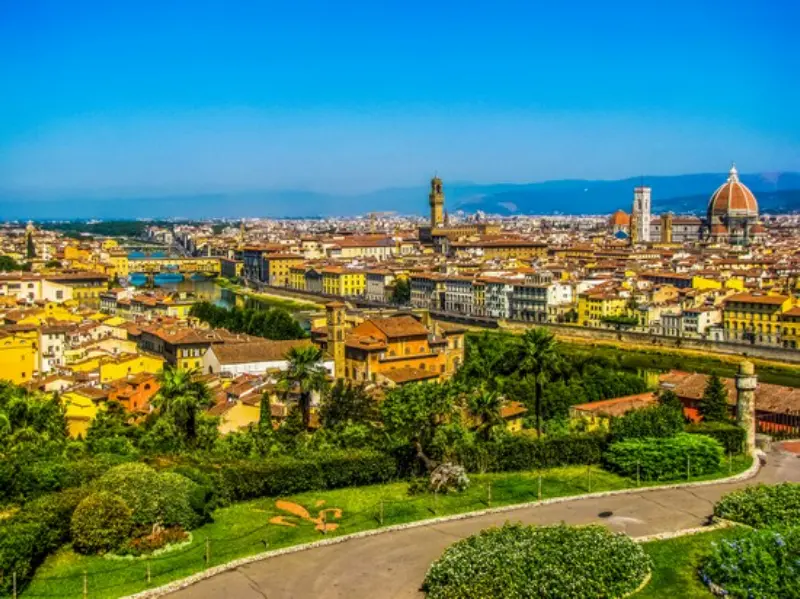
Florence is an excellent base for exploring Tuscany, but not every famous Tuscan place is a good day trip. Pisa, Lucca and Arezzo work naturally by train; Siena is straightforward by bus or rail with a little planning; Fiesole is almost an extension of the city; while Chianti, Val d’Orcia and combinations of small hill towns become much easier with a car or an organized excursion. The smartest choice depends less on fame and more on travel time, transport frequency and what you want your day to feel like.
At a glance
| Easiest by train | Pisa, Lucca, Arezzo, Prato and Pistoia |
|---|---|
| Easiest by bus | Fiesole; Siena is often convenient by direct bus |
| Best with a car | Chianti, Val d’Orcia, Mugello and multi-village routes |
| Best for art | Siena, Arezzo, Pisa |
| Official inspiration | Visit Tuscany |
1. Siena: the classic medieval contrast
Siena offers the strongest visual and cultural contrast with Renaissance Florence. Piazza del Campo, the cathedral complex and the dense contrade make a full day without needing to add another town. Direct buses can be convenient because they arrive closer to the historic centre than the railway station, while train travel remains possible if you prefer rail and do not mind the uphill transfer into town.
For the wider destination context behind Best Day Trips from Florence, see our Florence Travel Guide, including sights, transport and useful planning choices.
Use our Siena travel guide to choose two or three priorities. Trying to combine Siena, San Gimignano and Chianti independently in one public-transport day often produces more waiting than seeing. If you want all three, a car or well-designed small-group tour can make the logistics more coherent.
2. Pisa and 3. Lucca: easy rail days
Pisa is one of the easiest train excursions from Florence and deserves more than a photograph at the Leaning Tower. Walk from Pisa Centrale through the city to Piazza dei Miracoli so that the river, university streets and Keith Haring’s Tuttomondo become part of the day. See our Pisa guide for a route that goes beyond the Field of Miracles.
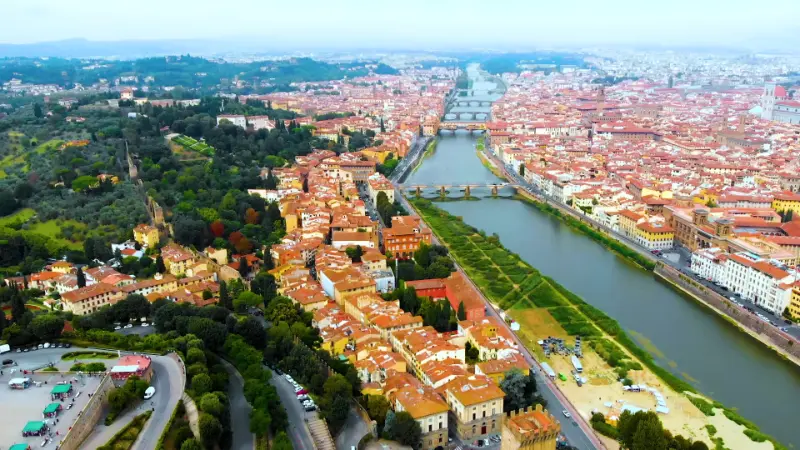
Lucca is another strong rail option, with Renaissance walls that function as a green promenade, a compact historic centre and towers that reward slower wandering. It is possible to combine Pisa and Lucca in one long day because the cities are linked by rail, but staying overnight in Lucca produces a quieter evening. Our Lucca guide explains the trade-off.
4. Fiesole and 5. Prato: short trips when you do not want a twelve-hour day
Fiesole sits on the hills above Florence and works especially well when you want Roman archaeology, views and a change of scale without spending half the day in transit. It is close enough for a half-day, leaving the morning or evening for Florence. Read our Fiesole guide for the archaeological area and viewpoint planning.
Prato is underrated for visitors interested in textiles, contemporary culture and cathedral art. Frequent regional trains make it a practical alternative when Florence feels crowded. Because it receives fewer international day trippers, it also gives a more ordinary urban rhythm than the headline Tuscan towns. See our Prato guide.
6. Arezzo and 7. Cortona: eastern Tuscany
Arezzo is an excellent train day for Piero della Francesca, Piazza Grande and antique culture. The historic centre rises from the station but remains manageable on foot. It is one of the best choices for travellers who want major art without the same crowd pressure as Siena. Our Arezzo guide covers the core sights.
Cortona is more complicated because the rail station is below the hill town, so a bus or taxi connection completes the journey. It can still work as a day trip, but the transport makes it less frictionless than Arezzo. If you want both places in one day, a car gives more control; otherwise choose one and enjoy it properly. See our Cortona guide.
8. Chianti: wine country needs a transport plan
Chianti looks close to Florence on the map, but vineyards, villages and estates are dispersed. Greve is reachable by bus, yet a full wine-country day is easiest with a car and a sober driver, a private driver, or an organized tasting tour. Do not rent a car specifically so everyone in the group can drink: transportation is part of the wine plan, not an afterthought.
Our Chianti road-trip guide focuses on Greve, Panzano, Castellina, Radda and Gaiole. One or two tastings plus lunch is enough for most people. A rushed sequence of four wineries creates neither better wine understanding nor a safer day.
9. San Gimignano, 10. Val d’Orcia and 11. Mugello
San Gimignano is famous for its towers and can be reached by bus connections, but transport is less direct than Pisa or Siena. A car makes it easy to arrive early and continue to nearby countryside. Use our San Gimignano guide and avoid combining too many towns just because they appear close on a map.
Val d’Orcia is visually extraordinary but too spread out for a simple rail excursion. Pienza, Montalcino, San Quirico and Bagno Vignoni are best treated as a road trip or overnight stay. Mugello, north of Florence, offers a different landscape of Apennine foothills, Scarperia and Lake Bilancino; parts are reachable by train, but a car makes the rural pieces easier. Compare Val d’Orcia and Mugello before choosing.
12. The coast: possible, but choose the right objective
Pisa and Livorno are straightforward by train, while beaches farther south can require local connections or a car. A summer day at the sea can be refreshing, but beach traffic and return schedules matter. For a dedicated coastal holiday, moving your base is usually better than commuting from Florence for several days.
If the sea is your priority, read our Tuscany beaches guide and the Etruscan Coast guide. Florence is a brilliant art-city base; it does not need to be the base for every landscape in the region.
Getting there and moving around
Use Firenze Santa Maria Novella as the rail reference point and verify schedules on the day before travel. Regional trains usually do not require the same advance planning as high-speed services, but strikes, engineering works and seasonal timetables can affect the day. For buses, confirm the correct stop in Florence and the return timetable before leaving, not after arriving in a small town.
Where to stay
If you plan three or more day trips, staying near Santa Maria Novella can simplify early departures. If your trip is mainly Florence with only one excursion, choose the neighbourhood you actually want to experience in the evening. Compare options on Booking.com rather than sacrificing every night for a ten-minute morning advantage.
Food and meal planning
One reason to choose a single destination is lunch. Siena, Lucca, Arezzo and the smaller towns all have local dishes and markets that disappear when you spend the day racing for connections. Treat food as part of the itinerary; our Tuscan food guide helps match dishes to different parts of the region.
Best time to visit
Spring and autumn are comfortable for city and hill-town days, while summer demands earlier starts and more shade. Winter can be excellent for art cities but brings shorter daylight and thinner rural schedules. Wine and harvest seasons add atmosphere in the countryside but can also increase demand for accommodation and tastings.
A realistic itinerary
For a five-night Florence stay, choose at most two day trips: for example Siena plus Lucca, or Arezzo plus a Chianti day. Keep at least two full days for Florence itself. If you want Val d’Orcia, Maremma or several villages, shift to a second base instead of repeatedly returning to the city.
Mistakes to avoid
The classic mistake is measuring distance instead of door-to-door time. A place forty kilometres away may require multiple buses, while a city farther away on a direct train can be easier. Another mistake is booking the return too tightly after a winery, museum or lunch. Leave margin and always know the last practical route back.
Continue planning your Tuscany trip
- Tuscany Travel Guide
- Tuscany Without a Car
- Siena Travel Guide
- Chianti Road Trip
Frequently asked questions
What is the easiest day trip from Florence?
Pisa, Lucca, Arezzo and Prato are among the easiest by train; Fiesole is the shortest overall.
Can you visit Siena and San Gimignano in one day?
Yes with a car or organized transport, but independent public transport makes the day more fragmented.
Do I need a car for Chianti?
Not for every village, but a car, driver or organized tour makes winery visits much easier and safer.
Is Val d’Orcia a good day trip from Florence?
It can be, but it is a long driving day. An overnight base in or near the valley produces a much better experience.
Official information
For current visitor information, use the official source before travelling.
Opening hours, ticket rules, transport schedules and access conditions can change. Check the official operator close to your travel date, especially for timed-entry attractions, seasonal buses, ferries and special events.
Planning the wider trip around this experience
Tuscany rewards geographical discipline. Keep Florence and its close day trips together, central Tuscany around Siena and Val d’Orcia together, and the western coast or islands as separate travel zones. Repeatedly crossing the region for one famous stop creates more driving, station time and parking than most first-time itineraries anticipate. A slower route also makes restaurant reservations, weather changes and spontaneous stops easier to absorb without damaging the rest of the trip.
Leave at least one flexible block every two or three days. It can become a longer museum visit, a market, a swim, an unplanned village, a rest at the hotel or simply time lost to transport. This margin is not empty time: it is what turns an itinerary from a timetable into a holiday. If you are choosing between one extra destination and one extra night in a place you already care about, the extra night is often the more rewarding choice.
Last updated: October 17, 2026