

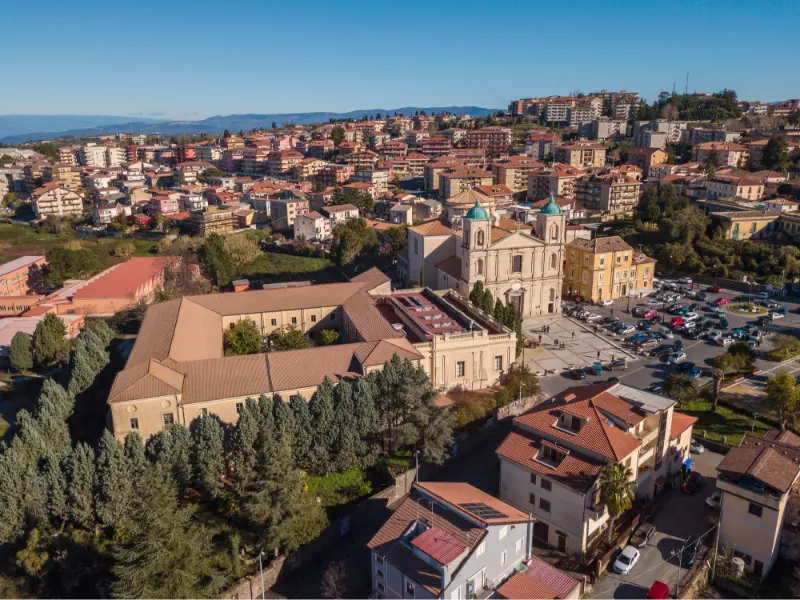
Vibo Valentia is a rare Calabrian city where an ancient Greek colony, a medieval castle, a modern provincial center and the dramatic Tyrrhenian coastline can be read together without leaving a small geographic area. Most visitors race through the province on their way to Tropea, Pizzo or Capo Vaticano. That is a missed opportunity if history interests you. The city’s identity grew from ancient Hipponion, later Roman Valentia; its archaeological museum occupies a fortified hilltop position, and the old streets connect civic life with unusually broad views toward the sea. The coastal district, Vibo Marina, offers a completely different setting. The best way to visit is to understand the relationship between the elevated city and the shore rather than to confuse the two on a map.
In this guide
- From Hipponion to Valentia: know what you are looking at
- The castle and the Vito Capialbi Archaeological Museum
- Walking the upper city without rushing
- Ancient walls and archaeological fragments beyond the museum
- Vibo Marina is a separate coastal experience
- Choosing between Vibo, Tropea and Pizzo as a base
- A thoughtful half-day and full-day itinerary
- Food culture: mountain, plain and the Costa degli Dei
- Getting here and traveling around the province
- When to visit and how to approach the city respectfully
- What to combine with Vibo on a longer trip
- Frequently asked questions
From Hipponion to Valentia: know what you are looking at
The ancient city of Hipponion was part of the network of Greek settlements in southern Italy and later became the Roman community of Valentia. Ancient city walls, funerary objects, inscriptions and cult material help historians reconstruct a place that traded and competed with the other settlements of Magna Graecia. Today’s streets do not display a perfectly preserved archaeological grid. Instead, you encounter fragments in museums and landscapes whose later buildings obscure earlier layers. The most useful strategy is to begin with the collections at the hilltop castle and then look at the city’s topography. That sequence gives context to artifacts that otherwise seem isolated behind glass. Avoid presenting Vibo merely as a medieval town with a fortress. Its pre-Roman and Roman past is the foundation of its identity, and the material evidence explains why this strategic height above the Tyrrhenian mattered for centuries.
Extend a visit to Vibo Valentia with the suggestions in our Calabria travel guide, which covers regional transport and where to base yourself.
The castle and the Vito Capialbi Archaeological Museum
The monumental castle traditionally linked to Frederick II occupies one of the highest positions over Vibo Valentia. It houses the National Archaeological Museum ‘Vito Capialbi,’ named for the local scholar and collector who helped document the region’s past. The collections provide the best introduction to ancient Hipponion, including objects connected with civic, religious and funerary life. Some of the most rewarding pieces are modest rather than monumental: small objects communicate how people lived, traded and expressed beliefs. Allow enough time to read labels, and do not expect every exhibit mentioned in an older travel blog to be in exactly the same gallery. Archaeological displays, loans and visiting arrangements change. The building is also a viewpoint, yet it must be treated first as a protected museum and monument. Check official visitor information before setting out, particularly if traveling on a holiday or hoping to see a specific collection.
Walking the upper city without rushing
After the museum, continue through the historic center where churches, civic buildings and daily shops occupy a web of streets shaped by centuries of rebuilding. Piazza San Leoluca and the Duomo area provide useful reference points for a relaxed walk; the cathedral is associated with the town’s patron and offers a change of scale after the fortress. Notice the transition between formal squares and narrower streets rather than trying to turn every old doorway into a named attraction. An upper city with functioning schools, businesses and public services has a different rhythm from a coastal holiday village. A late morning visit provides good light for the buildings and time for a seated lunch. Uphill approaches and occasional uneven paving mean that footwear matters. Travelers who need step-free access should confirm individual venues rather than assuming that proximity on a map guarantees easy entry.
Ancient walls and archaeological fragments beyond the museum
Evidence of Hipponion survives outside the museum in stretches of ancient fortifications and areas explored by archaeologists, although access and visibility are not always straightforward. Such remains may be in protected or partially accessible zones rather than landscaped parks with daily ticket offices. If you want an archaeological walk beyond the castle, check with the municipality or museum about current public access and whether an authorized guided visit is possible. Do not enter fenced land or search for ruins across private property based on a satellite image. The intellectual reward comes from understanding the defensive position and how Greek and later Roman occupation reshaped the landscape. Consider also a visit to the archaeological site of Locri or the museum at Reggio Calabria on another day, but do not imply they are quick stops next door: Calabria’s archaeological story is spread across an extensive region.
Vibo Marina is a separate coastal experience
The municipal coastal area known as Vibo Marina should be understood as a port and seaside district, not as the same neighborhood as the hilltop city. Its waterfront, harbor activity and connections along the Tyrrhenian coastline contrast with the castle and old-town piazzas above. Depending on your interests, Vibo Marina may be somewhere to have a meal by the sea, observe a working harbor or begin a drive along the Costa degli Dei. Beach conditions, public access and bathing quality depend on the exact stretch of coast and the season. It is important not to use the entire port area as shorthand for a conventional swimming beach. For a full beach day, compare nearby designated bathing areas and check water notices locally. To make both Vibo and the marina work in one itinerary, factor in the road transfer and parking rather than assuming an effortless walk downhill and back.
Choosing between Vibo, Tropea and Pizzo as a base
Vibo Valentia is a sensible base for travelers who want civic life, archaeology and inland access, especially with a car. Tropea is the better-known choice if swimming, postcard viewpoints and summer restaurants are the main priorities. Pizzo is attractive for a compact historic town and food-focused day, while Vibo Marina can serve people who specifically need the port district. These places are related but not interchangeable. Where to sleep depends on your intended evenings as much as your daytime sightseeing: an elevated city hotel does not provide direct beach access, and a seaside property is not automatically convenient for the archaeological museum. Compare accommodation on a map, look at genuine parking and transit conditions, and consider how much time you will spend commuting. It is often better to choose one base for three nights and make focused day trips than to move luggage every afternoon.
A thoughtful half-day and full-day itinerary
For a half-day, focus on the castle museum, then take a slow walk through the upper center and finish with a local meal. That is enough to justify the stop without making the visit feel like an obligation between beaches. A full day can add a second historic site, a viewpoint and an afternoon drive toward the marina; only do this if transport is straightforward. Families may prefer a museum visit when children are fresh, then lunch and a short outdoor walk rather than a long sequence of religious interiors. Visitors deeply interested in ancient history could spend most of the day in the upper town instead. The temptation to add Tropea, Pizzo and Capo Vaticano on the same day is understandable, but doing so would shortchange each place. Think in geographic clusters: Vibo plus Pizzo is one reasonable day; Tropea plus its surrounding beaches is another.
Food culture: mountain, plain and the Costa degli Dei
The cuisine around Vibo draws on hill farms, olive groves and fishing traditions, with regional favorites such as red Tropea onions, local cheeses, cured pork and seasonal vegetables. The spicy spreadable sausage ‘nduja, strongly associated with Spilinga, is memorable but only one component of the food scene. Try fresh pasta or a simple vegetable preparation before automatically ordering a chili-heavy plate; food here is often more balanced than the stereotype suggests. Seafood dishes make more sense on the coast, while a family-run restaurant in the city might emphasize inland ingredients. Ask what is locally produced and in season. Pizzo’s tartufo ice cream makes a fine separate dessert stop if you head north. Culinary identity provides another thread connecting ancient agricultural landscapes with the modern province, and making time for a real lunch is a better introduction than buying ten anonymous souvenirs.
Getting here and traveling around the province
Travelers coming from Lamezia Terme Airport commonly reach Vibo by road or rail connections with onward local transport. Be alert to station names: a railway stop associated with the Vibo area may be outside the upper historic center, meaning a bus or taxi remains necessary. Routes and service frequency depend on the date and day of the week. A rental car gives flexibility to connect the museum, Vibo Marina, Pizzo and the inland villages, but parking in the old center can be more complicated than on the outskirts. If using public transport, concentrate on the upper city and verify the return schedule before leaving your hotel. In summer, coastal traffic can also affect plans more than the map suggests. Do not advertise a fixed journey time between scattered sights; check live transport conditions and leave margin before flights or trains.
When to visit and how to approach the city respectfully
Spring and fall usually provide a better balance for walking, archaeology and inland side trips than the busiest summer afternoons. Summer remains worthwhile if you start early, carry water and use the hottest hours for lunch or a museum. In winter you will encounter a working provincial city rather than an emptied resort, although museum and hospitality schedules require checking. Remember that neighborhoods and public spaces serve residents first. Photography should respect religious services, museum policies and private homes. Archaeological remains are fragile, and stones that appear ordinary may be protected. With children or travelers who have mobility needs, build the day around a small number of accessible places instead of assuming the city’s slopes are easy. Vibo rewards curiosity because it does not package its history into a single tourist promenade.
What to combine with Vibo on a longer trip
Pizzo offers the church of Piedigrotta, the Murat castle and a pleasant town center; Tropea offers the dramatic cliff-top old town and access to nearby beaches; Zungri has an extraordinary rock-cut settlement that tells a different story about settlement and agriculture. Each can support its own dedicated guide and should not be rushed through as an afterthought. Inland, the Serre mountains introduce cooler landscapes and the religious heritage of Serra San Bruno. Travelers interested in Greek history can build a larger multi-day archaeology itinerary linking Vibo with Locri, Kaulon and Reggio. The most balanced approach is to alternate a coastal day with a history or inland day. That rhythm is often more enjoyable than trying to fill every day with three beach stops and a museum on the way back.
At a glance
| Suggested time | Half a day to a full day, depending on your focus |
|---|---|
| Transport | Verify current rail, road or local transfers before travel |
| Best approach | Choose a realistic route and prioritize safety or access notices |
| Base or visit | Vibo Valentia, Calabria |
Related Calabria guides
- Calabria Travel Guide: Where to Go, Stay and How to Plan
- Best Things to Do in Calabria: Coast, Culture and Nature
- Tropea, Calabria: Old Town, Beaches and Visit Tips
- Sila National Park: Lakes, Forest Trails and Bases
Official sources and planning links
Schedules, access restrictions and services can change. Use these official or primary sources to check details before visiting:
Frequently asked questions
Is Vibo Valentia the same place as Vibo Marina?
They belong to the same municipality but are different districts. The archaeological museum and upper historic center are inland and elevated; Vibo Marina is on the coast.
What is the most important attraction?
The National Archaeological Museum ‘Vito Capialbi’ in the castle is the best first stop for understanding ancient Hipponion.
Can I visit Vibo as a day trip from Tropea?
Yes, especially with a car. Keep the museum and upper city as the focus rather than planning an unrealistic string of coastal detours.
Is Vibo a beach destination?
The municipality includes coastal areas, but the upper town is best approached as a cultural city, not as a beachfront resort.
How much time should I allow?
A focused half-day covers the castle museum and historic center. A full day leaves room for more walking and a coastal extension if transport is convenient.
Last updated: October 17, 2026