
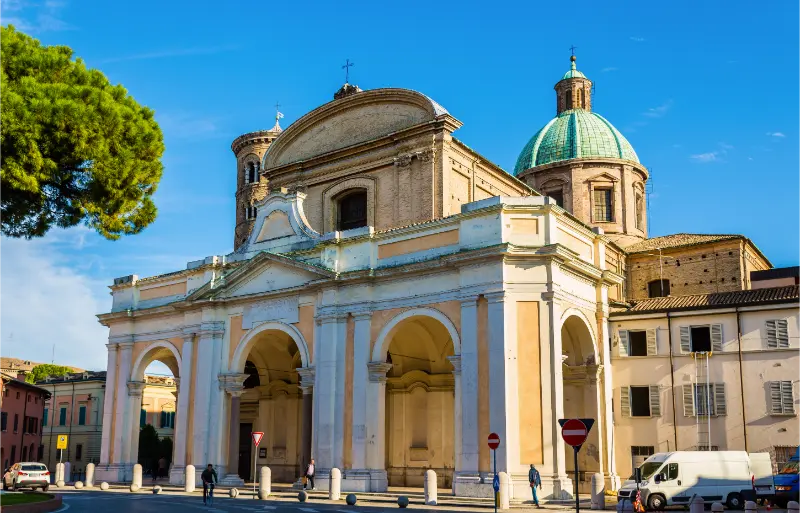
Ravenna is compact enough that choosing accommodation is more about convenience and atmosphere than saving huge amounts of travel time. For most first-time visitors, the historic centre is the clear choice, but station access, parking, evening noise and plans for Classe or the coast can make another area more practical.
At a glance
| Best first-time base | Historic centre around Piazza del Popolo |
|---|---|
| Best for mosaics | Between San Vitale and central UNESCO sites |
| Best for trains | Station / east side of centre |
| Best with a car | Edge of ZTL with confirmed parking |
| Best for coast focus | Marina di Ravenna or another lido, not central Ravenna |
Historic centre: the easiest all-round choice
The centre gives you the simplest access to San Vitale, Galla Placidia, the baptistery, Sant’Apollinare Nuovo, Dante’s Tomb, restaurants and evening walks. Because Ravenna’s key sights are spread across a compact core rather than one single square, a central hotel reduces the temptation to plan around buses or taxis.
To connect Where to Stay in Ravenna with the rest of the destination, our Ravenna Travel Guide offers a broader overview of what to see and how to get around.
Look at the exact address. “Central Ravenna” can mean anything from steps from Piazza del Popolo to a position near the edge of the historic area. A ten-minute difference is not important during the day, but it matters with luggage, rain or an early train.
Around San Vitale: best for an art-focused stay
Staying near San Vitale is particularly attractive for travellers whose priority is the mosaic circuit. You can reach the basilica and Galla Placidia early, return to the hotel for a midday break, and continue to the baptistery or Dante area later. The streets also feel calm once day visitors leave.
The trade-off is that the station is farther away than from the eastern side of the centre. If you are arriving with heavy luggage, consider a taxi or ask the property for the easiest walking route. Historic paving can make a modest map distance feel longer.

Station area: practical for short stays and rail trips
The area between Ravenna station and Sant’Apollinare Nuovo is useful if you have one night, an early departure or multiple regional train connections. The centre remains walkable, and Sant’Apollinare Nuovo can become your first or final UNESCO site without crossing the whole city.
The atmosphere is more functional than the prettiest central streets, so compare recent reviews for noise and the immediate block. If evening ambience matters more than transport, move a little closer to Piazza del Popolo rather than choosing solely by distance from the platforms.
Darsena: contemporary atmosphere and more space
Ravenna’s Darsena area reflects the city’s modern relationship with its canal and port. It can appeal to repeat visitors, travellers who prefer contemporary regeneration projects, or those seeking larger apartments outside the most touristic streets. Cultural venues and events periodically animate the waterfront environment.
The main UNESCO monuments are still reachable, but the Darsena is not the optimum base for a first visit focused on early Christian art. Check your daily walking route before booking and decide whether the extra distance is balanced by price, parking or a property you particularly like.
Staying with a car: ZTL and parking strategy
Central Ravenna has restricted traffic areas, so never drive toward a historic-centre hotel assuming access is automatic. Ask the property for written instructions about permitted routes, licence-plate registration and parking before arrival. One wrong turn can create a fine long after the trip has ended.
For a road trip, staying just outside the restricted centre can be ideal. Park once, walk to the monuments, then retrieve the car for Classe, the Po Delta or the coast. A slightly less romantic location with straightforward parking can produce a much easier stay.
Staying near the coast
If your main goal is beach time, pinewoods or summer nightlife, consider a lido such as Marina di Ravenna rather than commuting from the historic centre every day. The coast and central Ravenna are different travel experiences, and trying to treat one hotel as perfect for both can create unnecessary transport.
For a culture-first trip with one beach day, stay centrally and travel out once. For a week-long summer holiday with only one mosaic day, reverse the logic and base yourself by the sea. We will cover the coast in a separate Ravenna block so those choices can be compared properly.
Families, accessibility and room features
Families should value lift access, air conditioning, quiet rooms and space more than being fifty metres closer to a monument. Ravenna’s flat terrain helps with strollers, but historic buildings may have steps, narrow lifts or split-level rooms. Ask specific questions rather than relying on a generic “family friendly” label.
For reduced mobility, confirm the route from street to room, not only whether an elevator exists. Also check the distance to an accessible parking space or taxi drop-off. A central pedestrian location can be excellent once settled but inconvenient during arrival if the property has no clear access plan.
How much to budget and when to book
Rates rise during spring weekends, cultural events and popular summer dates, while winter often brings better value. Ravenna is not as capacity-constrained as Venice or Florence, but the most appealing small hotels and apartments in the centre can still sell out early.
Compare current options through Booking.com, then verify the property’s own information on parking, breakfast, check-in and cancellation. Read recent reviews for street noise and air conditioning rather than focusing only on the headline score.
One night versus two nights
One night is enough if Ravenna is a cultural stop between other cities and you are comfortable with a full sightseeing day. Two nights are more relaxed and make it much easier to include Classe, a museum or a long dinner without watching the train timetable. Three nights make sense if you also want the coast, wetlands or a cycling day.
Because changing hotels consumes more time than the map suggests, avoid sleeping in Ravenna for only a few hours if you can instead arrive by late afternoon, enjoy dinner and begin the monuments fresh the next morning.
Extra planning notes for a smoother visit
For a trip centred on where to stay in Ravenna, leave a little margin around the main visit rather than scheduling the next admission immediately. Ravenna’s centre is compact, but ticket checks, church services, a short queue or simply wanting another look at a mosaic can change the pace. A ten- to fifteen-minute buffer usually improves the day more than adding one more minor stop.
Use official pages for opening times on the morning of the visit and keep the rest of the plan flexible. Seasonal timetables are useful for planning, but religious buildings can close temporarily for services, funerals or institutional events. The safest itinerary has one or two fixed reservations and treats everything else as movable.
If you are combining Ravenna with other Emilia-Romagna cities, avoid comparing the trip only by the number of famous attractions. Ravenna rewards close looking and short walking distances, so a slower day here can balance a busier museum schedule in Bologna, Ferrara or another art city.
Crowds, timing and common planning mistakes
The most common mistake when planning where to stay in Ravenna is treating every opening hour as usable sightseeing time. Last admission may be earlier than closing, ticket checks take time and active churches can pause tourist access for services. Build the day around the official admission rules, not around a map that assumes you can walk straight through every doorway.
A second mistake is stacking visually demanding interiors without a break. Ravenna is unusually compact, so it is easy to move from one monument to another faster than your attention can recover. A coffee, a short walk through Piazza del Popolo or twenty minutes outdoors often makes the next visit more rewarding than squeezing in another minor stop.
Season also changes the best rhythm. In summer, use the hottest part of the day for interiors and museums, then walk more in late afternoon. In winter, shorter opening hours reward an earlier start. Spring and autumn can bring school groups and weekend visitors, making advance booking more valuable even when temperatures are comfortable.
If you are travelling from Bologna, Ferrara or the Adriatic coast, protect your first reservation with a generous arrival margin. Regional transport is convenient but not immune to delays. A flexible return ticket or a later train usually produces a calmer day than an itinerary built around the earliest possible departure home.
Finally, keep one element optional. Ravenna has enough depth that changing the plan is not a failure: skipping one museum because you spent longer at a mosaic, or postponing a church until the next morning, often improves the trip. The goal is to understand the city, not to maximise the number of scanned tickets.
Continue planning your Ravenna trip
Once you choose an area, use the Ravenna travel guide to plan transport and one day or two days in Ravenna to judge whether your location creates unnecessary backtracking.
Final practical checks
Map the hotel against San Vitale, Sant’Apollinare Nuovo and the station before paying. Ravenna is walkable, but the best location depends on which two of those three points matter most to you.
If you are driving, ask about the ZTL before arrival, not after booking. If you are taking the train, prioritise a route that feels comfortable with luggage. Small logistical choices make a bigger difference here than choosing between two equally attractive central streets.
Last updated: October 17, 2026
Leave a Reply