

Campania is one of Italy’s most rewarding regions because it combines a major city, world-class archaeology, islands, volcanoes, royal palaces and two very different coastlines within a relatively compact area. The difficulty is not finding things to do; it is deciding how much you can realistically combine without spending the trip changing hotels or sitting in traffic.
Naples deserves to be treated as a destination rather than only an arrival point. Pompeii and Herculaneum need time and heat planning. The Amalfi Coast is spectacular but transport can be the hardest part of the trip. Capri and Ischia are not interchangeable, while Caserta, Paestum and Cilento open a completely different side of the region. A good Campania itinerary therefore starts with bases and transport, not a list of famous names.
This guide is designed as the hub for the whole Campania cluster: where to stay, how many days to allow, which places combine naturally, when a car helps, when it becomes a burden, and what I would prioritise on a first trip.
| Best first base | Naples for city, archaeology and rail connections; add a coast or island base for a longer trip |
|---|---|
| Ideal first trip | 7–10 days |
| Car | Useful for inland Campania and Cilento; usually a disadvantage in Naples and on the Amalfi Coast |
| Best balance | April–June and September–October |
| Do not miss | Naples + one major archaeological site + one coast/island experience |
How I would structure a first trip to Campania
A first-time itinerary works best when you divide the region into two or three travel zones. Naples and the Bay of Naples form the transport core; Pompeii and Herculaneum sit on the rail corridor toward Sorrento; the Amalfi Coast is a separate transport problem best approached by ferry, bus or transfer depending on season and base. Caserta lies north of Naples, while Paestum and Cilento extend south beyond Salerno.
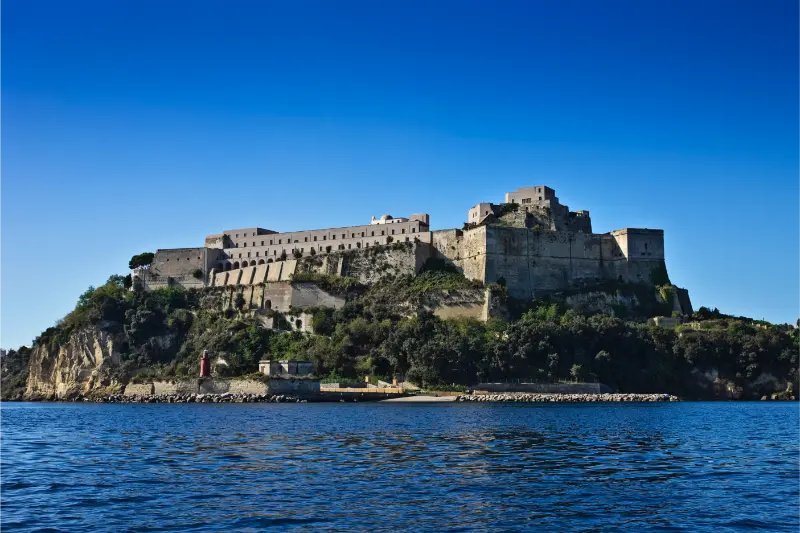
For seven days, I would normally spend three or four nights in Naples, use one day for Pompeii or Herculaneum, and spend the remaining nights in Sorrento, Salerno or directly on the Amalfi Coast. With ten days, add an island or Paestum. With two weeks, Campania finally has room to breathe: Naples, archaeology, coast, island and inland or Cilento can all fit without daily hotel changes.
If this is your first time in the city, start with the Naples travel guide. It explains the neighbourhoods, transport and sightseeing rhythm that make the rest of the region easier.
The places that matter most
Naples
For a closer look at this side of the destination, read our Royal Palace of Caserta Travel Guide.
Naples is not a place to rush through between a flight and Pompeii. The historic centre, National Archaeological Museum, churches, underground layers, markets, waterfront and hill districts easily fill three days. Use the best things to do in Naples guide to decide what deserves priority rather than attempting every famous sight.
Pompeii and Herculaneum
Pompeii gives scale: streets, houses, baths, temples and public buildings spread across an enormous ancient city. Herculaneum is smaller and often easier to understand in half a day, with exceptional preservation. For Pompeii, read the Pompeii travel guide before buying tickets because entrances, ticket products and seasonal hours affect the route.
The Amalfi Coast
The Amalfi Coast is a UNESCO-listed cultural landscape, not a single town. Positano is the iconic vertical village; Amalfi is a transport hub with a major cathedral; Ravello sits above the sea with gardens and views; Maiori and Minori are more practical for longer beach stays. The Amalfi Coast travel guide guide compares these bases and explains why ferries can be more useful than a rental car.
Capri, Ischia and Procida
Capri is the most dramatic for cliffs, walks and a polished visitor experience. Ischia is larger and better suited to thermal parks, beaches and several nights. Procida is smaller, quieter and easier to experience at a slower pace. Do not try to “collect” all three in a single rushed day.
Caserta, Paestum and Cilento
For a closer look at this side of the destination, read our Paestum Travel Guide.
For more detail on the landscape and possible routes, see our Cilento Travel Guide.
The Royal Palace of Caserta is one of the region’s essential monumental sites and pairs naturally with Naples. Paestum offers extraordinary Greek temples and an archaeological museum south of Salerno. Continue into Cilento if you want beaches, hiking, small towns and a less intensely visited coastline.
If you prefer a guided experience, compare tours by duration, meeting point and what is actually included. A shorter, well-focused tour often leaves more useful independent time than an all-day package that combines several distant places.
Where to stay: choose a base for the trips you actually plan
If choosing a base is the next step, our Ischia Travel Guide compares the options in more detail.
If choosing a base is the next step, our Salerno Travel Guide compares the options in more detail.
If choosing a base is the next step, our Sorrento Travel Guide compares the options in more detail.
If most of your sightseeing is in Naples, Pompeii, Herculaneum and Caserta, stay in Naples and use trains. If the priority is the Amalfi Coast, choose a coastal base instead of commuting from Naples every day. Sorrento is practical for Pompeii, Capri and the western coast but is not on the Amalfi Coast itself. Salerno is excellent for rail connections, Paestum and seasonal ferries along the coast.
For Naples, where to stay in Naples compares Centro Storico, Chiaia, Vomero, Santa Lucia, Mergellina and the station area. For current accommodation across the region, Booking.com can be useful for comparing real addresses and cancellation terms. Always check the map: “Amalfi Coast” listings can be far inland or require steep access.
Getting around Campania without wasting days
For a more detailed plan, our Mount Vesuvius Travel Guide develops this part of the journey step by step.
Train
For routes, tickets and the practicalities of getting around, consult our Procida Travel Guide.
Naples is the regional rail anchor. Mainline trains connect Naples with Rome and Salerno; local and regional services serve Caserta, the Vesuvian archaeological corridor and other towns. For Pompeii, route choice matters because different rail services use different stations.
Ferries
Sea transport is one of Campania’s great advantages in the warmer part of the year. Ferries connect Naples with the islands and, seasonally, connect coastal towns in ways that avoid road traffic. Services can change with weather and season, so check the operator timetable close to travel.
Bus
Buses remain essential on the Amalfi Coast and for villages without rail access. They can be crowded, especially in summer. Build buffer time into connections rather than scheduling a non-refundable attraction immediately after a long bus transfer.
Rental car
A car is useful for Cilento, inland villages, wineries and some rural routes. It is normally unnecessary in Naples and can be expensive and stressful on the Amalfi Coast. If your itinerary combines city and countryside, collect the car only when leaving the rail-based part of the trip.
Best Campania itineraries by trip length
4 days
Base yourself in Naples. Spend two full days in the city, one day at Pompeii or Herculaneum, and one day on a carefully chosen excursion such as Caserta or Capri. This is a city-and-day-trip trip, not a complete Campania tour.
7 days
Spend three or four nights in Naples and three nights around Sorrento, Salerno or the Amalfi Coast. This gives you a major city, archaeology and the coast without changing rooms every night.
10 days
Add an island or Paestum. A balanced sequence is Naples 4 nights, coast/Sorrento 3 nights, island 2 nights, with the final night positioned for departure.
14 days
This is when Cilento or inland Campania becomes realistic. Slow the route down instead of adding a new headline destination every day. Two weeks can feel luxurious if you protect beach time, long lunches and weather flexibility.
Food: what is actually regional
Campania’s food identity is reason enough to travel slowly. Naples is the obvious place for pizza, but the region is also about sfogliatella, babà, pasta from Gragnano, buffalo mozzarella in the Caserta and Salerno areas, tomatoes, lemons, anchovies from Cetara and a strong tradition of vegetables, seafood and simple pasta sauces.
Do not make every meal a “famous restaurant” mission. The best food planning usually combines one destination restaurant, one bakery or street-food lunch and several local places close to where you are already sightseeing. On the coast, paying for the view can be worthwhile once; for the rest of the trip, move a street or two away from the busiest waterfront strips.
Best time to visit Campania
For a more detailed plan, our Best Things to Do in Capri develops this part of the journey step by step.
For a more detailed plan, our Herculaneum Travel Guide develops this part of the journey step by step.
April to June and September to October offer the most balanced combination of sightseeing temperatures, ferry availability and coastal atmosphere. July and August are best for travellers whose main goal is the sea, but archaeological sites can be brutally hot and the Amalfi Coast is at its most congested.
Winter is excellent for Naples and can be rewarding for Pompeii on clear days, but ferry schedules and coastal businesses are reduced. If the coast is central to the trip, verify seasonal transport before committing to a winter base. Rain can also affect hiking routes and sea crossings.
Campania with children and limited mobility
Families should reduce the number of transfers. Naples plus Sorrento or Salerno is easier than moving between several cliffside villages with luggage. Pompeii is fascinating for older children but requires sun protection, water and realistic expectations about uneven ancient paving. The archaeological park provides an accessible “Pompeii for All” route, but not every house or street is step-free.
On the Amalfi Coast, vertical geography is the main challenge. Positano has extensive stairs; ferries may require boarding conditions that vary by port and sea state. Travellers with limited mobility should choose a base after checking the exact route between hotel, road and port, not simply the town name.
Mistakes that can weaken an otherwise excellent trip
The first mistake is using Naples only as a sleeping base while taking a day trip every morning. The second is renting a car for the Amalfi Coast because the map looks easier than public transport. The third is trying to combine Pompeii, Vesuvius and a full evening in another town without accounting for heat and walking.
Another common problem is moving accommodation too often. Campania is compact on the map but luggage, ferries, station changes and cliffside access add friction. Protect at least two or three nights per base. Finally, do not build a coast itinerary around exact ferry connections months in advance; seasonal timetables and weather can change.
Related guides for planning the next step
- One Day in Naples: A Realistic First-Time Itinerary
- Two Days in Naples: The Best 48-Hour Itinerary
- Pompeii Travel Guide: Tickets, Entrances, Best Route and Practical Tips
- How to Visit Pompeii from Naples: Train, Tickets and Day-Trip Plan
- Amalfi Coast Travel Guide: Where to Stay, Transport and Best Places
- Positano Travel Guide: What to Do, Beaches, Transport and Where to Stay
Use these guides only when the next stop fits the geography of your trip. A strong Campania itinerary reduces transfers first and adds attractions second.
Booking accommodation: final checks before you pay
For current accommodation in Campania, compare the exact address, cancellation terms, recent noise comments, stairs or lift access and the route to your main transport stop. You can check current options on Booking.com. Do not choose a property only because the town name looks convenient on a regional map.
Affiliate links can support this site at no extra cost to you. Always compare the final price and conditions shown by the booking provider before confirming.
Frequently asked questions
How many days do you need in Campania?
Seven days is a strong minimum for Naples, one archaeological site and a coast stay. Ten days allows an island or Paestum without rushing.
Is Naples a good base for Campania?
Yes for Pompeii, Herculaneum, Caserta and island day trips. It is less efficient for repeated day trips deep into the Amalfi Coast.
Do you need a car in Campania?
No for a classic Naples–Pompeii–coast itinerary. A car becomes more useful in Cilento and inland areas.
Is the Amalfi Coast part of Campania?
Yes. It lies in the province of Salerno and forms one of Campania’s major coastal areas.
What should first-time visitors prioritise?
For a more detailed plan, our Capri Travel Guide develops this part of the journey step by step.
Naples, Pompeii or Herculaneum, and one coast or island experience create the strongest first overview.
Useful official information
For current opening times, transport notices, ticket rules and local updates, use Italia.it – Campania. Practical details can change, especially ferry timetables, archaeological access, seasonal services and traffic rules.
Last updated: October 17, 2026
Leave a Reply