

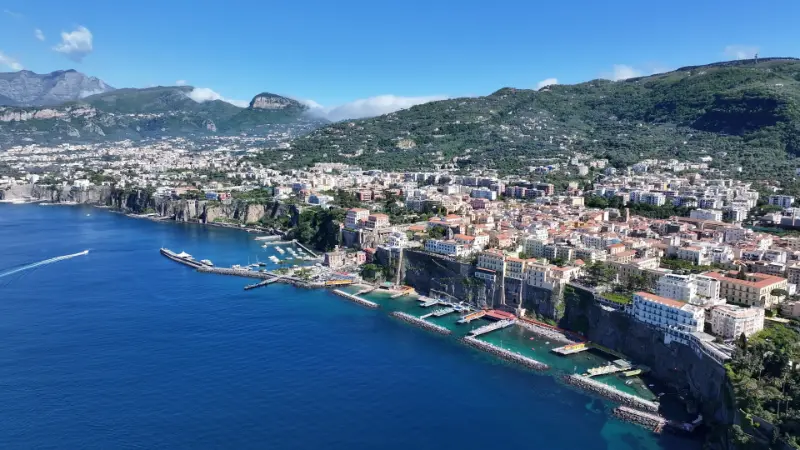
Sorrento is one of Campania’s most useful bases because it connects three different trips: the Bay of Naples, Pompeii and the western entrance to the Amalfi Coast. It also has enough of its own character—clifftop views, a compact historic centre, Marina Grande and citrus gardens—that it should not be treated only as a hotel zone.
The town’s strength is convenience. Circumvesuviana/EAV rail links toward Pompeii and Naples, ferries connect the port with Capri and seasonal destinations, and road tours head toward Positano. The weakness is that this convenience attracts heavy visitor demand and prices can rise sharply in peak season.
To see where Sorrento Travel fits into a wider Campania itinerary, use our Campania travel guide for transport, bases and possible neighbouring stops.
If your itinerary mixes archaeology and the coast, compare Sorrento with the bases in Where to Stay on the Amalfi Coast. Sorrento is not on the Amalfi Coast itself, but for some itineraries it is the smartest place to sleep.
| Ideal stay | 2–4 nights |
|---|---|
| Best for | Pompeii + Capri + one Amalfi Coast day |
| Car | Not needed for a classic first visit |
| Main advantage | Rail + ferry + road-tour connections |
| Best balance | April–June and September–October |
What is genuinely worth seeing in Sorrento?
Sorrento is not a monument-heavy city like Naples. Its value comes from the combination of historic streets, cliff views, marinas and the ease of day trips. One full day is enough for the centre, but two to four nights make sense because you can use the town as a base without moving luggage.
Historic centre, cloisters and the everyday streets
Walk the lanes around Piazza Tasso, Corso Italia and the older streets west of the square, but look beyond souvenir shops. The Cloister of San Francesco is one of the most atmospheric small spaces in town, and local churches add depth without requiring a long museum schedule.
The Vallone dei Mulini is visible from above rather than functioning as a conventional walk-through attraction. Treat it as an unusual piece of urban geography, not a destination that consumes hours.
Marina Grande and the waterfront
Marina Grande is the place to go when you want Sorrento to feel like a fishing town rather than a transport hub. It sits below the main centre and has restaurants and a small-beach atmosphere. The descent is easy enough for many visitors, but remember the climb back or use local transport if heat or mobility is an issue.
Villa Comunale, cliffs and sunset
The clifftop public viewpoints near Villa Comunale provide the classic panorama across the Bay of Naples toward Vesuvius. They are especially useful at the beginning of a trip because the view explains the geography you will travel over the next few days.
Sunset can be beautiful, but do not assume you need an expensive terrace reservation to see it. Public viewpoints and a simple aperitivo can deliver the same landscape.
Why Sorrento works so well for day trips
Pompeii
Sorrento is directly connected toward Pompeii by local rail, making it one of the easiest bases outside Naples for the archaeological site. Use the Pompeii travel guide to choose tickets and entrances before leaving.
Capri
Ferries make Capri a natural sea day. Read the Capri travel guide and take an early departure if you want both Anacapri and Capri town without rushing.
Amalfi Coast
Positano is the first major coast town beyond the peninsula, but road traffic makes timing variable. The Amalfi Coast itinerary helps decide whether a day trip is enough or whether you should move bases for several nights.
Naples
A day trip is possible, but if Naples matters to you, I would rather spend several nights there. The Naples travel guide explains why the city deserves more than a hurried return trip.
Arriving in Sorrento and getting around
The local rail line links Sorrento with Pompeii, Herculaneum-area stations and Naples. It is practical but different from a reserved-seat intercity train: expect commuter-style conditions and more crowding at peak times. Keep valuables secure and allow margin when connecting to a long-distance train in Naples.
The ferry port sits below the centre. Lifts and local connections can reduce the vertical climb, but travellers with luggage should understand the route before arrival. Taxis are valuable when a hotel is farther along the peninsula or high above town.
Where to stay in Sorrento
Stay near the centre if you want rail access, restaurants and simple evenings. Stay closer to Marina Piccola/port routes if Capri departures dominate the plan, but check the vertical connection to the centre. Properties outside the core may offer views and pools but can make every dinner dependent on a shuttle.
Sorrento is often more expensive than Naples. The higher price can still be worthwhile when it eliminates multiple hotel changes and long coast transfers.
Lemons, gnocchi and what to look for on menus
Sorrento’s citrus identity is real, and lemon appears in desserts, drinks and savoury cooking. Gnocchi alla sorrentina is the obvious namesake dish. Look beyond tourist menus for seafood, local cheeses and seasonal produce, and compare restaurant locations because the most photographed terrace is not always the strongest kitchen.
A realistic two-day Sorrento plan
Day 1: historic centre, cloister, viewpoints, Marina Grande and a relaxed dinner. Day 2: choose Capri or Pompeii as a full-day trip. If you have a third day, add the other. Only then would I consider using Sorrento for a quick Amalfi Coast day rather than moving bases.
Best time to visit Sorrento
Spring and early autumn are ideal for combining sightseeing with ferries. Peak summer is lively but crowded and hot. Winter works for the town and Pompeii, yet ferry options are more limited and the coast behaves less like a summer resort region.
Sorrento with children and limited mobility
Sorrento can be easier than the vertical Amalfi Coast towns because much of the centre is relatively manageable, but the cliff-to-port connection remains an issue. Families benefit from a central hotel and fewer day trips. Travellers with mobility needs should check lift access and the exact route to the ferry pier.
Common Sorrento mistakes
- Treating Sorrento as if it were physically on the Amalfi Coast.
- Booking every day as a long excursion and never experiencing the town.
- Making a tight connection from the local train to a high-speed train in Naples.
- Choosing a panoramic hotel without checking shuttle frequency.
- Trying to combine Pompeii and a full Amalfi Coast tour in one exhausting day.
Frequently asked questions
How many days do you need in Sorrento?
Two nights works for the town plus one major day trip; three or four nights is better if you want both Pompeii and Capri.
Is Sorrento a good base for the Amalfi Coast?
It is good for one or two coast excursions. If most of your trip focuses on Amalfi, Ravello and eastern villages, move to a coast base.
Do you need a car?
No. Rail, ferries, buses, tours and taxis cover a classic itinerary more comfortably than parking and traffic.
Sorrento or Naples?
Choose Naples for city culture and multiple rail day trips; choose Sorrento for a calmer base with easier Capri and western-coast access.
Practical planning details that make the trip easier
For Sorrento travel guide, the most useful final check is not another attraction list but the sequence of the day. Put the activity most vulnerable to weather, heat or timed entry first. Keep lunch and a flexible walk in the middle, then finish with a viewpoint, waterfront or town centre that does not depend on an exact reservation. This protects the part of the day that is hardest to replace.
Save tickets and hotel details offline before leaving Wi-Fi. Keep a screenshot of the return transport you expect to use, but verify live service because coastal ferries, mountain access and local buses can change. Carry a backup payment method and enough water to absorb a delay without turning it into an emergency purchase.
If you are moving accommodation the same day, deal with luggage before sightseeing. Hotel storage, station lockers or a private transfer can be worth paying for because dragging bags through steps and crowded transport is one of the fastest ways to make a short Campania day unpleasant.
Finally, protect unstructured time. These destinations reward a coffee, a church you did not plan, a swim or simply sitting at a viewpoint. A cluster guide should help you make better decisions, not force you to complete a checklist.
Swimming and bathing in Sorrento
Sorrento sits on cliffs, so beach expectations need adjustment. Much of the easy sea access is through bathing platforms and small waterfront areas rather than broad sandy beaches. Marina Piccola is practical for port-side facilities, while Marina Grande has more of a village atmosphere. If a classic beach holiday is the priority, compare other peninsula or Amalfi Coast bases.
Paid bathing establishments can be convenient because they provide loungers, changing facilities and easier water access, but prices vary. Reserve in peak summer if a specific club matters to you; otherwise keep sea time flexible around day trips.
A 3-day Sorrento plan for first-time visitors
Day 1: stay local—historic centre, cloister, Villa Comunale viewpoint, Marina Grande and dinner. Day 2: take an early ferry to Capri and return for a relaxed evening. Day 3: visit Pompeii by rail. This is the cleanest demonstration of why Sorrento works as a base: each day uses a different transport mode without changing hotels.
With a fourth day, choose the Amalfi Coast. If you want two or more coast days, that is the signal to move to Amalfi/Positano rather than continuing to commute from Sorrento.
Shopping: lemons, inlaid wood and what is actually local
Sorrento has a long tradition of intarsia, decorative inlaid woodwork, alongside the better-known lemon products. Quality ranges from genuine craft to mass-market souvenirs. If you are buying something significant, ask where it was made and look for workshops or specialist retailers rather than assuming every item in the centre is locally produced.
Food gifts travel more easily, but liquids and fresh products can create luggage problems. Check airline rules before buying large limoncello bottles on the first day of a longer trip.
Arrival and departure strategy
From Naples Airport, travellers usually connect by coach, private transfer or a combination through Naples. From Rome/Florence, high-speed rail to Naples followed by local transport is common. If you have a late international arrival, a private transfer can remove several points of failure, particularly with children or large luggage.
On departure, avoid a tight local-train connection to a non-flexible high-speed service. The regional line can be crowded and delays do occur. Build a buffer in Naples, store luggage if necessary and use the time for coffee rather than gambling the entire onward journey.
Independent day trips or organised tours?
Sorrento makes independent travel easy for Pompeii and Capri because the transport links are direct enough that you do not need a guide simply to move between places. An organised tour becomes more useful for the Amalfi Coast, where a driver or boat can remove several bus changes and parking problems. Compare the time actually spent in each town rather than choosing the tour with the longest list of stops.
For families or four adults travelling together, a private driver can sometimes make sense once you compare the total cost of separate transfers and the value of controlling departure times. For solo travellers, public transport usually remains much better value.
Booking accommodation: what to check before paying
In Sorrento, check whether “central” means easy walking to Piazza Tasso, the station and the route to the ferry port; clifftop geography can hide inconvenient vertical transfers. For current availability, compare accommodation options on Booking.com. Check the exact address, stairs or lift access, cancellation terms and the route to the transport you expect to use most often.
Affiliate links can support this site at no extra cost to you. Always compare the final price and conditions shown by the booking provider before confirming.
Useful official information
For current opening times, ticket rules, transport notices or local restrictions, check Comune di Sorrento – official website shortly before travel. On the coast and islands, weather and seasonal services can change the practical plan even when the attraction itself is open.
Last updated: October 17, 2026
Leave a Reply