
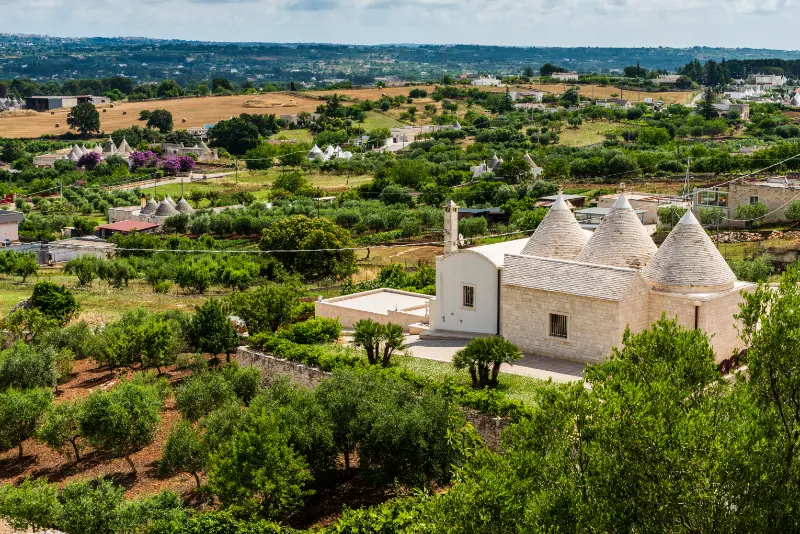
Locorotondo is the Valle d’Itria town I would choose when you want beauty without the same intensity as Alberobello. Its circular whitewashed historic centre sits above vineyards, olive groves and scattered trulli, while the distinctive sloping-roof cummerse give the lanes a character that is genuinely different from neighbouring villages.
The town is small enough for a half-day, but that does not mean it should be rushed. Locorotondo works best as a late-afternoon and evening stop, a quiet overnight base or part of a carefully paired day with Alberobello. Its appeal is the combination of proportion, views and atmosphere rather than a long monument list.
For travel beyond Locorotondo Travel, consult our Puglia travel guide; it explains how to choose a base and link nearby destinations.
This guide explains where to walk, what the cummerse are, how to use the belvedere, when parking becomes difficult, whether to stay overnight and how to combine Locorotondo with Martina Franca, Cisternino, Monopoli or the wider Valle d’Itria.
Quick planning summary
| Best for | A beautiful white town, panoramic terraces, wine and a calmer Valle d’Itria atmosphere. |
|---|---|
| Minimum time | 3–4 hours; stay for dinner or overnight if the valley is a major part of your trip. |
| Car | Very useful for the countryside; park outside the old centre and walk. |
| Best pairing | Alberobello in the morning, Locorotondo later in the day. |
| Local detail | Look for cummerse: white houses with steep limestone-slab roofs, distinct from trulli. |
What to see and do
Walk the circular historic centre slowly
Locorotondo’s name reflects the rounded form of the settlement, and the best way to understand it is simply to loop the old centre rather than chase a sequence of monuments. White facades, flowered balconies and narrow lanes create a coherent visual identity.
Because the centre is compact, repeat streets at different times instead of feeling you must “finish” them. A coffee, aperitivo or short pause at a viewpoint is part of the experience and keeps the visit from becoming an accelerated photo session.

Cummerse: the detail that makes Locorotondo different
The cummerse are among the most distinctive architectural features in town: whitewashed houses topped by steep roofs covered with local stone slabs. They create a roofline unlike Alberobello’s cones and help explain why Locorotondo should not be dismissed as another trulli stop.
Look upward as you walk, but remember that these are homes rather than museum exhibits. The best photographs often come from public lanes and wider views where the roof geometry can be seen in context.
Belvedere and the Valle d’Itria panorama
The panoramic edge of Locorotondo is one of the main reasons to visit. From the terraces, the landscape opens across vineyards, olive groves, trulli and masserie, making the relationship between town and countryside much clearer than from street level.
Late afternoon is especially rewarding because the light becomes softer and the day-trip pace slows. If haze reduces distant views, focus on the nearer agricultural pattern rather than treating the visit as a failed panorama.
Churches and small-town scale
The Mother Church of San Giorgio and smaller religious buildings give the town historical anchors without dominating the visit. Enter when open, but do not build the whole itinerary around church hours.
Locorotondo’s strength is urban form and atmosphere. One interior, one long walk and time at the panoramic edge will often leave a stronger impression than trying to see every minor site.
Countryside, wine and nearby trulli
Locorotondo sits in a wine-growing landscape and the rural districts around town are dotted with trulli and masserie. A booked winery or producer visit can give the countryside a purpose beyond scenic driving.
If you are drinking, arrange the day responsibly. Staying in town or at the property hosting the tasting can be more enjoyable than making wine the first stop in a long driving circuit.
How to plan the visit
Visit after Alberobello rather than before if you want the day to get progressively calmer. An early Alberobello start followed by a rural lunch and a late Locorotondo walk creates a much better rhythm than alternating between crowded centres at peak times.
If Locorotondo is your overnight base, use the morning for the countryside or another village and return before dinner. You get the benefit of the valley while preserving the best evening atmosphere in town.
Protect the first part of the day for the place or experience that matters most. In Puglia, heat, parking and long lunches are real parts of travel time. A plan with breathing room normally delivers more than a longer list of stops.
Getting there and getting around
A car is the practical choice for the wider Valle d’Itria. Locorotondo itself is small and walkable once parked, but rural trulli, wineries and nearby villages are spread across country roads.
Use public parking outside the historic core and do not follow navigation blindly into narrow white streets. Summer events can change access patterns, so accommodation instructions are more reliable than assuming the same route works year-round.
Car, public transport or a mix?
Use transport according to geography rather than ideology. Trains work very well for selected Adriatic cities, while rural valleys, beaches and national-park routes reward a car. If a vehicle spends several days parked while you explore on foot, consider whether you need it for that part of the trip.
Parking and ZTL strategy
Historic centres often restrict traffic or become unpleasant to drive through even when access is technically possible. Save a peripheral parking location before departure, follow official signage and ask accommodation for exact arrival instructions when a ZTL is involved.
Where to stay
Locorotondo is excellent for travellers who want a small-town evening and central access to Alberobello, Martina Franca and Cisternino. A room inside the old centre gives atmosphere; countryside stays give parking and views but require driving for dinner.
If beaches are your main priority, Monopoli or the coast may be a better base. Locorotondo is strongest for the valley itself and for travellers who value an evening walk more than immediate sea access.
Before booking, compare the accommodation with your actual first morning route. Parking, stairs, dinner options, station distance and the last kilometre of a rural access road can matter more than a small difference in nightly price.
A realistic itinerary
Morning
Arrive late morning only if you are visiting on its own; otherwise use the morning for Alberobello or a rural experience.
Lunch
Long lunch nearby or a winery/producer visit if booked in advance.
Afternoon
Walk the historic centre, identify the cummerse and spend time at the panoramic terraces.
Evening
Aperitivo and dinner in town, then one final quiet circuit when the day visitors have left.
Food and local character
Local white wines, olive oil and valley products fit naturally into the visit. Restaurants often draw on the same meat, vegetable and cheese traditions found around Cisternino and Martina Franca, so choose by quality and atmosphere rather than searching for a single “Locorotondo dish.”
If wine is a priority, build the day around one tasting rather than several. The point is to understand local production and enjoy the countryside, not to turn the village circuit into a sequence of rushed cellar appointments.
Best time to visit
April to June
Spring brings green countryside, flowers and comfortable village walking. It is one of the strongest periods for masserie, cycling and outdoor lunches.
July and August
The valley is busy and hot, but evenings in the hill towns are lively. Start early, use pools or long lunches at midday and return to towns later.
September and October
Harvest atmosphere, warm light and cooler walking conditions make early autumn excellent. Check closing days for rural experiences outside peak season.
Winter
Towns are quiet and food-focused. Rural stays can be atmospheric, but heating, restaurant availability and shorter daylight deserve attention.
Worth knowing before you go
Check operational information close to travel rather than assuming opening hours, beach services, event access or transport frequencies remain fixed. Save important ticket QR codes and addresses offline, especially when a timed reservation or boat departure anchors the day.
Puglia rewards simple geography. Put stops in the same direction on the same day and avoid crossing the region merely to add one more famous name. The resulting itinerary usually costs less, feels calmer and gives you more time on foot.
Families and accessibility
Locorotondo is family-friendly because the old centre is compact and traffic-light once you are inside the pedestrian areas. The challenge is keeping younger children interested when the main appeal is architecture and views, so pair the visit with a farm, pool or Alberobello trulli experience.
Accessibility varies by individual sight. Stone paving, old stairs, steep lanes, sand and rural paths can change the experience even when the destination appears compact on a map. Check the exact attraction and parking-to-entrance route if step-free access matters.
Mistakes to avoid
- Visiting only for twenty minutes because the town is small.
- Expecting trulli to dominate the historic centre itself.
- Driving into narrow lanes instead of parking outside.
- Pairing Locorotondo with too many other villages in the same afternoon.
The pattern behind most of these mistakes is over-optimisation: trying to gain one more attraction while ignoring heat, parking, meals and transfer friction. Build the day around two or three priorities and leave secondary stops movable.
Key decisions that improve the trip
Locorotondo or Alberobello overnight?
Choose Locorotondo for a calmer evening and a more conventional living town; choose Alberobello if early access to the trulli districts is your priority.
Is Locorotondo worth visiting if you already saw Ostuni?
Yes. Both are white towns, but Locorotondo’s circular form, cummerse and direct Valle d’Itria panorama create a different experience.
How long should you stay?
Three to four hours is enough for the town itself. Add an overnight stay if you want dinner, wine or countryside time without driving onward.
What would I skip?
Skip a second or third generic white village in the same day if energy is dropping. Locorotondo is better with time to look than as another tick on a list.
On-the-ground strategy
Save parking points, accommodation directions and essential opening information before leaving Wi-Fi. Keep water, sun protection and a light layer in the car or day bag. Coastal wind and evening temperatures can change faster than the midday forecast suggests.
If driving, keep valuables out of sight and avoid loading luggage in exposed public parking longer than necessary. On a rail day, leave a margin before the final useful train; on a boat day, arrive early enough that parking does not become the reason you miss departure.
The final hour of a good Puglia day is often better spent over dinner or on a waterfront than squeezing in another town. Protect that flexibility.
Deeper planning notes
A half-day route that does not feel rushed
Park outside the historic centre, enter through the main approach and make one slow circuit before committing to a meal or tasting. Spend time at the panoramic terraces, then return through different lanes so the cummerse are seen from several angles. If you arrive around 16:00–17:00 in warm months, the light and temperatures improve progressively and you can continue directly into aperitivo and dinner. That timing is often more rewarding than a midday stop squeezed between Alberobello and Martina Franca.
What Locorotondo adds to a Puglia itinerary
Locorotondo is valuable precisely because it does not require a huge checklist. After Bari, Alberobello or Lecce, a place where the main activity is walking, looking across the valley and eating well can improve the whole route. Use it as a decompression stop. Travellers often remember the quiet terrace, a glass of local wine or the white lanes at dusk more clearly than another ticketed monument. That slower role is why I would keep Locorotondo even on an itinerary already rich in white towns.
Useful related guides
Continue planning with Valle d’Itria travel guide, Alberobello travel guide, Ostuni travel guide, 7-day Puglia itinerary.
Official information to check before travel
Opening hours, access arrangements and local services can change. Before travelling, check the official or primary destination information and verify any ticket, parking, transport or seasonal service that is essential to your day.
Last updated: October 17, 2026
Leave a Reply