

Three days are enough for a satisfying first Lake Como trip if you resist the urge to see every famous town. The strongest plan uses one base, one central-lake day, one villa or city-focused day and enough transport margin that a late boat does not collapse the schedule. This itinerary is designed for travellers using trains and ferries from Milan.
| Ideal base | Varenna for this version |
|---|---|
| Day 1 | Arrival + Varenna |
| Day 2 | Bellagio + central lake |
| Day 3 | Tremezzina villas or Como alternative |
How this guide fits into a Lake Como trip
This itinerary uses Varenna as the base because the direct train from Milan and central ferries simplify both arrival and day trips. Como can also work, but travel times to the central lake become longer. Bellagio is atmospheric overnight but less convenient for the final train back to Milan.
For a fuller understanding of the surrounding area, use our Lake Como Travel Guide alongside these more focused recommendations.
The route deliberately does not include every shoreline. Northern Lake Como, Lecco and mountain valleys deserve separate time. Three days should feel like a holiday, not an endurance test.
Getting there and moving around
Travel from Milan to Varenna in the morning or early afternoon. Trenord currently shows regular direct journeys of about 64 minutes from Milano Centrale. Leave enough time after arrival to walk to the hotel, store luggage and understand the path to the ferry pier.
Use Navigazione Laghi for all central crossings and verify the timetable for your exact date. Do not build the three days around a generic screenshot from another season.
On the final day, either return to Varenna for the train or choose Como as your exit point if the itinerary has already moved to the western/southern lake.
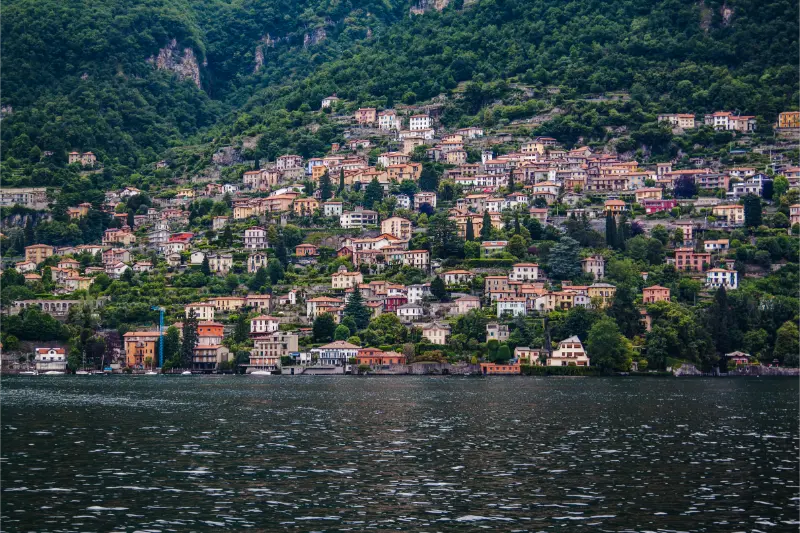
Day 1 morning or early afternoon: arrive in Varenna
Check in or leave luggage before sightseeing. Start at the waterfront and Piazza San Giorgio so you understand the village layout before choosing a climb. This is intentionally a light arrival block; the first day should absorb train delays without destroying a timed reservation.
Use the full Varenna guide for Villa Monastero and Castello di Vezio options. Choose one major sight, not both, if you arrive after lunch.
Day 1 late afternoon: Villa Monastero or the old village
If seasonal hours allow, Villa Monastero is an excellent first anchor because the gardens ease you into the lake rather than sending you immediately onto another vehicle. If it is closed or weather is poor, keep the day to the village and waterfront.
Eat dinner in Varenna and stay after the day-trip crowds disappear. That quiet evening is one of the main reasons to base here.
Day 2 morning: ferry to Bellagio
Cross early to Bellagio before the main midday surge. Walk the waterfront and old centre, then spend meaningful time in the Villa Melzi gardens or another planned visit rather than trying to collect every staircase.
The Bellagio guide explains how to use early and late hours. A relaxed three-hour visit is more satisfying than a rushed one-hour stop.
Day 2 afternoon: Menaggio or return to Varenna
If energy and ferry timing are good, continue to Menaggio for a different western-shore atmosphere and a flat promenade. If Bellagio has taken longer than expected, return directly to Varenna. The itinerary is designed to allow that choice without feeling like a failure.
Dinner back at the base keeps the evening simple and avoids dependence on the last ferry after a full day.
Day 3: choose Tremezzina villas or Como city
For gardens and villas, travel toward Tremezzina and build the day around a pre-booked Villa del Balbianello entry, adding Villa Carlotta only if timing remains comfortable. This is the strongest “classic Lake Como” finish.
For a lower-risk departure day, instead travel to Como, explore the cathedral and waterfront, and continue to Milan by train. The Como city guide is especially good when weather is mixed or you have luggage.
A realistic way to plan your time
The itinerary’s hidden rule is one anchor per half-day. Day 1 has Varenna, day 2 has Bellagio, day 3 has either a villa reservation or Como. Ferries and meals fill the spaces rather than becoming additional checklist items.
If rain affects one day, swap the schedule. Villa gardens and viewpoints are weather-sensitive; a Como city day is more resilient. Flexibility is more valuable than insisting that “day 2 must be Bellagio” because a blog said so.
Where to stay and who this base suits
Varenna is the recommended base here because it minimises hotel changes. Stay near the station-pier corridor if luggage is heavy, or closer to the old centre if evening atmosphere matters more and you can handle slopes.
Travellers who want nightlife or a wider restaurant scene may prefer Como. Couples prioritising the iconic village may prefer Bellagio, but they should accept the extra transfer at the start or end.
Food, coffee and sensible breaks
Keep lunch flexible on ferry days and make dinner the slower meal. A picnic or quick plate near the pier can protect the schedule without reducing the quality of the day.
On the villa day, eat in Lenno or Tremezzo only after you know the reservation time. Balbianello should not be the attraction you miss because lunch service took longer than expected.
Best season and weather strategy
Late spring through early autumn is the easiest period for this exact itinerary because gardens and ferry networks are most active. Summer is hotter and more crowded; shoulder months need a jacket and a closer look at seasonal closing times.
In winter, redesign the plan around Como, rail-accessible towns and confirmed openings rather than copying this warm-season sequence unchanged.
Crowds, queues and timing
Day 2 should start earlier than you think. The difference between Bellagio at 9:00 and midday can be dramatic. On day 3, pre-booked Balbianello access is the key crowd-control decision.
Return to Varenna before the final ferry rush if catching a train. Do not schedule the last connection before a flight or long-distance train from Milan.
Families, mobility and slower travel
Families can use the same three-day structure but should drop one villa or town. Ferries, gardens and gelato provide natural variety, while repeated formal interiors are likely to become tiring.
For mobility needs, base in Como or a flatter part of Menaggio if Varenna’s gradients are unsuitable. The itinerary can be preserved conceptually even when the exact towns change.
Budget and booking priorities
Three days do not require a rental car, and avoiding one can save parking expense. Spend instead on a well-located room and the one or two admissions that matter most.
If accommodation in Varenna is unusually expensive, compare Como plus one longer ferry day. The cheapest room is not automatically cheapest overall, but neither is the most famous base always worth the premium.
Common planning mistakes
Do not add Lake Garda, Bergamo or the Dolomites to these three days. They are excellent destinations, but the transport time turns Lake Como into a backdrop instead of a trip.
Avoid booking fixed tours on all three days. One flexible day gives you protection against weather and transport disruption.
How to combine this with the rest of the lake
Read Lake Como Travel Guide first for the overall geography, then the ferry guide for the exact connections.
If the three days begin after a Milan stay, the Three Days in Milan itinerary can be paired with this cluster without duplicating transport advice.
Extra practical details that make the trip easier
Before departure, save the current ferry and train information offline and take a screenshot of the last useful connection for your route. Mobile coverage is generally good, but a delayed boat or a crowded platform is easier to manage when you already know the next realistic alternative. On Lake Como, a plan that has one backup connection is usually more robust than an itinerary timed to the minute.
Pack for elevation as well as the waterfront. Even on a warm day, shaded ferry decks, evening breezes and hill paths can feel noticeably cooler than the promenade. Shoes with grip matter on stone steps and sloping lanes, while a refillable bottle is useful because the most scenic walking sections are not always the places where you want to stop simply to buy water.
If photography matters, use the first and last hours of the day rather than blocking narrow lanes at midday. The lake changes with cloud, haze and boat movement, and the best view is often the one found while waiting rather than the most famous social-media pin. Respect private entrances, hotel terraces and residential stairways; beautiful architecture does not make every doorway a public viewpoint.
Leave at least one uncommitted hour in the day. Ferry services can run on time and still produce queues, and a villa visit may take longer than expected because the gardens invite slow walking. The spare hour is not wasted time: it is what allows an aperitivo, a swim stop where permitted, or a waterfront bench without turning the next reservation into a sprint.
For luggage, verify storage rather than assuming every small station or pier has lockers. If changing hotels, ask your accommodation whether it can hold bags before check-in or after check-out. Carrying a suitcase over cobbles, stairways and crowded boats can turn a simple transfer into the hardest part of the trip, especially in Varenna and other compact villages with steep lanes.
Tours and tickets: when booking adds value
A guided experience is most useful when it solves a real problem: limited time, difficult transport, a villa with controlled access, or the need for historical interpretation. Compare meeting points, cancellation terms and whether ferry or entrance tickets are actually included rather than assuming every Lake Como tour covers the same route.
Where to stay
Accommodation prices around Lake Como move sharply with weekends, weddings and the warm-season peak. Compare location against ferry and rail access, not just the nightly rate. Compare hotels and apartments for this Lake Como stay and check the exact walking route from the station or pier before booking.
Useful official sources
- Navigazione Laghi – Lake Como tickets and timetables
- Trenord – regional trains in Lombardy
- Villa Carlotta official site
- FAI – Villa del Balbianello
Final planning advice
Lake Como rewards selective planning. Choose one or two anchor experiences, leave space for the lakefront and ferry views, and build the day around the actual transport timetable. That approach produces a calmer trip than trying to collect every famous village in a single sweep.
Last updated: October 17, 2026