

Lake Como looks compact on a map, but the two southern arms, the central-lake triangle and the northern basin create very different travel days. The best trip starts by choosing a base and a limited zone, then using trains and boats to connect places that naturally fit together rather than treating Como, Bellagio, Varenna and every villa as stops on one checklist.
| Ideal first stay | 2–4 nights |
|---|---|
| Best no-car bases | Como, Varenna, Menaggio and central-lake towns |
| Essential transport | Regional trains plus Navigazione Laghi ferries |
| Biggest mistake | Trying to cross too much of the lake in one day |
How this guide fits into a Lake Como trip
For more detail on the landscape and possible routes, see our Lecco Travel Guide.
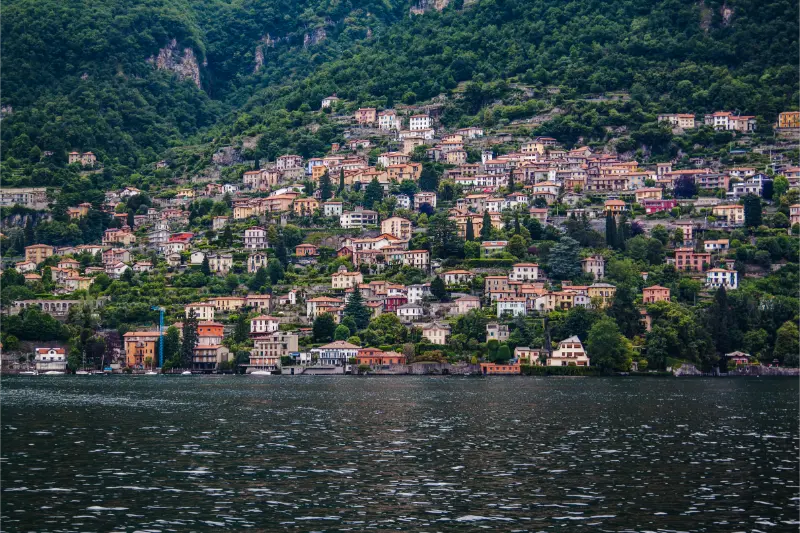
Como city works as the southern gateway and is the easiest choice if you want frequent rail access from Milan, a proper city centre, the cathedral, Brunate and a wide range of accommodation. Varenna, Bellagio and Menaggio sit around the central section, where short cross-lake ferry connections make town-hopping much more efficient.
Our Lombardy travel guide places Lake Como Travel in the context of the wider region, including travel times and alternative bases.
The western shore around Tremezzina concentrates Villa Carlotta, Villa del Balbianello, Lenno, Ossuccio and the Greenway. The eastern shore has the important railway spine through Lecco, Varenna-Esino and farther north. These transport patterns matter more than straight-line distance on the map.
If Lake Como is one part of a longer northern-Italy route, start with the Milan travel guide and the Milan day-trip guide. A day trip is possible, but an overnight stay changes the experience because the famous villages are noticeably calmer before the first large wave of visitors and after the afternoon departures.
Getting there and moving around
From Milan, the two most useful rail gateways are Como and Varenna. Trenord currently advertises direct Milano Centrale–Como S. Giovanni journeys of roughly 40 minutes on regular services, while Milano Centrale–Varenna-Esino is roughly 64 minutes with regular direct departures. Always check the travel date because engineering work and seasonal changes can alter the pattern.
Once on the lake, boats are not just sightseeing extras; they are part of the transport network. The central ferry routes between Bellagio, Varenna, Menaggio and Cadenabbia are especially useful because they avoid long road detours. Vehicle transport is limited to designated ferry services, so never assume a passenger boat takes cars.
A car can be useful for remote accommodation, mountain valleys and some western-shore itineraries, but it is a liability for a classic village-and-villa trip. Parking is limited in famous places, roads can be narrow, and summer traffic around bottlenecks can erase the theoretical flexibility of driving.
Choose the right base before choosing attractions
Como suits travellers arriving late, staying for only one or two nights, or wanting city services and straightforward rail connections. Varenna suits rail travellers who want central-lake ferry access without a car. Bellagio delivers the iconic promontory setting but lacks a railway station. Menaggio gives a flatter lakeside base on the western shore and good ferry links, while Tremezzina is strongest for villas and the Greenway.
The detailed comparison is in where to stay on Lake Como. The useful question is not which town is “best” in the abstract; it is which place removes the most transfers from the experiences you actually care about.
Build one day around Como and Brunate
Como deserves more than a station transfer. The cathedral, Broletto area, historic streets and waterfront fit naturally into a compact day, with the funicular to Brunate adding a high viewpoint when weather and queues cooperate. The city also works well as an arrival or departure day because luggage logistics are simpler than in small stepped villages.
Use the dedicated Como city guide if you want to combine the old centre with Brunate, a boat segment or the lakeside villas west of town.
Use the central-lake triangle for efficient village hopping
Varenna, Bellagio and Menaggio face one another across the central lake. That geography makes them a natural cluster: sleep in one, visit one or two others by ferry, and return without committing to a long bus or car circuit. This is the part of Lake Como where ferry timetables most directly shape the sightseeing day.
Do not assume that three villages mean three full sightseeing lists. Each has a waterfront, lanes, churches and viewpoints, but the character differs. Give the most time to the place whose villas, hikes or gardens match your interests and use the others as shorter contrasts.
Reserve villa visits strategically
For a more detailed plan, our Tremezzina Travel Guide develops this part of the journey step by step.
For a more detailed plan, our Varenna Travel Guide develops this part of the journey step by step.
Villa del Balbianello is one of the places where advance planning matters: FAI requires booking for access, and the interiors are visited under controlled tour arrangements. Villa Carlotta combines a museum with a large botanical garden, while Villa Monastero in Varenna fits naturally into an east-shore day.
Do not book two major villas back-to-back with a ferry transfer in between unless the timetable leaves generous margin. Garden visits are weather dependent, and the value comes from walking slowly rather than racing to the exit.
Keep the northern lake and mountains for a separate extension
For more detail on the landscape and possible routes, see our Menaggio Travel Guide.
Colico, Gravedona, Domaso and the upper lake have a more open landscape and different rhythm from the central glamour of Bellagio and Tremezzina. They make sense for longer stays, water sports, cycling or access toward Valtellina and alpine valleys rather than as hurried add-ons to a first two-night trip.
If you have four or five nights, split the trip between a central-lake base and a second area only when the change of hotel gives you something concrete: a hike, a beach, a northern-lake activity or an onward rail connection.
A realistic way to plan your time
For a more detailed plan, our Bellagio Travel Guide develops this part of the journey step by step.
For a more detailed plan, our Three Days on Lake Como develops this part of the journey step by step.
For two nights, choose one base and make one central-lake excursion. For three nights, add either Como/Brunate or a villa-focused western-shore day. Four nights allow a slower pattern with one weather-flexible day, which is valuable when gardens, views and boat rides matter.
Avoid writing an itinerary that depends on the final boat of the day. Return earlier when a dinner reservation, onward train or flight is important. The lake is relaxing only when the transport plan has breathing room.
Where to stay and who this base suits
First-time visitors often choose between Como and the central lake. Como gives infrastructure, restaurants, urban life and fast rail access. Varenna, Bellagio and Menaggio provide a more immediately scenic holiday atmosphere but can be more crowded and less forgiving with luggage.
Tremezzina is excellent if villas are the priority and you are comfortable using buses, ferries and walking routes. Families and travellers with mobility needs should inspect the exact slope between accommodation, pier and main road before booking because “near the lake” can still involve steep steps.
Food, coffee and sensible breaks
Lake fish, polenta, risotto and Lombard mountain products appear across the region, but menus in the busiest waterfront squares can be designed primarily around visitor traffic. Walk a few streets back, read recent menus rather than only ratings, and reserve dinner in small villages when choices are limited.
A long lunch can be one of the best parts of a lake day, but do not place it immediately before a critical ferry. Coffee, gelato and aperitivo work naturally as flexible pauses because they can expand or contract around transport.
Best season and weather strategy
Late spring and early autumn usually offer a good balance of long days, gardens and active transport, while July and August bring the heaviest visitor pressure and heat. Winter is quieter but has fewer services, shorter daylight and seasonal closures. The lake is not one year-round product.
Check both rain and visibility. A dry but hazy day may be less satisfying for panoramic viewpoints, while light cloud can be perfect for gardens and villages. Keep indoor or city options for unstable weather rather than forcing an expensive boat-heavy plan.
Crowds, queues and timing
Queues concentrate at famous piers, villa entrances and railway platforms after day-trippers arrive. Sleep in the destination you most want to photograph quietly, then use the middle of the day for a garden, lunch or ferry journey instead of fighting the densest pedestrian flow.
Navigazione Laghi advises arriving at ticket offices in advance and notes that summer and holiday periods can create substantial queues. Build that waiting time into the itinerary instead of treating published departure time as the moment you should reach the pier.
Families, mobility and slower travel
Lake Como can work well with children when the day contains ferries, parks and short walks rather than a chain of formal villas. Keep one major attraction per half-day, carry snacks and identify playground or lakeside pauses. Boat decks are exciting but require normal supervision near stairs and railings.
For limited mobility, research gradients carefully. Como and parts of Menaggio are easier than steep historic lanes in Varenna or Bellagio. Accessibility on boats can vary by vessel and water level, so contact the operator when step-free boarding is essential rather than assuming every sailing is identical.
Budget and booking priorities
Transport, villa admissions and waterfront accommodation can make the lake expensive, but the scenery itself is not ticketed. Balance one paid villa with public promenades, churches, viewpoints and a ferry segment. Buying every possible entrance rarely improves a short trip.
Book first what has limited capacity or fixed timing: your most important villa, a special guided visit, and accommodation for peak dates. Ordinary ferry tickets and flexible sightseeing can be handled later once the weather picture is clearer.
Common planning mistakes
The most common error is building a route from Instagram locations rather than geography. Como to Bellagio by boat is scenic but not a quick shuttle; Varenna to Bellagio is a short central-lake crossing. Those are completely different transport decisions.
Another mistake is using a car because it seems automatically more flexible. For the classic first trip, rail plus boat is often simpler. Use a car only when your lodging or planned hikes genuinely require it.
How to combine this with the rest of the lake
From Milan, compare a day trip with an overnight using Best Day Trips from Milan. If you continue through the region, Milan can remain the rail hub while Lake Como becomes a two- or three-night side trip.
Within this new cluster, continue with Where to Stay on Lake Como, Lake Como Ferry Guide and Lake Como Without a Car. These three planning articles solve most first-trip logistics before you start choosing individual villages.
Tours and tickets: when booking adds value
A guided experience is most useful when it solves a real problem: limited time, difficult transport, a villa with controlled access, or the need for historical interpretation. Compare meeting points, cancellation terms and whether ferry or entrance tickets are actually included rather than assuming every Lake Como tour covers the same route.
Where to stay
Accommodation prices around Lake Como move sharply with weekends, weddings and the warm-season peak. Compare location against ferry and rail access, not just the nightly rate. Compare hotels and apartments for this Lake Como stay and check the exact walking route from the station or pier before booking.
Useful official sources
- Navigazione Laghi – Lake Como tickets and timetables
- Trenord – regional trains in Lombardy
- Visit Como – official city tourism portal
Final planning advice
Lake Como rewards selective planning. Choose one or two anchor experiences, leave space for the lakefront and ferry views, and build the day around the actual transport timetable. That approach produces a calmer trip than trying to collect every famous village in a single sweep.
Last updated: October 17, 2026