
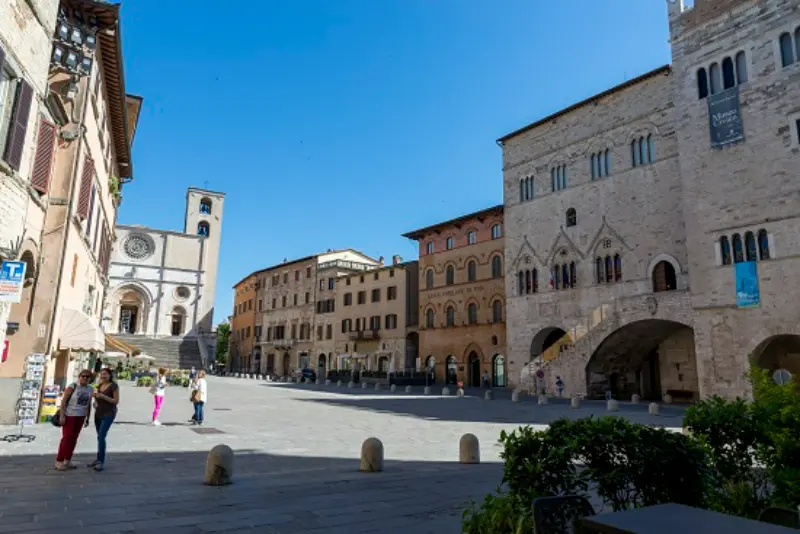
Umbria can be excellent with children because distances are modest, crowds are usually lighter than in Tuscany’s headline cities, and the region mixes castles, waterfalls, lakes, animals, caves and compact historic centres. The challenge is hills: too many steep stone towns in a row exhausts families quickly.
Build each day around one major experience plus one lighter stop. Alternate hill towns with water, parks or open landscapes. A family itinerary should contain fewer churches and more recovery time than an adult art itinerary.
This guide focuses on the decisions that make the trip work in practice: how much time to allow, which stops deserve priority, when a car genuinely helps, what can be combined without rushing and where older online advice is most likely to create problems.
Quick planning summary
| Best for | Travellers who want a distinctive Umbrian experience rather than another generic hill-town stop. |
|---|---|
| Minimum time | Half a day for a focused visit; a full day or overnight stay when landscape, food or outlying sights matter. |
| Car | Useful or essential for dispersed countryside and mountain stops; less important for major rail-connected cities. |
| Best months | April–June and September–October for the easiest balance of weather, daylight and walking. |
| Planning rule | Choose fewer stops and give them enough time; Umbrian roads and hill centres make rushed itineraries inefficient. |
What to see and do
Marmore Falls
The spectacle works for children, but route choice matters because paths vary in difficulty and spray can make surfaces wet.
Lake Trasimeno
Boat rides, lakeside promenades and flatter terrain provide a useful reset after hill towns.
Perugia
Escalators, underground Rocca Paolina and chocolate give children more variety than a standard church-and-museum city day.
Assisi
The city is meaningful and beautiful, but steep streets and crowds require pacing. Use parking and buses strategically.
Rasiglia
The water channels are immediately engaging, though the village becomes crowded and narrow at peak times.
Castles and fortresses
Rocca Paolina, Spoleto’s Rocca, Gubbio and smaller castles can turn history into something visually concrete.
Nature parks
Short walks in wooded or lake environments are better family choices than ambitious mountain hikes.
Città della Domenica and family attractions
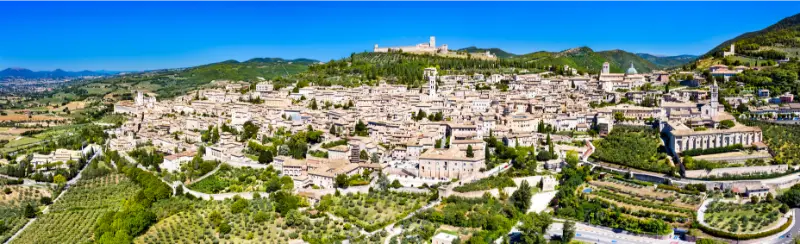
Perugia’s family-oriented attractions can be useful when children need a day designed around them rather than around adult sightseeing.
How to plan the visit
Start with the attraction or landscape that defines the destination, then add only stops that sit naturally on the same route. In Umbria a place that appears only 20–30 kilometres away can still require parking outside a historic centre, a steep walk or a slow mountain road.
If you are travelling in peak season, reserve the experiences that genuinely have capacity limits and keep the rest flexible. Small churches, local museums and family-run producers may use seasonal hours; checking the day before is more reliable than building the entire itinerary around an old timetable.
Best ages
Umbria works at any age, but itineraries change. With toddlers, prioritise flatter lakeside towns and one hill town per day. With school-age children, waterfalls, castles and underground sites become strong anchors.
Strollers
Historic paving and steep gradients make lightweight strollers easier than large travel systems. Baby carriers can be useful in villages, but heat must be considered.
Summer strategy
Start early, schedule lunch and indoor stops at midday, and use lake or mountain locations later. Children tire faster on exposed stone streets than adults often expect.
Where to stay
For this part of Umbria, choose accommodation according to the next morning’s first activity rather than only by scenery. If the trip is centred on Perugia, staying locally reduces driving and makes early or late hours more useful.
Rural agriturismi offer space, parking and atmosphere, but confirm dinner availability, road conditions and the actual drive to the nearest town. In hill centres, verify luggage access and whether the property lies inside a restricted-traffic zone.
Food and local character
Umbrian travel improves when meals follow geography. Mountain areas favour cured meats, truffles, legumes and hearty pasta; the central olive belt rewards simple food built around excellent oil; wine areas deserve time for one thoughtful tasting rather than a rushed sequence of cellars.
Protect at least one unhurried lunch. In smaller towns, restaurant opening days can matter more than online rankings, especially outside weekends and summer. If a specific restaurant is important, reserve rather than assuming there will be many equivalent alternatives.
Best time to visit
Spring
April to early June is usually the easiest period for walking and sightseeing. Valleys are green, daylight is generous and temperatures are more forgiving than midsummer.
Summer
Start early. Stone centres and open plateaus can be hot at midday, while mountain areas can still turn windy or cool. Weekends and festival dates often change parking pressure.
Autumn
September and October combine comfortable walking with food, wine and harvest activity. Higher mountain areas cool quickly, so carry an extra layer.
Winter
Cities remain visitable, but mountain routes, daylight and smaller attractions require more planning. Check weather and individual opening times rather than assuming summer schedules.
Getting there and getting around
The easiest way to reach Perugia depends on whether this article is being used as a standalone day trip or as part of a wider Umbria route. Rail-connected cities are straightforward, but mountain and rural destinations require more caution. If you are driving, download the route before departure and keep enough fuel for detours; mobile coverage is normally fine in towns but can weaken in valleys and high areas.
Public transport works best when the destination sits on the main Foligno–Spoleto–Terni or Perugia–Assisi corridors. Once you move into Valnerina, the Sibillini or scattered wine and olive country, bus frequency can make a multi-stop day impractical. A hybrid trip—train for the major cities, rental car for two or three countryside days—is often the most efficient compromise.
Parking and ZTL strategy
Do not aim the navigation app at the main piazza. In Umbrian historic centres, the best parking is often outside the walls or below the old town, with escalators, lifts, buses or a short uphill walk completing the journey. Follow official parking signs even when the route looks less direct.
ZTL cameras can issue fines automatically. Hotel guests may sometimes receive authorised access, but only when the accommodation confirms the procedure. Never assume a booking itself permits entry. In mountain villages, the issue is less often a formal ZTL than narrow roads, temporary traffic controls and limited roadside space.
A realistic day plan
Begin the day with the sight or landscape that would be most frustrating to miss. Around Perugia, that usually means using the first two hours for the defining experience while parking is easier and temperatures are lower. Save secondary churches, shops or short viewpoints for later, when a change of plans will not damage the entire day.
Schedule lunch as part of the itinerary rather than as an afterthought. In small Umbrian towns, kitchens may close between lunch and dinner and the best rural places can be fully booked at weekends. A 90-minute lunch is not wasted sightseeing time; it is one of the ways the region makes sense.
After lunch, choose one second anchor only: a nearby village, short walk, winery, spring, lake stop or museum. Adding a third substantial destination usually means arriving late, parking badly and experiencing the final stop in a hurry. If weather changes, use the afternoon as the flexible part of the day.
Budget and reservations
Umbria is generally easier on the budget than Italy’s most famous art-city circuits, but costs rise when you add private transfers, wine tastings, guided experiences or mountain accommodation in peak periods. Parking fees, attraction tickets and restaurant prices are usually manageable individually; the real budget problem comes from unnecessary backtracking and last-minute transport.
Reserve timed or specialist experiences first, then hotels, then restaurants that matter to you. Do not pre-book every meal or every hour. Flexibility is particularly valuable in mountain areas, where weather and road conditions may justify changing the order of the day.
Photography, weather and what to pack
Comfortable shoes with grip are more useful than formal footwear almost everywhere in Umbria. Stone paving becomes slippery in rain, and even compact villages involve gradients. In the mountains, add an insulating layer and lightweight rain protection even when the valley forecast is warm.
For photographs, early and late light usually improves both architecture and landscape. Midday can be harsh in open piazzas and on pale stone. In tiny villages, avoid blocking doorways and narrow lanes for photos; the best images often come from stepping back and using the wider setting rather than waiting in the most obvious viewpoint.
Who should prioritise this destination?
Build each day around one major experience plus one lighter stop. Alternate hill towns with water, parks or open landscapes. A family itinerary should contain fewer churches and more recovery time than an adult art itinerary.
If your first trip to Umbria is very short, compare this stop with the regional anchors you have not yet seen. If you already have Perugia, Assisi and Orvieto in the plan, destinations like this add variety and are often where the trip begins to feel personal rather than generic. On longer trips, the question is less ‘is it famous enough?’ and more ‘does it create a different kind of day from the one before?’
Families and accessibility
Families should reduce the number of formal sights and alternate historic centres with water, parks, viewpoints or open landscapes. A single memorable experience plus a relaxed meal usually works better than a dense adult sightseeing schedule.
Accessibility varies sharply between modern parking areas, medieval lanes and mountain paths. Check the specific attraction rather than treating the destination as uniformly accessible. Mechanised access in cities such as Spoleto and Perugia can make a substantial difference.
Mistakes to avoid
The most common mistake is overloading the day because distances look short. The second is assuming every historic centre can be approached directly by car. Use official parking, respect ZTL restrictions and leave margin for walking.
Do not let photography or social-media expectations dictate the entire visit. Weather, reconstruction, crowd management and seasonal agriculture can change what you see; the best itinerary remains worthwhile even when one viewpoint or attraction is unavailable.
Useful related guides
Continue planning with Umbria Travel Guide, Rasiglia, Marmore Falls and Lake Trasimeno.
Official information to check before travel
Opening hours, road access, temporary closures and event arrangements can change. Before travelling, check the relevant official destination information and verify any attraction with restricted access.
Leave a Reply