
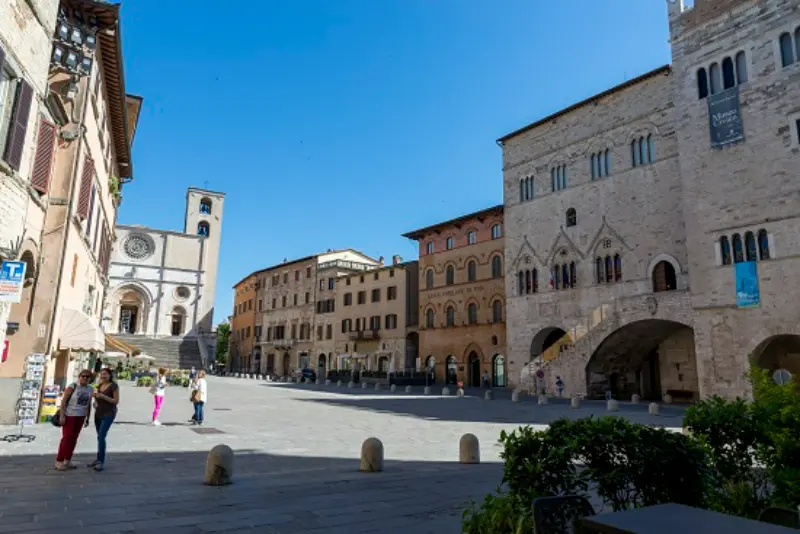
Umbria is one of Italy’s best regions for travellers who want art cities, hill towns, countryside and food without the constant scale of Rome, Florence or the most visited Tuscan corridors. The region is compact, but its railway lines and mountain geography mean that a good itinerary still depends on choosing the right bases.
Perugia, Assisi and Orvieto are the obvious first anchors. Spello, Gubbio, Spoleto, Todi and Montefalco add very different townscapes, while Lake Trasimeno, Marmore Falls, Monte Cucco and the Valnerina bring water and mountain landscapes into a trip that might otherwise become church-and-piazza heavy.
The existing MyItalyExperience cluster already goes deep on Perugia, Assisi, Orvieto, Spello, Gubbio and Lake Trasimeno. This regional guide is the planning layer above those destination articles: where to base yourself, how many days to allow and how to avoid spending the trip in the car.
Quick planning summary
| Ideal first trip | 5–7 days |
|---|---|
| Best bases without a car | Perugia, Assisi, Orvieto and selected rail towns |
| Best with a car | Hill towns, wineries, Valnerina, Monte Cucco and multi-base road trips |
| Best balance | Spring and early autumn |
| Key planning rule | Choose 2–3 bases, not a different hotel every night |
Think in geographic clusters, not a list of famous towns
Umbria is small enough that many places look close on a map, yet hill roads, parking and indirect public transport can make constant backtracking expensive in time. The most efficient clusters are Perugia–Assisi–Spello, Lake Trasimeno, the Valle Umbra around Foligno/Spoleto/Montefalco, and the southern axis around Terni–Marmore–Narni–Orvieto.
Build each day around one cluster. Crossing the region can be worthwhile for a hotel move, but doing it repeatedly as a day trip turns a compact region into a surprisingly tiring one.
The first-time priorities: what deserves the protected days
For a first trip, protect full days for Assisi and Orvieto if they appeal to you, and give Perugia at least one proper city day rather than using it only as a sleeping base. Those three places are different enough to justify separate attention: Franciscan UNESCO heritage, Etruscan/medieval city life, and a tufa-cliff city with cathedral and underground layers.
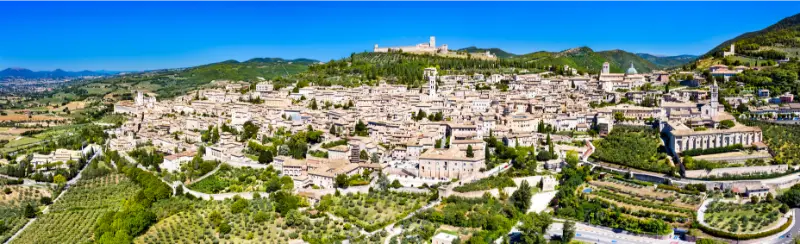
Then choose two or three additions according to your interests. Spello and Montefalco work for a slower Valle Umbra day; Gubbio for medieval drama and mountain context; Lake Trasimeno for water and cycling; Marmore for landscape and outdoor movement.
Perugia, Assisi and the central-north cluster
Perugia is the practical urban anchor, with rail and bus connections, museums and evening life. Assisi is the spiritual and artistic counterpoint, and Spello sits close enough to create a coherent smaller-town day. This is the easiest part of Umbria to explore without a car if you are comfortable using local buses from stations to hill centres.
Do not combine Perugia and Assisi only because both fit on a transport map. Each can fill a full day. Pair Assisi with a smaller stop only when your interest in the basilica and Franciscan sites is focused rather than exhaustive.
Orvieto and southern Umbria
Orvieto is unusually rail-friendly for a hill town because the station below the cliff connects by funicular and local transport to the historic centre. It can be a Rome day trip, but staying overnight reveals a much calmer city after the daytime flow fades.
Farther east, Terni, Marmore Falls and Narni form a different southern cluster. A car helps, but rail and local connections can work if you build the day carefully around the waterfall’s water-release timetable and museum opening hours.
The Valle Umbra: Spoleto, Foligno, Spello, Bevagna and Montefalco
The broad valley between Assisi and Spoleto is one of the easiest places to build a multi-day loop. Foligno is practical and flat; Spello is visually compact; Bevagna has Roman and medieval layers; Montefalco adds wine and views; Spoleto brings a larger art-city experience.
A car unlocks the full sequence, but rail serves several key towns. The main planning mistake is visiting three hill towns in one day and remembering only parking lots. One major town plus one small village is a much better rhythm.
Lake Trasimeno: when the lake improves an art-heavy itinerary
Lake Trasimeno gives Umbria a different visual language: water, islands, reed beds, cycling and sunset rather than stone streets and church interiors. Castiglione del Lago and Passignano are the most obvious bases, while Isola Maggiore adds a ferry day.
Use the lake as a deliberate change of pace. If your previous three days were Perugia, Assisi and Orvieto, a bicycle ride or lakeside lunch can be more valuable than adding another medieval town.
Waterfalls, mountains and nature
Marmore Falls is the region’s most dramatic engineered-natural attraction, with paths and timed water releases shaping the experience. Monte Cucco offers mountain scenery, hiking and cave environments, while Mount Subasio connects nature directly with the Assisi landscape.
Outdoor days require more current checking than city days. Weather, trail conditions, water-release times and seasonal access can change the plan, so keep one flexible day in a week-long trip.
Car or train? The answer depends on the itinerary
You can build an excellent car-free first trip around Perugia, Assisi, Spello, Foligno and Orvieto, with buses or taxis solving the final hill climb. A car becomes increasingly valuable for wineries, small hill villages, Monte Cucco, rural agriturismi and the Valnerina.
Do not rent a car automatically at the airport if the first two nights are in Perugia’s historic centre. It can be smarter to start by train, then collect a car when the itinerary moves into countryside.
How to decide whether Umbria belongs in your itinerary
Choose Umbria when you want a region that combines major art and religious heritage with countryside but still feels manageable over one week.
It is especially good for travellers who liked Tuscany but want fewer globally famous towns and more time in places where daily life remains visible.
If nightlife, beaches or high-speed intercity travel are central to your holiday, Umbria may work better as a four- or five-day inland section rather than the entire trip.
A better daily rhythm
Alternate major and minor days: Perugia followed by a lake day, Assisi followed by Spello/Montefalco, Orvieto followed by countryside. This protects attention and legs.
Use travel days to change geography, not to collect attractions. Move hotels after breakfast, stop for one worthwhile place en route and reach the next base before dinner.
Final practical checklist before you go
Before leaving for Umbria, recheck the exact opening hours or transport times that affect your day, save any timed tickets offline and note the address of the entrance you actually need. In Italy, the headline destination name and the practical access point are not always the same place, so a two-minute check before departure can prevent a long detour.
Carry water, comfortable shoes and a small weather layer even on a simple city day. If the itinerary includes archaeological ground, gardens, hills or old paving, footwear matters more than it does on a museum-only day. Keep one part of the schedule flexible so a delayed train, ferry, lunch or sudden change of weather does not force you to abandon the most important experience.
Finally, save the return connection before you start sightseeing. That is particularly useful on Sundays, public holidays and shoulder-season dates, when the last practical train, bus or boat may be earlier than expected. A good itinerary should finish with margin rather than with a sprint to the platform or pier.
How long to spend in Umbria
Five days gives you three major anchors plus two contrasting days. Seven days is the sweet spot for a first trip because it allows two bases and a mix of cities, villages and landscape.
Ten days or more is when Umbria begins to feel like a full region rather than a highlights route. That gives room for Lake Trasimeno, Gubbio, Valnerina or wine-country days without sacrificing Assisi and Orvieto.
Getting to and around Umbria
Regional trains form the backbone between major towns, but stations can sit below historic centres. Buses, funiculars, escalators and taxis are part of realistic car-free planning.
Driving is straightforward outside old centres, but ZTL zones and steep medieval streets make “door-to-door” navigation a bad goal. Park outside the walls and walk in.
For a road trip, plan by minutes rather than kilometres and avoid changing bases every night. Umbrian roads are scenic precisely because they are not always fast.
Where to stay in Umbria
Perugia is the best all-round urban base; Assisi is strongest for atmosphere and spirituality; Orvieto works beautifully for a south-Umbria or Rome-linked stay; Lake Trasimeno suits slow travel and families.
Agriturismi are ideal when countryside, food and quiet matter more than evening public transport. Confirm dinner, road access and whether a car is essential before booking a remote property.
Food and local flavours
Umbrian cooking is inland and ingredient-driven: cured meats, legumes, truffles, olive oil, grilled meats, umbricelli/strangozzi and rustic breads appear repeatedly, but local emphasis changes from lake fish to Norcia-style cured products and Sagrantino wine country.
Use meals to structure the itinerary. A long lunch in a hill town is often more memorable than squeezing in one extra church, and winery visits should be placed on driving-light days.
Best time to visit
Spring
April to June is excellent for green landscapes, walking and art cities. Easter affects Assisi especially, so book early if travelling around major religious dates.
Summer
Summer brings festivals and long evenings but also heat. Hill towns are cooler than Rome, yet stone centres and exposed climbs still need early starts.
Autumn
September and October are outstanding for harvest food, wine country and walking. This is one of the best periods for a road trip.
Winter
Winter is quiet and atmospheric, especially in Perugia, Assisi and Orvieto. Small museums and rural restaurants may reduce hours, and mountain conditions need checking.
Families, accessibility and pace
Umbria works well for families when each day mixes one cultural anchor with open space, a castle, lake, waterfall or simple village walk. Avoid consecutive museum marathons.
Accessibility varies sharply because many centres are steep. Perugia’s escalators and Orvieto’s funicular help, but individual churches, towers and fortresses may still involve stairs.
Budget and booking strategy
Umbria can be good value compared with the most famous Tuscan towns, especially outside festival dates. The largest hidden cost is inefficient transport: repeated taxis or long drives can erase room-rate savings.
Choose accommodation by itinerary, not by the cheapest map pin. A slightly more expensive hotel beside a station or public parking can save hours over a week.
Common mistakes to avoid
- Trying to visit Assisi, Perugia and Spello in one day.
- Renting a car for a historic-centre-only itinerary and then fighting ZTL zones.
- Changing hotels every night.
- Ignoring station-to-hill transport.
- Building every day around churches with no landscape break.
- Treating Umbria as a quick add-on between Tuscany and Rome rather than a destination.
The best Umbria trips are selective. The region rewards depth, meals and repeat views more than a rapid checklist of medieval centres.
On-the-ground strategy for Umbria
The most efficient way to experience Umbria is to protect the first part of the day for the sight or area that matters most to you. Do not spend the best morning hour solving breakfast, parking and ticket questions that could have been settled the evening before. Save addresses, opening information and any reservation confirmation in one offline note, then begin with the one experience you would regret missing.
Build the middle of the day around geography rather than around a long attraction list. Group places that are naturally walkable or connected by the same transport corridor, and avoid crossing town simply because two highly ranked sights appear next to each other in a search result. A relaxed lunch is useful planning time: reassess energy, heat, weather and the return connection before committing to the afternoon.
Crowds are rarely distributed evenly. The busiest landmark may be dramatically calmer at opening time or late in the visit, while nearby streets can feel almost empty. If a queue becomes disproportionate to the value of the experience, use the alternative parts of the itinerary instead of sacrificing an hour only because the place is famous. That flexibility is one of the advantages of having more than one worthwhile stop planned.
Leave enough margin for the final transfer. Rural buses, island ferries, regional trains and mountain roads each fail in different ways, but the solution is similar: do not make the last practical connection depend on perfect timing. A fifteen- or thirty-minute buffer is often worth more than squeezing in one final viewpoint, shop or coffee stop.
Useful related guides
Start with Perugia, Assisi, Orvieto, Lake Trasimeno and Marmore Falls.
Official information to check before travel
Opening hours, tickets, transport and temporary access rules can change. Before travelling, check Umbriatourism – official regional tourism website for the latest practical information.
Leave a Reply